Seeded bread with large slices
If you usually toast long or unevenly thick slices of seeded bread, check the slot shape first. The type of bread alone won’t tell you whether a slice will fit a particular model.


For seeded bread in a small kitchen, start by comparing the length and thickness of your usual slices with the space available. A compact two-slot toaster could work if your slices fit; for longer slices, a long-slot model is a more obvious choice. A longer appliance may hold more bread, but it will take up more worktop space. Also check the crumb tray, browning controls and safe positioning – no design guarantees that a particular slice of seeded bread will fit.
If you usually toast long or unevenly thick slices of seeded bread, check the slot shape first. The type of bread alone won’t tell you whether a slice will fit a particular model.
If you usually toast just one or two slices, consider how much space you need alongside the appliance’s capacity. Measure the space available and check that the toaster can be positioned there safely.
If you regularly make breakfast for several people, a larger capacity could reduce the number of batches. The key question is whether the larger appliance will still fit on your worktop.
First, check that your usual slices fit in the slots and that the appliance can be positioned safely. Then weigh up cleaning and capacity in light of how you’ll use the toaster day to day.
| What matters | What to check when buying | Who should consider this? |
|---|---|---|
| Slots that fit | Compare the length and thickness of your slices with the specifications and instructions for the specific model. | If you need to fit long or thicker slices of seeded bread, the slot shape is crucial; around 36% of consumers put this check first. |
| Worktop space and positioning | Compare the appliance’s external dimensions with the space available and follow the model’s positioning instructions. | If you need to find a suitable clear space in a small kitchen, the appliance’s dimensions are especially important; around 29% of consumers say space is their main concern. |
| Crumbs and removal | Check whether the crumb tray can be removed and accessed where the toaster will be positioned; a high-lift function may also be useful for small slices. | If crumbly bread needs regular cleaning up or you want to remove small slices more easily, ease of use matters; around 21% of consumers prioritise cleaning. |
| Capacity | Compare the number of slices you need per batch with the appliance’s external dimensions; if you often make several batches, consider how evenly it browns. | If several people need toast at the same time in the morning, a larger capacity could reduce the number of batches; around 14% of consumers prioritise toasting several slices at once. |
A slice can still be too long or too thick, even with wide slots. For the Severin AT 2620, the manufacturer specifies a maximum bread thickness of around 14 mm; thicker slices may get stuck.
Measure your usual slices and compare them with the slot specifications and instructions for the exact model. Don’t assume the AT 2620’s limit applies to other toasters.
A long slot may come with a long body. A long-slot model documented by Bosch is 431 mm wide; the manufacturer lists it as no longer available. Safe positioning also depends on the instructions for the specific appliance.
Compare all the external dimensions with your worktop space and follow the model’s positioning instructions. In its user manual, Severin warns against placing the toaster near or underneath flammable materials.
Wattage alone doesn’t tell you how evenly a toaster will brown individual slices or several batches. TÜV SÜD recommends considering the power in relation to the number and size of the toasting slots.
Compare reliable toasting test results and how easy the browning controls are to use, rather than basing your decision on wattage alone.
According to Graef, the TO62 is a compact two-slice toaster and could suit slices that fit in its slots.
Severin describes the AT 2620 as a two-slot model. The manufacturer’s website lists a crumb tray, centring function and dimensions of 19,5 × 31 × 19 cm (H × W × D).
The Philips HD2597/90 is another two-slot option. Philips describes toasting chambers with variable width and browning control.
According to Krups, the Control Line KH442D is a two-slice toaster with short slots.
Russell Hobbs describes the “Lift and Look” function on the Inspire White 24370-56.
The selection includes compact two-slice toasters and long-slot models. Compare the listed slot and external dimensions with your seeded bread and the space available.
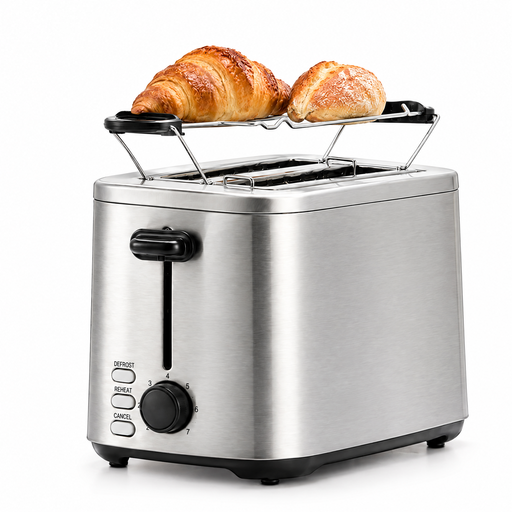 No image available
This toaster could suit you if you want to toast two slices at a time and are looking for wide slots.
The product details list 800 W, seven browning settings, a removable crumb tray and an uncoated stainless steel body.
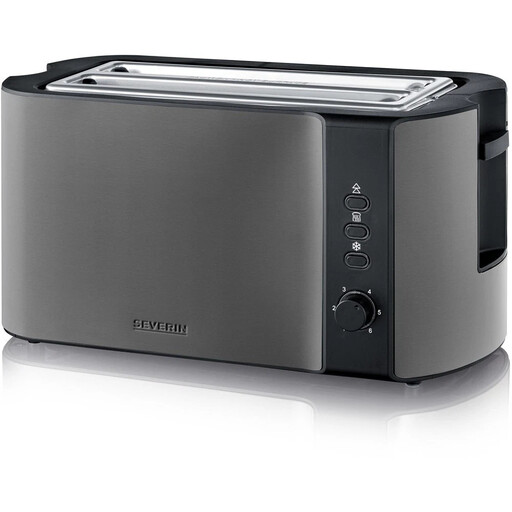 No image available
The two extra-long slots may suit longer slices; even so, compare your slice dimensions with the model specifications.
The product details list up to four slices per batch, a removable crumb tray, and defrost and reheat functions. It measures 18 × 38 × 19 cm; bear the body width in mind if worktop space is limited.
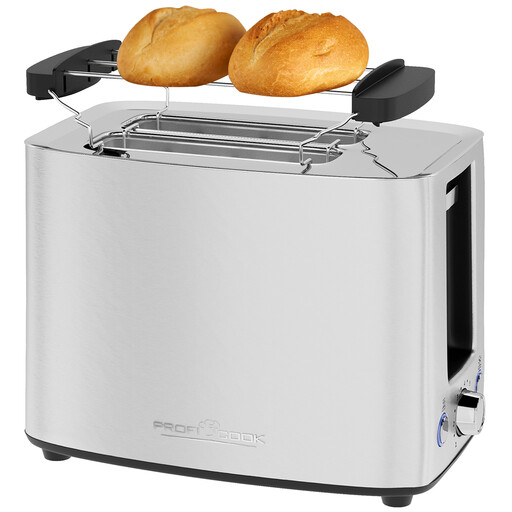 No image available
If you usually toast two slices, compare the stated slot width on this model with your slices of seeded bread.
The product details list 40 mm-wide slots, a centring function, a crumb tray and variable browning control. Defrost, reheat and quick-stop functions are also listed.
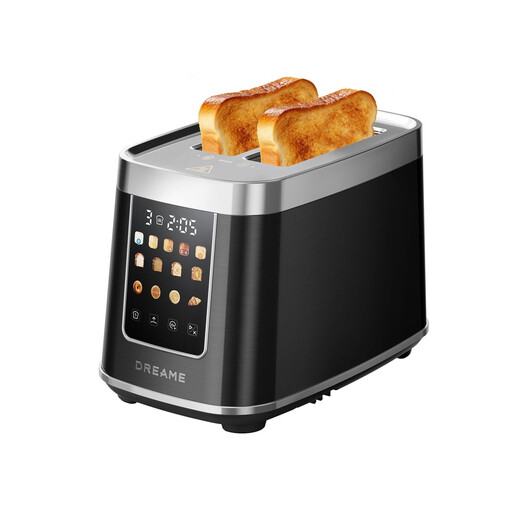 No image available
Check the stated slot width against your slices; the product details also list a single-slice function.
Features listed include 38 mm-wide self-centring slots, eight bread programmes, six browning settings, 1.200 W and a removable crumb tray. The model has a 5,3-inch touchscreen.
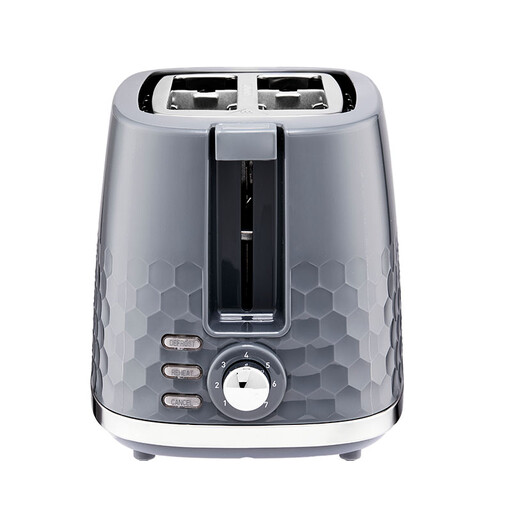 No image available
Compare its dimensions of 287 × 178 × 186 mm with the space available. The product information lists a pull-out crumb tray and a high-lift function.
Important: according to the product information, there is a risk of burns when removing slices of bread less than 85 mm long. Check whether this applies to your usual slices.
No, the maximum thickness depends on the model. Severin specifies a maximum of around 14 mm for the AT 2620, as thicker slices may get stuck. Check your slice against the instructions for the toaster you choose, and don’t assume this limit applies to other models.
Unplug the appliance and let it cool completely before cleaning it in accordance with the manufacturer’s instructions. For the AT 2620, Severin explains that you should pull out and empty the crumb tray; don’t cover the toaster while it’s in use.
Heavy browning isn’t a necessary buying consideration. The German Federal Institute for Risk Assessment notes that food which has been burnt often contains particularly high levels of substances formed by exposure to intense heat. Set the browning control so the bread doesn’t become charred.
For a standard distance purchase from a trader in the EU, you generally have a 14-day right to cancel, starting from delivery; exceptions and possible return costs should be taken into account. Under EU law, faulty goods are covered by a legal guarantee from the seller for at least two years. This is separate from any additional manufacturer’s guarantee. This information is based on the EU rules explained by Your Europe.
Check that the CE marking and product and manufacturer details are present and correct. Germany’s Federal Network Agency lists these checks as part of its market surveillance of electrical products; on their own, they don’t tell you whether your bread slices will fit or how evenly the toaster will brown them.