When putting together a Christmas platter with seeded crispbread, start by thinking about the toppings. A milder rye and linseed slice leaves more room for cheeses and spreads, while a heartier multiseed variety makes more of a statement in its own right. If your guests need to avoid certain ingredients, check the specific pack and provide a separate alternative rather than relying on the words ‘seeded’ or a general wholegrain claim.
Which option is right for you?
Hosts putting out cheese and spreads
If you’re serving a range of savoury toppings, choose a crispbread that complements them. You could serve a rye and linseed variety alongside a more strongly seeded option, giving guests a choice of different flavour profiles.
Guests who enjoy a pronounced seed flavour
With mild cheese, dips or vegetables, the crispbread itself can take centre stage. Compare the types of seeds and descriptions of the texture: hearty multiseed slices and more delicately textured seeded slices won’t suit the same preferences.
Hosts catering for specific dietary requirements
If you’re shopping for guests with allergies or who need foods labelled gluten-free, check each variety individually. Seeded crispbread may contain sesame and gluten-containing cereals, among other ingredients; a gluten-free label says nothing about sesame.
What should you look for when buying?
When planning a Christmas buffet, start with the toppings and your guests’ dietary requirements. Then compare the wholegrain labelling, types of seeds and nutritional information for the varieties you’re considering.
| What you’re looking for |
What to check when buying |
Who it matters most to |
| A good base for your toppings |
Match the grain base and types of seeds to the toppings you plan to serve. For a mixed platter, consider choosing two varieties with different levels of flavour. |
If cheese, spreads and appetisers are the focus, the slices should complement them rather than overpower them. Around 33% of consumers would put how well it pairs with toppings first. |
| Wholegrains and nutritional value |
Look for an explicit wholegrain label and compare fibre and salt per 100 g on the pack. |
If you’re specifically looking for a wholegrain base, don’t rely on visible seeds alone. This would be the main priority for around 27% of consumers. |
| Allergens and gluten |
Read the ingredients and allergen information for every variety. If needed, look for one explicitly labelled gluten-free and serve it separately. |
If a guest needs to avoid sesame or certain cereals, the suitability of the specific pack matters more than its flavour profile. Around 20% of consumers would put this first. |
| Seed profile and texture |
Compare the types of seeds and texture descriptions for the variety you choose. A seed content claim alone doesn’t prove that a product is wholegrain or gluten-free. |
If you want the crispbread itself to have a distinct seed flavour alongside mild toppings, the texture becomes a key factor. Around 20% of consumers would choose mainly on this basis. |
Common selection mistakes
-
Assuming visible seeds mean wholegrain
Seeds on the surface don’t tell you whether the grain base is wholegrain too. So if you’re looking for wholegrain crispbread, don’t rely on its appearance or colour.
Look for an explicit wholegrain label and read the ingredients list. The German Nutrition Society recommends checking for this labelling when choosing wholegrain products.
-
Overlooking sesame and cereals on your festive table
Seeded crispbread may contain both sesame and gluten-containing cereals. The specific variety matters for guests with related allergies or intolerances.
Check the ingredients and allergen information on every pack, and keep options with different suitability clearly separate when serving.
-
Confusing gluten-free with free from all allergens
Hammermühle’s Sesame Oat Crispbread, which is described as gluten-free, still contains sesame. The retailer also notes that people with coeliac disease may tolerate gluten-free oats differently.
Check the gluten labelling, sesame and other ingredients separately, and take account of the product-specific information on the pack.
-
Adding moist toppings too soon
Crispbread should stay crunchy on an appetiser platter, but moist spreads and vegetables can make the slices soggy if they’re left to stand for too long.
Store the slices somewhere dry and add toppings as close to serving time as possible.
Brands to consider
The examples below show different crispbread and seed profiles. Ingredients and nutritional information relate to the variety or product range mentioned, not to every product from the brand.
Wasa
Wasa’s range includes crispbread made with wholegrains and linseed. For a Christmas platter, the specific variety may be a good choice if you’re looking for a rye and linseed base to go with savoury toppings.
- Wasa lists wholegrain rye flour and linseed in the ingredients for its linseed crispbread.
- The linseed product listed contains rye and wheat germ. Possible traces of sesame and milk are also worth checking when choosing for guests.
Dr. Karg's
The listed Classic 3-Saat variety is a wholegrain crispbread with several types of seeds, for a platter where you want the crispbread itself to have a noticeable flavour too.
- REWE lists wholegrain wheat flour, sunflower seeds, sesame and linseed for Classic 3-Saat.
- According to the retailer’s information, this variety contains wheat, sesame, barley and rye. It also contains 22 g of fat and 1.8 g of salt per 100 g.
Brandt
Brandt’s Saaten Crisp range is for anyone looking for a pronounced seed flavour and a texture the brand describes as delicate.
- Brandt states that the range has a seed content of 72% to 85%, depending on the variety.
- This figure doesn’t apply equally to every variety. Check the ingredients, allergens and nutritional information for the specific pack you choose.
Hammermühle
The listed oat crispbread with sesame is explicitly described as gluten-free, making it an option when guests need a product with this labelling.
- The product information at REWE lists gluten-free oat ingredients and sesame.
- This variety isn’t sesame-free. REWE also notes that people with coeliac disease may tolerate gluten-free oats differently.
Seeded crispbread at Joybuy
These crispbreads combine grains and seeds in different ways to go with cheese, dips and spreads on a cold Christmas buffet. Choose a variety only after considering your planned toppings and your guests’ dietary requirements.
 No image available
Wasa Delicate Crisp Oats & Sesame, 230 g
An option if you’re looking for an oat and sesame crispbread to serve with savoury toppings.
If your guests have allergies or intolerances, check the ingredients and allergen information on the current pack.
View at Joybuy
 No image available
Alnatura Organic Spelt Crispbread with Seeds, 200 g
A good choice for a platter where you want to offer spelt and seeds, perhaps alongside dips or spreads.
If your guests need to avoid certain ingredients, check the ingredients list against the allergen information on the current pack.
View at Joybuy
 No image available
Wasa Sesame & Flaxseed Crispbread, 210 g
For savoury toppings when you’re looking for a rye and linseed base.
Before buying, check the current ingredients list carefully for sesame: the product name and ingredients description don’t make it clear whether sesame is included. This is crucial if you have a sesame allergy.
View at Joybuy
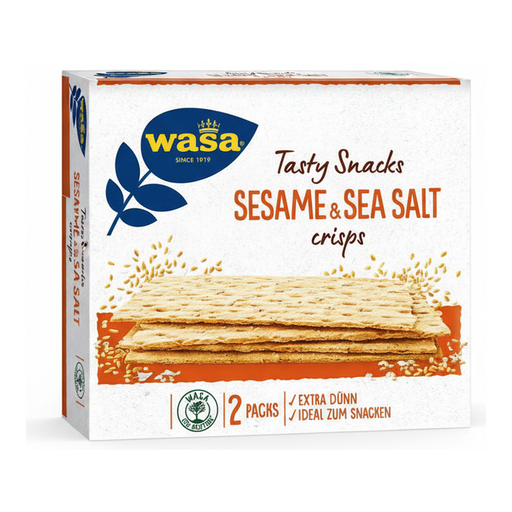 No image available
Wasa Round Sesame & Sea Salt Crispbread, 190 g
A round sesame variety for a platter of cheese, spreads or dips.
If your guests have relevant allergies or intolerances, take sesame and the cereal ingredients into account and check the current pack.
View at Joybuy
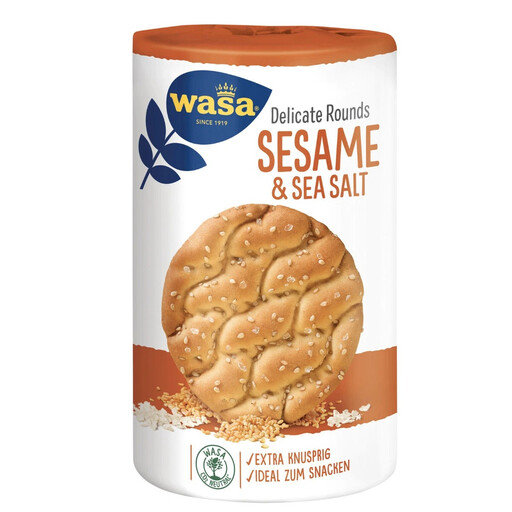 No image available
Wasa Round Sesame & Sea Salt Crispbread, 235 g
Another pack size of the round sesame variety, for savoury toppings or vegetables.
Don’t assume it has the same ingredients or nutritional values as the 190-g version just because the names are similar. Check the information on this pack, particularly for sesame and wheat.
View at Joybuy
Frequently asked questions
How can I tell if seeded crispbread is wholegrain?
Look for an explicit wholegrain label, not just visible seeds or a dark colour. The German Nutrition Society recommends using this labelling as a guide. To compare two varieties, you can also check the ingredients and fibre information on their packs.
Is seeded crispbread automatically gluten-free?
No. Seeds don’t tell you which grains have been used. If you need a gluten-free variety, choose a pack labelled accordingly and check its ingredients and product-specific information. Gluten-free also doesn’t mean sesame-free.
What should I look out for if someone has a sesame allergy?
Check every crispbread variety for sesame in the ingredients and allergen information. The Federal Ministry of Agriculture, Food and Regional Identity lists sesame as an allergen that must be declared. Keep products with different suitability clearly separate when serving.
When should I add toppings to crispbread for an appetiser platter?
Add toppings as close to serving time as possible if you want the slices to stay crunchy. Store the plain crispbread somewhere dry, and follow the best-before date and storage instructions on the pack.


