For fans of savoury toppings
If you enjoy cheese, hummus or cream cheese with your coffee and like a noticeable crunch, sesame and mixed-seed varieties are worth considering. When choosing, compare fat and energy per 100 g too.


For savoury toppings, choose crispbread with clearly noticeable seeds if you want a hearty crunch; with sweet spreads, a milder variety may be a better match. If you eat crispbread regularly, also compare the ingredients, fibre and salt per 100 g: visible seeds alone don’t tell you how much wholegrain it contains.
If you enjoy cheese, hummus or cream cheese with your coffee and like a noticeable crunch, sesame and mixed-seed varieties are worth considering. When choosing, compare fat and energy per 100 g too.
If you want a sweet spread to take centre stage, look for descriptions of the crunch and seed flavour. Wasa describes its Oats & Sesame crispbread as delicately baked; its ingredients still include gluten-containing cereals and sesame.
If you reach for crispbread often, you can compare wholegrain ingredients, fibre and salt using the nutrition information per 100 g. If you need to avoid certain ingredients, always check the labelling on the specific pack.
First, think about what you’ll be serving with your coffee and the kind of crunch you prefer. Then you can compare ingredients and nutritional values on the same basis.
| What matters to you | What to check before buying | Who it matters most to |
|---|---|---|
| Flavour and seed crunch | Types of seeds and quantities listed in the ingredients; description of the crunch. | With cheese or hummus, I want to really taste and feel the seeds. This is the main priority for around 36% of consumers when buying. |
| Wholegrain and fibre | Wholegrain ingredients and, where stated, their proportion; fibre per 100 g. | If crispbread is a regular part of my diet, I want to compare what’s in it rather than relying on the wording on the front of the pack. Around 29% of consumers put this comparison first. |
| Ingredients and allergens | Types of cereal, sesame, highlighted allergens and any precautionary ‘may contain’ statements on the current pack. | If I need to avoid certain ingredients, the labelling on the specific variety determines what I choose. This check is the top priority for around 21% of consumers. |
| Salt and energy | Salt, energy and fat per 100 g; for your own portion, also consider how many slices you eat and what you put on them. | If I eat crispbread regularly, I want to keep an eye on the salt and energy in the portion I actually eat, as well as its flavour. Around 14% of consumers focus on this. |
Wasa lists 49% wholemeal wheat flour and 39% wheat flour for its Sesame & Wholegrain variety. In 2023, Lebensmittelklarheit criticised the packaging, saying it could lead consumers to expect a higher wholegrain content.
If wholegrain is your main priority, check the ingredients and compare the stated wholegrain content and fibre per 100 g.
The presence of seeds alone doesn’t tell you the nutritional values. EDEKA Bio Three Seeds contains 459 kcal and 20.3 g of fat per 100 g.
Compare energy, fat and salt per 100 g, and consider how many slices you eat and what you put on them.
Seeded varieties can differ in the types of cereal and whether they contain sesame. For example, according to the manufacturer, Wasa Oats & Sesame contains rye, wheat, oats and sesame.
If you need to avoid ingredients for medical reasons, check the current pack and follow the individual advice you’ve been given by a qualified professional.
ALDI SÜD notes that different suppliers may be used for GOLDÄHREN Wholegrain Crispbread, so the nutritional information may vary.
Before buying, check the ingredients, allergens and nutritional values on the pack you’re actually taking home.
The Sesame & Wholegrain and Oats & Sesame ranges offer different ways to combine seeds and cereals to enjoy with coffee.
Its Three Seeds crispbread is a useful example of a blend of sunflower seeds, sesame and linseeds.
ALDI SÜD’s Wholegrain Crispbread can be used as a comparison with varieties that specifically list seeds.
Multigrain Crispbread offers a point of comparison for a blend of cereals and seeds, including buckwheat, linseeds and sesame.
This selection includes crispbread with oats, sesame, linseeds or chia seeds, to suit different toppings and crunch preferences. Compare the ingredients and nutritional values on the specific pack.
 No image available
This oat and sesame variety is worth considering if you prefer a more delicate crunch with your coffee. Check the ingredient quantities and allergen information on the current pack.
 No image available
A sesame variety for anyone looking for seeded crispbread to serve with savoury toppings and coffee. Check the wholegrain ingredients and nutritional values on the pack.
 No image available
Sesame and linseeds make this variety an interesting option if you’re comparing different seed combinations. If fibre is a priority for you, check the amount per 100 g on the pack.
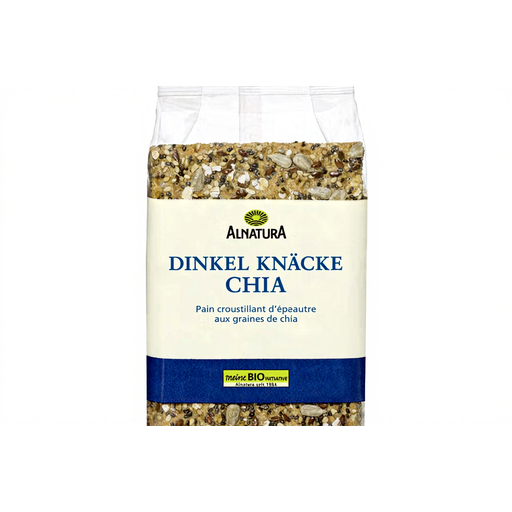 No image available
If you’d like to compare spelt with chia seeds rather than a sesame-only variety, this is another option. If you need to avoid certain ingredients, pay particular attention to the allergen information on the current pack.
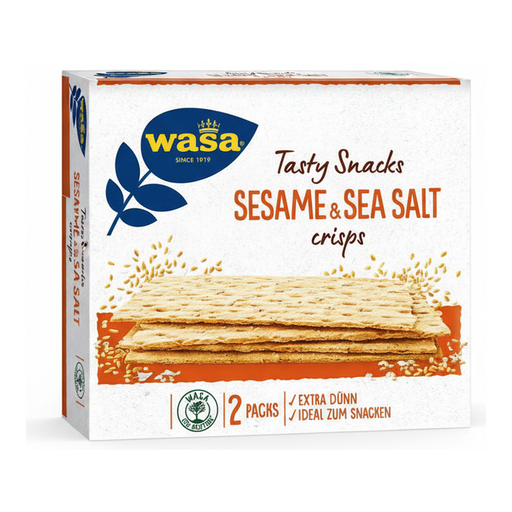 No image available
This round sesame variety with sea salt is worth considering for savoury toppings. If you plan to eat it regularly, compare its salt content per 100 g with other varieties.
No. Seeds and wholegrain refer to different ingredients. For example, Wasa lists 49% wholemeal wheat flour and 39% wheat flour for Sesame & Wholegrain, so check the ingredients rather than relying on the product name alone. Lebensmittelklarheit has criticised the wholegrain presentation of this variety.
No, the varieties mentioned here aren’t automatically suitable. According to the manufacturer, Wasa Oats & Sesame contains rye, wheat and oats; EDEKA Bio Three Seeds lists wheat and other cereal ingredients, among others. If you need to follow a gluten-free diet for medical reasons, the specific pack must be labelled accordingly and meet your individual requirements.
Follow the storage instructions on the pack and seal it carefully. EDEKA24 specifically advises storing EDEKA Bio Three Seeds in a dry place, away from heat.
First compare the salt per 100 g, then take into account the amount you eat and what you put on it. Wasa Sesame & Wholegrain contains 1.2 g of salt per 100 g, while EDEKA Bio Three Seeds contains 1.4 g per 100 g; these product values don’t replace considering your diet as a whole.