Hosts who love seeds
You’d like to serve crispbread with sesame or a selection of seeds on curry night. The ingredients lists for Wasa and Dr. Karg’s show why it’s worth checking the individual seeds rather than relying on the variety name alone.


If you want sesame to take centre stage on curry night, choose crispbread that clearly states its sesame content. If you’re looking for a variety of seeds or a particular wholegrain base, check the full ingredients list instead. Before serving, check the labelling for gluten, sesame and any other relevant allergens: gluten-free sesame crispbread still contains sesame.
You’d like to serve crispbread with sesame or a selection of seeds on curry night. The ingredients lists for Wasa and Dr. Karg’s show why it’s worth checking the individual seeds rather than relying on the variety name alone.
You want to know which grain forms the base and what fibre content applies to the specific variety. Compare the ingredients and nutritional information per 100 g rather than relying solely on the front-of-pack wording.
If guests need to avoid gluten or certain allergens, check each variety individually. Gluten-free options can still contain sesame, and warnings about possible traces of milk may also be relevant to your choice.
First, establish which ingredients are suitable for your guests. Then compare the seeds you want and, if it matters to you, the grain base and nutritional values using the same measure.
| Criteria | What to check | Who should pay particular attention |
|---|---|---|
| Seed profile | Check whether sesame or the seeds you’re looking for are listed as ingredients, and whether quantities are given. | I want to choose sesame or a mix of different seeds specifically for my crispbread platter, rather than rely on the variety name. Around 46% of consumers consider this seed profile their top criterion. |
| Wholegrains and nutritional values | Compare the grain ingredients, as well as fibre, fat and energy per 100 g; then take the serving size into account. | As well as the seeds, I want to know what wholegrain base the crispbread has and what its nutritional values are. For around 36% of consumers, this comparison comes first. |
| Gluten and allergens | Read the ingredients and allergen information on the specific pack, including any relevant trace warnings. | Before offering a variety to guests, I need to find out whether it contains gluten, sesame or any other allergens relevant to them. This check takes priority for around 18% of consumers. |
The ingredients vary: Wasa lists 11% sesame in its Sesame & Wholegrain variety, while the Dr. Karg’s Organic Spelt & Seeds crispbread listed by REWE combines sunflower seeds, sesame and linseed.
Look for the seeds you actually want to serve in the ingredients list, and check any quantities given.
Wasa lists 9.2% sesame and possible traces of milk in its gluten-free Sesame & Sea Salt crispbread. So “gluten-free” doesn’t answer every question about allergens.
If any of your guests have dietary requirements, check each relevant allergen against the current pack.
Values given per slice are based on the weight of that particular slice. This means they aren’t a consistent basis for comparison when the crispbreads are different sizes.
Compare the nutritional information per 100 g first, then factor in the portion you’ll actually serve.
Wasa offers crispbreads with different sesame and grain ingredients, as well as a gluten-free sesame variety.
The Organic Spelt & Seeds crispbread listed by REWE combines a spelt base with several seeds.
ALDI SÜD’s crispbread range includes varieties with sesame and three seeds, among others.
On its international product page, Ryvita describes its Multigrain Crispbread as containing rye, buckwheat, brown linseed and sesame.
This selection includes crispbreads with sesame, as well as one variety whose product information mentions linseed. Check the specific ingredients and your guests’ requirements to decide which one suits your planned platter.
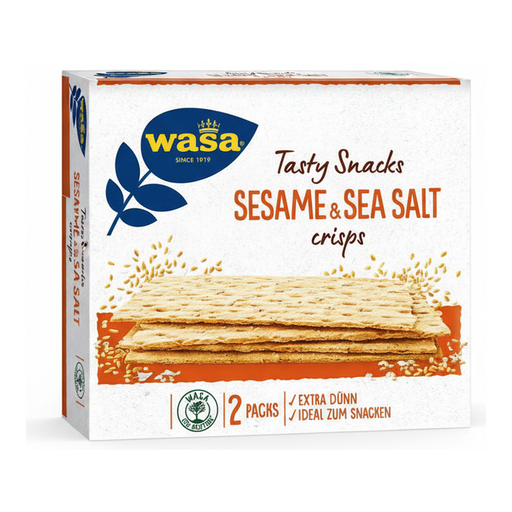 No image available
An option if you’d like to serve sesame crispbread on your curry-night platter. If your guests have allergies or dietary restrictions, check the current ingredients and allergen information.
 No image available
When choosing between sesame crispbreads, you can compare this variety’s grain base and nutritional information with those on other packs. If your guests have dietary requirements, check the current allergen information.
 No image available
If you’re interested in the combination of oats and sesame, compare the ingredients in this variety with those in other crispbreads. For a specific sesame content, or if you have an allergy, the current information on the pack is what matters.
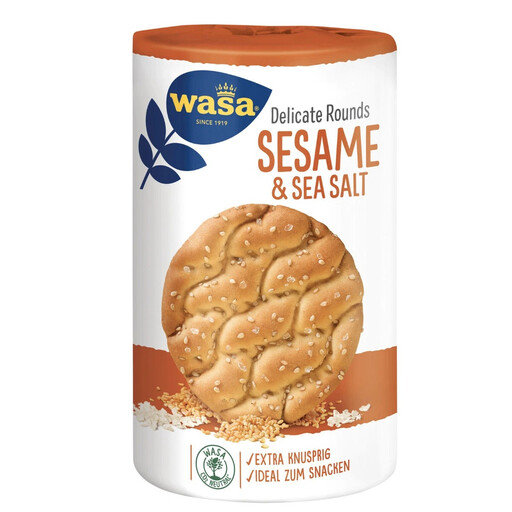 No image available
This pack size could be a good choice for a platter featuring sesame crispbread. Compare it as a separate variety with the 190 g pack, and check its current labelling if you have dietary requirements.
 No image available
If you’re looking for crispbread with linseed for your platter, check this variety against its current ingredients list. The product name alone isn’t enough if you’re specifically choosing for sesame: check the sesame information on the pack, especially if you have a sesame allergy.
No. The seeds don’t tell you whether the grain base is gluten-free. According to the manufacturer, Wasa Oats & Sesame contains rye and wheat ingredients, among others. If you need a gluten-free option, check the labelling on the specific pack.
No. A gluten-free label doesn’t mean the product is free from sesame. Wasa lists 9.2% sesame and possible traces of milk in its gluten-free Sesame & Sea Salt crispbread. Always use the current information on the specific pack to guide your choice.
For packaged crispbread, check the ingredients list, highlighted allergens and any relevant trace warnings. The EU Food Information Regulation governs the labelling of allergenic ingredients and processing aids listed in Annex II when they are present in the finished product. The Verbraucherzentrale explains how allergens are highlighted in ingredients lists.
Follow the storage instructions on the pack. For Dr. Karg’s Organic Spelt & Seeds crispbread, REWE recommends storing it in a cool, dry place and protecting it from sunlight. Seal an opened pack well if you plan to serve the crispbread later.