For small topped bites, look for crispbreads described as extra thin. For dips or generous toppings, the shape and crunch that work best for serving matter most. Then compare the seeds, grain base and nutritional information per 100 g. If someone needs to avoid particular ingredients, the information on the specific pack matters more than a phrase such as “with seeds”.
Which options are right for you?
For bite-sized snacks and dips
If you’re topping crispbread in small portions or serving it with dips, compare thin varieties with the shape you need for your toppings. Wasa describes its Chia and Poppy Seed Selection varieties as extra thin; you can’t assume that other varieties are just as thin.
For comparing seeds and wholegrains
If a particular seed or grain base matters to you, check the ingredients list rather than relying on the picture on the pack. Sesame, chia, poppy seeds and linseeds feature in different recipes; stated percentages and nutritional information make it easier to compare specific packs.
For guests with dietary requirements
If you’re serving someone with an allergy or specific dietary requirements, check the ingredients and precautionary allergen information on the relevant pack. A gluten-free sesame variety may still contain sesame and carry a warning about possible traces of milk.
What should you look for when buying?
First, decide whether the crispbread is for bite-sized snacks, to serve with a dip or for more generous toppings. Then compare recipes and pack information to suit the food you’re serving and your guests.
| What to consider |
What to check |
Who it matters most to |
| Shape and crunch |
Check that the product’s shape and descriptions such as “extra thin” or “more delicate bite” suit the way you plan to serve it. |
For small topped bites, I want the crispbread to suit the topping and portion size. Around 40% of consumers prioritise shape and crunch when choosing. |
| Seeds and nutritional information |
Check the type of seed, the stated seed content and the grain base; compare nutritional information using the same measure, such as per 100 g. |
If I’m specifically looking for sesame or a wholegrain recipe, a picture of seeds on the pack isn’t enough. Ingredients and nutritional information come first for around 30% of consumers. |
| Ingredients and allergens |
If you have dietary requirements, check the ingredients, allergen labelling and any precautionary allergen information on the specific pack. |
If I’m serving someone who needs to avoid gluten, milk or sesame, I need clear information about that specific variety. This check is a priority for around 30% of consumers. |
Common selection mistakes
-
Assuming “with seeds” means “gluten-free”
The sesame, chia and poppy seed varieties described by Wasa may contain wheat or rye. Even an explicitly gluten-free sesame variety still contains sesame and may, according to the manufacturer, contain traces of milk.
If you have relevant dietary requirements, check the ingredients, allergen labelling and precautionary allergen information on each specific pack.
-
Judging the amount of seeds by the picture on the pack
Visible seeds don’t tell you how much of the recipe they make up. The German Food Federation explains that ingredients are listed in descending order by weight.
Compare the order of the ingredients and, where stated, the percentage of the seed you want to serve.
-
Focusing only on crunch
The same product shape may be more or less practical for bite-sized snacks, dips and generous toppings. For example, Wasa describes its Selection varieties as extra thin and its Oat & Sesame variety as having a more delicate bite. These descriptions apply to those varieties, not to every seeded crispbread.
First decide how you’ll serve the crispbread, then choose a suitable shape and crunch.
-
Treating the best-before date as a use-by date
According to Lebensmittelklarheit, the best-before date relates to the quality of food that has been kept unopened and stored correctly. It doesn’t mean that crispbread must be thrown away as soon as that date has passed.
Follow the storage instructions on the pack. If the date has passed, check the product for anything unusual before serving; if in doubt, don’t serve it.
Brands to consider for seeded crispbread
Wasa
Wasa describes several different recipes with seeds, including Sesame & Wholegrain, made with wheat, and Selection varieties with chia or poppy seeds, made with wholegrain rye.
- Ingredients are listed for the varieties mentioned, making it possible to compare their seeds and grain bases.
- The properties of one variety don’t automatically apply to others. Even a sesame variety described as gluten- and lactose-free contains sesame and may, according to the manufacturer, contain traces of milk.
Alnatura
EDEKA24’s product information lists wholegrain rye flour and sesame as ingredients in Alnatura Organic Sesame Crispbread.
- This product is listed as containing 84% wholegrain rye flour and 10% sesame.
- The recipe contains rye. If you need to avoid gluten-containing grains, check the pack information before buying.
Seeded crispbread at Joybuy
These products offer seeded crispbread for toppings, bite-sized snacks or dips. To decide whether a variety is right for delicate canapés or guests with dietary requirements, check its specific shape and pack information.
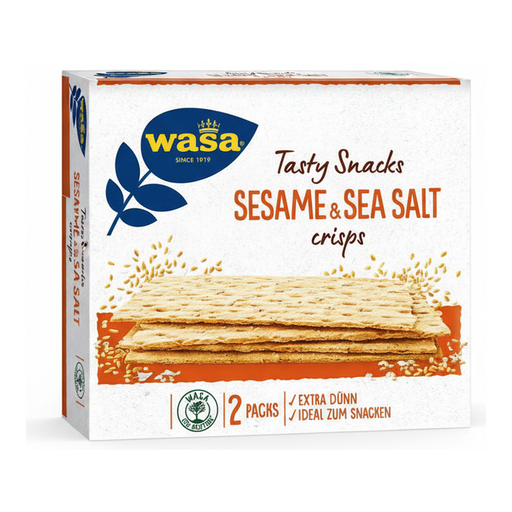 Image unavailable
Wasa Round Crispbread Sesame & Sea Salt, 190 g
A round sesame variety for topped bites; the product description also suggests serving it as canapés.
If your guests need to avoid certain grains or milk, check the ingredients and precautionary allergen information on the pack.
View at Joybuy
 Image unavailable
Alnatura Organic Spelt Crispbread with Seeds, 200 g
A seeded variety for dips or spreads.
If you’re serving guests with allergies, check the ingredients and allergen information directly on the pack.
View at Joybuy
 Image unavailable
Alnatura Organic Sesame Crispbread, 250 g
For toppings or serving with dips, if you’re looking for sesame on a wholegrain rye base.
EDEKA24’s product information lists Alnatura Organic Sesame Crispbread as containing 84% wholegrain rye flour and 10% sesame. If you have dietary requirements, check the information on the pack.
View at Joybuy
 Image unavailable
Wasa Delicate Crisp Oats & Sesame, 230 g
An oat and sesame variety to serve as a base for toppings.
If you need to avoid gluten-containing grains or traces of milk, check the information on the specific pack.
View at Joybuy
 Image unavailable
Wasa Sesame & Flaxseed Crispbread, 210 g
For topped bites, if you’re looking for a linseed variety on a rye base.
If you want sesame as an ingredient or need to avoid it, check the ingredients list and precautionary allergen information on the pack. The product name alone doesn’t tell you what you need to know.
View at Joybuy
Frequently asked questions
How can I tell how much sesame is in crispbread?
Check the ingredients list and any stated percentage, rather than relying on the name or picture on the pack. Wasa lists 11% sesame in its Sesame & Wholegrain variety; EDEKA24 lists 10% for Alnatura Organic Sesame Crispbread. These figures apply to the specific recipes.
Is seeded crispbread gluten-free?
No. Seeds in crispbread don’t automatically mean it’s gluten-free. The varieties described may contain wheat or rye, for example. If you need to avoid gluten, check the explicit labelling and ingredients on the specific pack.
What should I check before serving crispbread to someone with allergies?
Check the ingredients, allergen labelling and any precautionary allergen information on each pack. The Federal Ministry of Agriculture, Food and Home Affairs explains that certain allergenic ingredients must be listed on packaged foods. For the varieties described here, pay particular attention to grains, sesame and possible traces of milk.
What does the best-before date mean for crispbread?
It doesn’t mean the product must automatically be thrown away. Lebensmittelklarheit explains that the date relates to the key quality characteristics of food that has been kept unopened and stored correctly. Follow the storage instructions and check the product for anything unusual before serving it after the date has passed.


