When choosing seeded crispbread for lunch, don’t judge it by the visible seeds alone. If wholegrain matters to you, check the product name and ingredients list. Compare seeds, fibre, fat and salt using the same basis, and if you have allergies, read the labelling on the specific pack.
Which crispbread is right for you?
Fans of seeds and a hearty crunch
If you’re looking for a variety of seeds and a hearty bite for lunch, compare the fat and energy per 100 g too. The Dr. Karg's and Mestemacher products listed by REWE show that seeded recipes can differ in these figures.
People who care about wholegrains and fibre
The product name and ingredients list are a better guide to a wholegrain base than a dark colour or visible seeds. You can also compare the fibre figures per 100 g.
People who need to watch out for allergens
If you need to avoid sesame or gluten-containing cereals, check the current labelling on each pack. Read the ingredients and any precautionary allergen information rather than judging suitability from the front of the pack.
What should you look for?
First, check whether the grain base suits your preference for wholegrains. Then compare the seeds and nutritional values. If you have allergies, the ingredients and allergen labelling take priority.
| Criteria | What to check when buying | Who should pay particular attention |
|---|
| Wholegrains and fibre |
Does the product name say “wholegrain”, and which cereal flours are listed in the ingredients? Compare fibre per 100 g. |
I want a wholegrain base, not just visible seeds, and I want to compare the fibre figures. This is a priority for around 40% of consumers. |
| Seeds and texture |
Which seeds are listed, and is the amount stated? Compare fat and energy per 100 g. |
I particularly value a variety of seeds and a hearty bite at lunchtime. Around 30% of consumers would mainly choose on this basis. |
| Allergens |
Read the ingredients highlighted on the pack and check for any precautionary allergen information. |
If I need to avoid certain ingredients, the pack labelling determines whether I consider the crispbread at all. This would be the main criterion for around 20% of consumers. |
| Salt and the meal |
Compare salt and protein per 100 g, and take account of how much you eat and what you put on top. |
I plan to have crispbread as part of lunch and want to consider the salt content alongside the topping. This comparison would take priority for around 10% of consumers. |
Common comparison pitfalls
-
Assuming visible seeds mean it’s wholegrain
Seeds on the surface don’t tell you which flour makes up the base. EDEKA distinguishes seeded bread from wholemeal bread on precisely this point.
Look for “wholegrain” in the product name and check which flours or cracked grains appear in the ingredients list.
-
Assuming more seeds make it a lighter choice
The Dr. Karg's and Mestemacher examples listed by REWE contain 22 and 25 g of fat, and 464 and 478 kcal per 100 g, respectively. You can’t work out the energy content from the amount of seeds alone.
Compare the nutritional values per 100 g, then consider the portion you actually eat.
-
Checking for allergens from the front of the pack alone
Seeded crispbread may contain gluten-containing cereals or sesame. Ingredients and precautionary allergen information vary by product.
Check the ingredients list and all relevant allergen information on each specific pack.
-
Assuming online nutrition figures always match the recipe
ALDI SÜD notes that different suppliers may provide products with different nutritional values.
Use product pages to narrow down your options, then check the information on the pack before you buy.
Brands and product ranges to consider
Wasa
Wasa Sesame & Wholegrain is worth comparing if you’re specifically looking for sesame crispbread with a stated wholemeal wheat content.
- According to REWE, this product contains 49% wholemeal wheat flour and 11% sesame seeds.
- It contains wheat and sesame; REWE lists 1.2 g of salt per 100 g.
Dr. Karg's
Classic 3-Seed is an option if having several listed seeds matters to you.
- REWE lists sunflower seeds, sesame and linseed among the ingredients, as well as 11 g of fibre per 100 g.
- REWE also lists 22 g of fat and 1.8 g of salt per 100 g. Note the warning that it may contain traces of milk products.
Mestemacher
The Organic Oat and Seed Crispbread offers an oat-based alternative with a stated oilseed content.
- REWE lists 58% oats and 30% oilseeds for this product.
- The product information lists 25 g of fat per 100 g. It also states that the product may contain traces of milk and soya.
GUT BIO / ALDI SÜD
The organic three-seed crispbread is another option to compare with other seeded products.
- ALDI SÜD lists 12 g of fibre per 100 g.
- ALDI SÜD notes that nutritional values may vary between suppliers, so check the information on the specific pack.
GOLDÄHREN / ALDI SÜD
The wholegrain crispbread is a useful comparison if the grain base matters more to you than a seed mix.
- ALDI SÜD lists 15.3 g of fibre per 100 g.
- The product isn’t described as seeded crispbread. The retailer notes that nutritional values may vary by supplier.
Ryvita
Dark Rye Crispbread is a straightforward rye product to compare with crispbread that doesn’t have an added seed mix.
- Ryvita’s UK product page lists wholegrain rye flour, rye flour and salt as ingredients.
- This UK product information describes neither a seeded variety nor a German recipe.
Seeded crispbread at Joybuy
This selection includes crispbread with sesame, linseed and other seeds. Check each variety individually to see whether its grain base and allergen information suit you.
 Image unavailable
Wasa Delicate Crisp Oats & Sesame Crispbread, 230 g
Worth comparing if you’re looking for crispbread with oats and sesame to serve with toppings.
Pack size: 230 g. Check the ingredients, nutritional values and allergen information on the specific pack before choosing.
View at Joybuy
 Image unavailable
Wasa Sesame & Linseed Crispbread, 210 g
This variety is worth considering if you’re looking for crispbread with linseed.
Pack size: 210 g. Check the pack to see whether sesame is an ingredient or only mentioned in precautionary allergen information. You can also check the fibre figure there.
View at Joybuy
 Image unavailable
Alnatura Organic Sesame Crispbread, 250 g
An option to compare if you’re considering sesame crispbread as the base for your lunch.
Pack size: 250 g. If you have an intolerance to gluten-containing cereals or sesame, check the labelling on the specific pack.
View at Joybuy
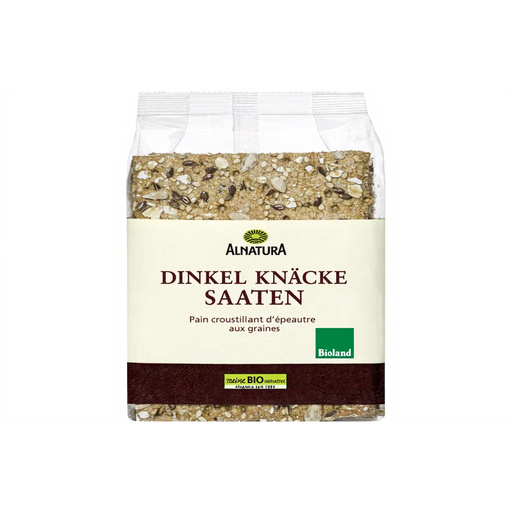 Image unavailable
Alnatura Organic Spelt Crispbread with Seeds, 200 g
This spelt variety is worth considering if you want to compare different types of seeds.
Pack size: 200 g. Check the current allergen information particularly carefully before deciding whether it’s suitable for you.
View at Joybuy
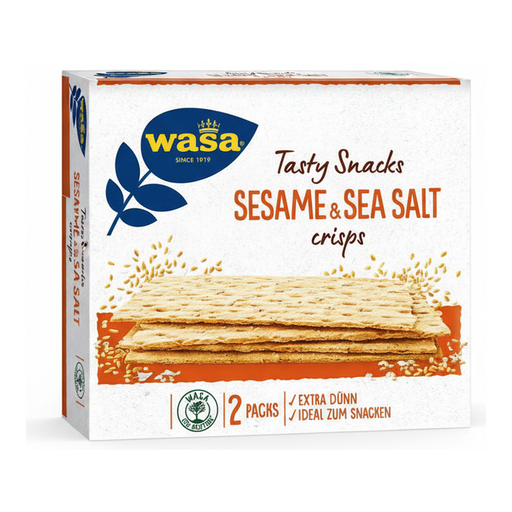 Image unavailable
Wasa Round Crispbread Sesame & Sea Salt, 190 g
A round sesame variety to consider if you like this shape as a base for toppings.
Pack size: 190 g. If you’re comparing it with wholegrain varieties, check the cereal ingredients and fibre figure on the pack.
View at Joybuy
Frequently asked questions
Do visible seeds prove that crispbread is made from wholegrains?
No. Seeds alone don’t tell you which flour has been used. To check for a wholegrain base, read the product name and cereal ingredients. EDEKA specifically distinguishes visible seeds from wholegrain composition.
What should I look out for if I have a sesame or cereal allergy?
Read the ingredients and allergen information on the current pack. Gluten-containing cereals and sesame are allergens that must be declared. A precautionary “may contain” warning is not the same as an ingredient being listed.
Is seeded crispbread always lower in energy than other bread?
No. You can’t draw that conclusion from the seeds alone. Even the seeded crispbreads from Wasa, Dr. Karg's and Mestemacher listed by REWE have different energy values. Compare figures per 100 g and take account of how much you eat.
Is wholegrain crispbread enough on its own for lunch?
Crispbread can provide the grain base for lunch, but it doesn’t make up the whole meal. Choose a topping to suit your preferences and the ingredients you can eat, rather than basing your choice solely on the crispbread’s fibre content.


