If you’re looking for a hearty crunch
If you want seeds to give your late-night snack plenty of texture, compare the types of seeds listed and their stated quantities. A product image or the term “multigrain” tells you less.


Choose seeded crispbread for a late-night snack based on whether you value a hearty crunch or a clearly stated wholegrain base more: visible seeds alone don’t prove that a product is high in wholegrains. Also check the ingredients and allergens, as well as the salt and energy per 100 g, on the specific pack. The number of slices and your toppings matter too.
If you want seeds to give your late-night snack plenty of texture, compare the types of seeds listed and their stated quantities. A product image or the term “multigrain” tells you less.
If wholegrains and the fibre content matter to you, check the product name, ingredients list and nutritional information. Visible seeds and a dark colour aren’t a substitute for these details.
If gluten, sesame or other allergens are important to your choice, check the labelling on the specific product, including any may-contain warnings. A product labelled gluten-free may still contain sesame.
First decide which feature matters most for your snack. Then compare the ingredients and nutritional information of the products that fit the bill.
| Criteria | What to check | Who should pay particular attention? |
|---|---|---|
| Seeds and crunch | Compare the types of seeds and their stated quantities in the ingredients list. | For my snack, I want to choose crispbread that actually lists the seeds I’m looking for. Around 33% of consumers put seeds and a hearty crunch first. |
| Wholegrains and fibre | Check for wholegrains in the product name and ingredients list, and compare the fibre per 100 g. | If the flour base matters more to me than visible seeds, I want to be able to identify wholegrains in the ingredients. Around 27% of consumers prioritise a wholegrain base. |
| Gluten and allergens | Read the ingredients, allergen information and may-contain warnings on the specific pack. | I need to know whether the product meets my requirements for gluten and allergens. Around 20% of consumers make this their priority. |
| Salt and energy | Compare the nutritional information per 100 g, and take your portion size and toppings into account. | For a late-night snack, I want to gauge how my chosen amount, including toppings, fits my preferences. Around 20% of consumers check salt and energy first. |
Crispbread can contain visible seeds, but that doesn’t tell you anything about the flour used.
If you’re specifically looking for wholegrains, check the product name and ingredients list rather than relying on the colour or appearance of the seeds.
Sesame is an ingredient in several of the seeded products considered here. A gluten-free label doesn’t tell you whether a product is also sesame-free.
Read the ingredients, highlighted allergens and may-contain warnings on the specific pack. If you need a gluten-free product, check that the exact variant is labelled as such.
The size of a slice doesn’t tell you how much energy, fat or salt the product contains per 100 g. The amount you eat and your toppings also affect your snack.
Compare the nutritional information on the same basis, then take your planned portion into account.
A product shown online may not be available in every store. EDEKA notes that availability of GUT&GÜNSTIG Wholegrain Crispbread may vary between stores.
Check what’s available at your local store and read the information on the pack when you buy it.
The variants considered here offer different options: sesame with wholemeal wheat, and a sesame product specifically labelled gluten-free.
Classic 3-Saat combines wholemeal wheat flour with sunflower seeds, sesame and linseed.
Saaten Crisp is a variant labelled gluten-free, with stated quantities of sunflower seeds and sesame.
The wholegrain crispbread considered here is a useful comparison if a simple wholemeal rye recipe matters more to you than added seeds.
The Crispbread varieties considered here, Pumpkin Seed & Oat and Multigrain, are rye-based and contain different seeds.
These products are worth considering for a late-night snack if you’re looking for crispbread with stated seeds or a particular type of seed. If you’re specifically choosing by wholegrain content, nutritional values or allergens, also check the information on the relevant pack.
 No image available
An option if you’re looking for spelt crispbread with seeds for a late-night snack. The pack contains 200 g. Check the label for the individual seeds, allergens and nutritional information to make your choice.
 No image available
This 250 g pack is an option for a snack with sesame crispbread. If the wholegrain base or salt content matters to you, compare the ingredients list and nutritional information on the pack.
 No image available
If you’re looking for crispbread with oats and sesame, this variant is one to compare. The pack contains 230 g. Check the cereal and allergen information on the specific pack if needed.
 No image available
If you’re looking for crispbread with linseed, this 210 g variant is worth considering. As sesame is concerned, it’s particularly important to check the ingredients and allergen information on the specific pack: the product name mentions sesame, while the available ingredient information lists it as a possible may-contain warning.
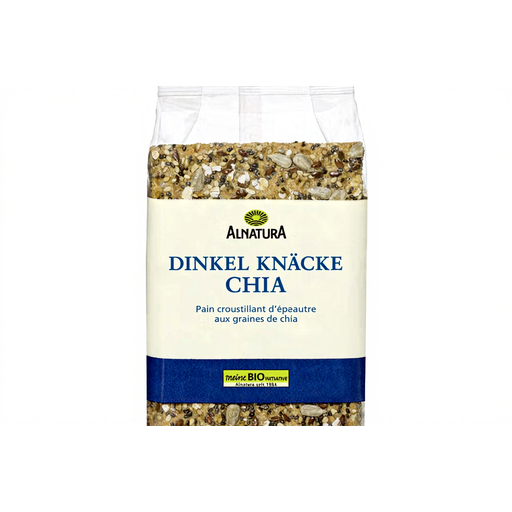 No image available
A 200 g option for anyone looking for spelt crispbread with chia seeds for a snack. If egg, soya, milk or nuts are relevant to you, check the allergen information on the specific pack particularly carefully.
No. Visible seeds alone don’t tell you for certain what flour has been used. If you’re looking for wholegrain crispbread, check for “wholegrain” in the product name and read the ingredients list; a dark colour isn’t enough to go on.
Check the ingredients, highlighted allergens and any may-contain warnings on each specific pack. A gluten-free label doesn’t mean the crispbread is also free from sesame or other allergens that matter to you.
Store it according to the instructions on the pack and seal the opened pack well. The REWE product information considered here recommends storing the crispbread in a dry place; for other variants, follow the instructions on their own packaging.