What should you look for when buying?
First, check the nursery’s allergen requirements. Then compare the wholegrain and seed content you’re looking for, and make sure the texture is right for the planned lunch.
| Criterion |
What to check when buying |
Who it matters most to |
| Ingredients and allergens |
Check the ingredients list, declared allergens and any precautionary allergen statements on the specific pack against the nursery’s requirements. |
If I’m buying for children with different allergen requirements, I need to know exactly which variety will be served. This is a key purchasing consideration for around 42 % of consumers. |
| Wholegrain and seeds |
Look for an explicit wholegrain label; compare the seed ingredients and the fibre, fat and salt content per 100 g. |
I want to choose wholegrain deliberately and know which seeds are actually included, rather than relying on how seedy the crispbread looks. This is a priority for around 33 % of consumers. |
| Texture for nursery life |
Consider the portion size, crunch, crumbliness and how easy it is to handle with the planned topping in your group. |
What matters most for my group is whether the children can easily eat the crispbread with its topping. Around 25 % of consumers place the greatest importance on practical appeal. |
Brands and product ranges to consider
The details below relate to specific documented varieties, not every product from each brand. Always check the label on the pack you’ll be using at nursery.
Wasa
The Sesame & Wholegrain variety combines wholemeal wheat flour with sesame.
- Wasa lists 49 % wholemeal wheat flour and 11 % sesame seeds for Sesame & Wholegrain.
- The variety contains wheat and sesame. Its ingredients and allergen information must meet the group’s requirements.
Dr. Karg's
Bio Spelt & Seeds Crispbread is a variety made with wholemeal spelt flour and several types of seeds.
- REWE’s ingredient information lists, per 100 g of product, 63 g wholemeal spelt flour, 18 g sunflower seeds, 7 g sesame and 3 g linseed.
- Spelt and sesame are among the ingredients. The pack’s other allergen information and any precautionary statements are also important for nursery.
Mestemacher
Bio Unser Pures Oat & Seed Crispbread is made with oats and oilseeds.
- REWE’s product information lists 58 % oats and 30 % oilseeds.
- The variety also contains sesame; check for possible traces of milk and soya against the nursery’s requirements.
Ryvita
The international Multigrain Crispbread variety combines different grains and seeds.
- Ryvita lists 18 % toasted seeds and grains, including buckwheat, linseed and sesame.
- When choosing a product in Germany, check the ingredients, allergens and label on the pack that’s actually available.
Seeded crispbread at Joybuy
These crispbreads may suit a nursery lunch with seeds, provided the individual pack meets the group’s allergen requirements and works for the way the children eat. This doesn’t mean that every variety listed is confirmed as a wholegrain option.
 No image available
Wasa Delicate Crisp Oats & Sesame Crispbread, 230 g
An option if oats and sesame work for your planned crispbread lunch. Before serving, check the ingredients and allergens on the specific pack, and make sure the group is happy with its crunchy texture.
View at Joybuy
 No image available
Alnatura Organic Sesame Crispbread, 250 g
If you’re choosing sesame crispbread, you can compare this variety with other seeded products. If you want it to meet a wholegrain preference, check the labelling, ingredients and allergens on the pack you’ll be using.
View at Joybuy
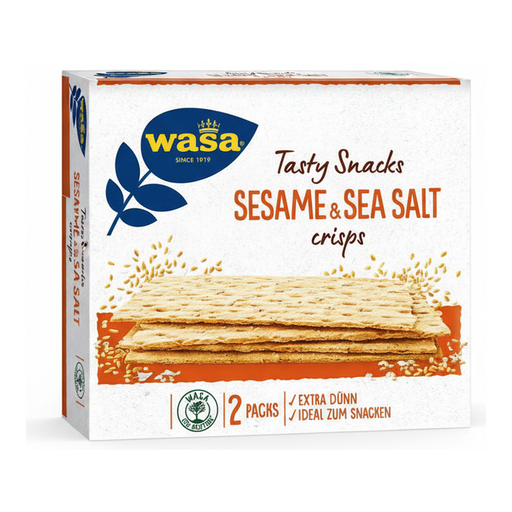 No image available
Wasa Round Sesame & Sea Salt Crispbread, 190 g
This round variety may work if sesame and a salted option suit the planned topping. Compare the salt content per 100 g and check the allergens on the specific pack against the nursery’s requirements.
View at Joybuy
 No image available
Wasa Sesame & Flaxseed Crispbread, 210 g
When choosing this variety for a seeded lunch, checking the pack is particularly important: the product name mentions sesame, but the available ingredient information categorises it differently. Check the specific pack to confirm whether it contains sesame or lists it as a possible trace before choosing it for nursery.
View at Joybuy
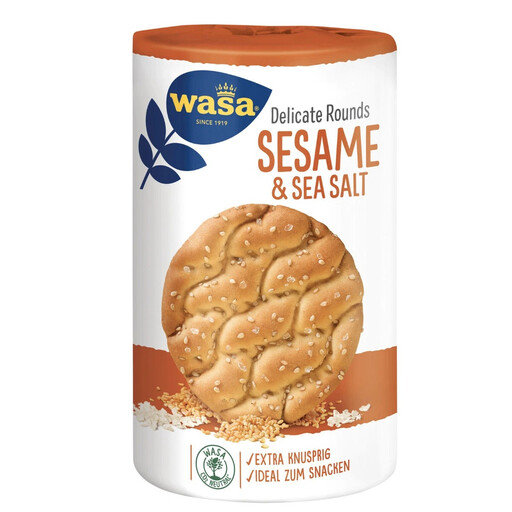 No image available
Wasa Round Sesame & Sea Salt Crispbread, 235 g
This 235 g variety is another option for a lunch with sesame crispbread and a topping. Check the ingredients and allergen information on the pack. If wholegrain is important, also look for an explicit wholegrain label.
View at Joybuy
Frequently asked questions
How can you record allergens in seeded crispbread for nursery?
Record the ingredients and declared allergens on the pack that’s actually being used, then check them against the children’s individual requirements and the nursery’s records. Remember to check precautionary allergen statements too, and repeat the check if the product changes.
Is dark or seedy crispbread automatically wholegrain?
No. Neither the colour nor visible seeds confirm that it’s wholegrain. The German Nutrition Society recommends looking for an explicit ‘wholegrain’ label; checking the ingredients list can also help you assess a particular variety.
Is seeded crispbread enough on its own for nursery lunch?
Think of seeded crispbread as a possible grain component, not a substitute for planning the whole meal. Whether you serve it, and what toppings and other foods you offer alongside it, should fit the nursery’s food provision plan and the needs of the group.
How should you store opened seeded crispbread?
Follow the storage instructions on the specific pack. For Dr. Karg's Bio Spelt & Seeds Crispbread, REWE’s product information recommends storing it in a cool, dry place away from direct sunlight.


