If you’re planning a meal for one
One or a few slices will serve as a crunchy base. The key is whether the seeds you choose and their flavour work well with your planned toppings.


For a single meal with toppings, start by choosing seeded crispbread based on the flavour you want and your main requirement: sesame for a sesame-forward option, a mix of seeds for varied textures, or a variety with suitable fibre information. Then compare the nutritional information using the same basis and, if you have dietary restrictions, check the current ingredients and allergen labelling. The words ‘seeded crispbread’ alone won’t answer these questions.
One or a few slices will serve as a crunchy base. The key is whether the seeds you choose and their flavour work well with your planned toppings.
For this, you’ll need the specific nutritional information and the amount you eat. You can’t tell the fibre content of a portion from the words ‘wholegrain’ or ‘with seeds’ alone.
Depending on the recipe, the crispbread may contain sesame and cereals containing gluten, among other ingredients. Check the labelling for the specific product, including any ‘may contain’ warnings.
First, decide what matters most for your meal for one: the flavour of the seeds, nutritional values, ingredient suitability or how practical the pack will be to use over several meals. Then check the information on the specific product.
| Criterion | What to check when buying | Who it matters most to |
|---|---|---|
| Seeds and flavour | Types of seeds and, where provided, their proportions in the ingredients list; whether the variety will work with your planned toppings. | If I’m keeping the toppings simple, I want to choose between a sesame flavour and a mix of different seeds. Around 40% of consumers put flavour and texture first when making this choice. |
| Fibre and nutritional values | Compare fibre, fat and energy using the same basis, such as per 100 g or per portion if a portion size is given. | I want to know what the slices I actually eat add to my meal, rather than relying on the product name. For around 30% of consumers, nutritional information comes first. |
| Ingredients and allergens | Read the current ingredients list, highlighted allergens and any ‘may contain’ warnings on the pack. | If I need to avoid sesame or cereals containing gluten, I have to check the specific recipe before buying. Around 20% of consumers prioritise checking ingredients. |
| Portion and storage | Check the pack size, any information per slice and storage instructions after opening. | I only top a few slices and want to save the rest for later meals for one. Convenient portioning and storage are the most important criteria for around 10% of consumers. |
The proportion of seeds alone doesn’t tell you this. For example, EDEKA Bio 3 Saaten Knäckebrot is listed as containing 20.3 g of fat per 100 g. To compare products, check the nutritional information for each one.
Compare fat and energy using the same basis, and take the amount you eat into account for a single meal.
As well as sesame, seeded crispbread may contain various cereals containing gluten. ‘May contain’ warnings also vary between products.
Read the current ingredients list and allergen labelling on the pack you’ve chosen, especially if you need to avoid certain ingredients.
Storage is particularly important if you’ll only take a few slices from the pack now and then. Product instructions may advise keeping it somewhere dry and away from heat.
Follow the instructions on the pack and seal any opened crispbread well.
These examples show different product approaches. Ingredients and nutritional values apply to the specific variety named, not to every product from a brand or retailer.
Wasa Sesam & Vollkorn is an example of wheat crispbread with a prominent sesame flavour, suitable as a base for a meal with toppings.
3 Saaten Knäckebrot is an example of a variety made with sunflower seeds, sesame and linseed.
The REWE range includes different types of crispbread to compare, including products with sesame and other seeds.
This selection includes spelt crispbread with seeds, as well as sesame crispbread in different varieties and pack sizes. For a single meal, you can start by choosing the type of seeds you want, then compare the portion and nutritional information on each pack.
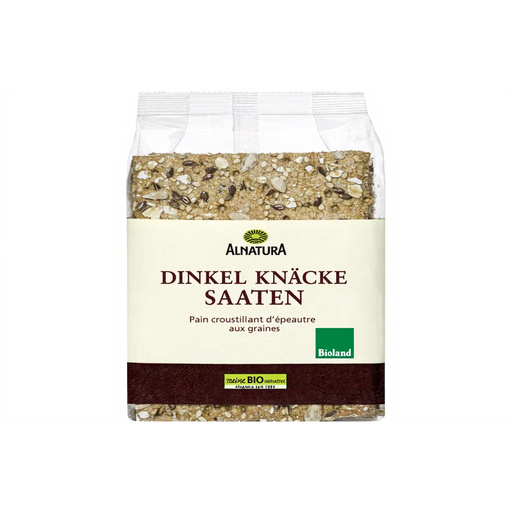 No image available
An option if you’re looking for spelt crispbread with seeds as the base for a meal with toppings.
If you’re planning by the number of slices, check the portion information on the pack. If you need to avoid certain ingredients, take particular care to read the current ingredients and allergen labelling.
 No image available
A sesame option if you’re looking for a base to add toppings to and don’t need a mix of different seeds.
Before buying, check the information per portion, along with the current ingredients and allergen labelling.
No image available
A variety with sesame and sea salt, if that combination suits your planned meal with toppings.
The pack size is 190 g. Compare the salt and portion information on the pack and check the allergen labelling.
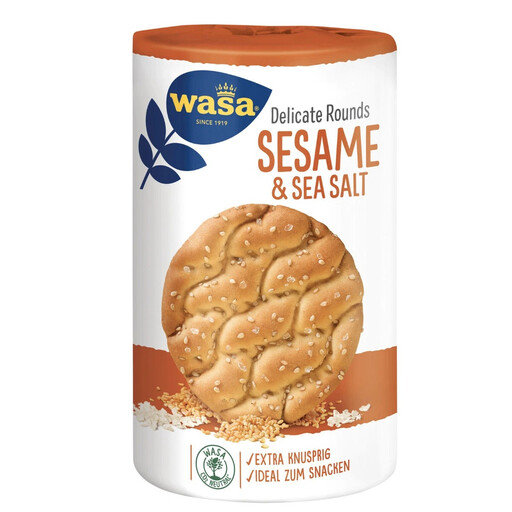 No image available
The same sesame and sea salt variety in a 235 g pack, if you’re considering a larger pack for several individual meals.
Check the portion and storage instructions on the pack. If you have dietary restrictions, the current allergen labelling is essential.
 No image available
A sesame option for individual meals with toppings if you’re not looking for a mix of different seeds.
The pack size is 250 g. For a nutritional comparison, read the information per 100 g and, if needed, check the portion and allergen labelling.
First, check that the seeds and types of cereal suit your toppings and any ingredient requirements you have. Then compare the nutritional values using the same basis and consider how many slices you actually plan to eat.
For prepacked crispbread in Germany, allergenic ingredients are listed on the pack. The Federal Ministry of Agriculture, Food and Regional Identity explains the legal requirement to label allergens. Also check any ‘may contain’ warnings for the specific product.
No. To compare fibre content, you need the specific nutritional information and the same basis for comparison. If you only eat a few slices, the amount in your portion also matters.
Store opened crispbread somewhere dry and keep it well sealed. Follow the instructions on the pack, especially if it says to keep the product away from heat or direct sunlight.
No, the best-before date isn’t an automatic throw-away date. The consumer advice centre explains that it relates to certain qualities when the product is unopened and stored correctly. After the date has passed, also check the packaging and consider how it was stored, its smell and its taste.