Students planning their food shop
If you want a pack of crispbread to last for several suppers, pack size and a recipe that works with your planned toppings are important. Check that you can store the pack somewhere dry and use it all up.


When you’re planning a student supper on a tight budget, seeded crispbread can make a handy grain-based base. But the seeds shown on the front tell you little about the wholegrain content, nutritional values or allergens. Choose a recipe to suit your main priorities, compare the figures per 100 g on the specific pack, and plan a topping if crispbread is going to be the basis of your meal.
If you want a pack of crispbread to last for several suppers, pack size and a recipe that works with your planned toppings are important. Check that you can store the pack somewhere dry and use it all up.
You want to compare wholegrain content and nutritional information rather than choosing based only on the seeds shown on the front. The consumer advice centre recommends choosing wholegrain options for grain products where possible; figures per 100 g are useful when comparing products.
If you need to avoid certain types of grain or sesame, check the label on the specific pack. According to the European Commission, prepacked foods in the EU must list their ingredients and highlight allergens.
First, decide whether your priority for supper is planning ahead, choosing a wholegrain recipe or meeting a specific ingredient requirement. Then compare products using the information on the pack.
| Priority | What to check when buying | Who it matters most to |
|---|---|---|
| Planning ahead | Pack size and storage instructions; choose an amount you’ll actually use up. | If I’m planning to eat crispbread for several suppers, I want to be able to portion the pack sensibly and store it somewhere dry. This is the main priority for around 40 % of shoppers. |
| Wholegrain and nutritional values | Compare wholegrain ingredients, fibre and salt per 100 g. | If you’re looking for a wholegrain base for toppings, you’ll want to assess the recipe using the ingredients and nutritional information. This is the main priority for around 40 % of shoppers. |
| Ingredients and allergens | Check the ingredients list, highlighted allergens and any precautionary allergen statements on the current pack. | If I need to avoid sesame or certain types of grain, I can’t rely on the product name. For around 20 % of shoppers, checking the ingredients comes first. |
Seeds and wholegrain are two different things. Wasa says its Sesame & Wholegrain variety contains 49 % wholemeal wheat flour; its Oats & Sesame variety is 70 % wholegrain.
If wholegrain content matters to you, read the ingredients list and compare the nutritional information using the same basis of 100 g.
As well as sesame, seeded crispbread may contain several types of gluten-containing grain. EDEKA says its Bio 3-Saaten-Knäckebrot contains wheat, oats, sesame and barley, among other ingredients, and may contain traces of soya and milk.
Each time you buy it, check the ingredients, highlighted allergens and any precautionary allergen statements relevant to you on the specific pack.
Crispbread is a grain-based base; the toppings and sides you choose help make it a meal.
Before you shop, think about what you’d like to serve with it, such as a bean spread, egg or tofu and vegetables.
Wasa’s German product pages describe several wholegrain and sesame varieties with different recipes.
Bio 3-Saaten-Knäckebrot combines wholegrain flours with sunflower seeds, sesame and linseed.
Bio Knäcke Dinkel & Saaten is a specific variety made with spelt and several types of seed.
ALDI SÜD sells wholegrain and sesame crispbread under the GOLDÄHREN brand, including in 250-g packs.
These products offer crispbread with sesame or other seeds mentioned in the product name, which can provide a base for toppings. For your supper, check the current recipe, nutritional information and allergens on the relevant pack.
 No image available
If you’re looking for crispbread with oats and sesame to serve with toppings, this 230-g variety is one option. Check the nutritional information and the labelling for sesame and gluten-containing grains on the pack.
 No image available
This 200-g variety could work for a supper with toppings if you’re looking for spelt crispbread with seeds. Before choosing it to meet a specific dietary requirement, check the ingredients, allergens and any precautionary allergen statements on the current pack.
 No image available
If you specifically want sesame crispbread as a base for toppings, you could consider this 250-g pack. Compare the wholegrain ingredients and nutritional values on the pack; this product isn’t suitable if you have a sesame allergy.
 No image available
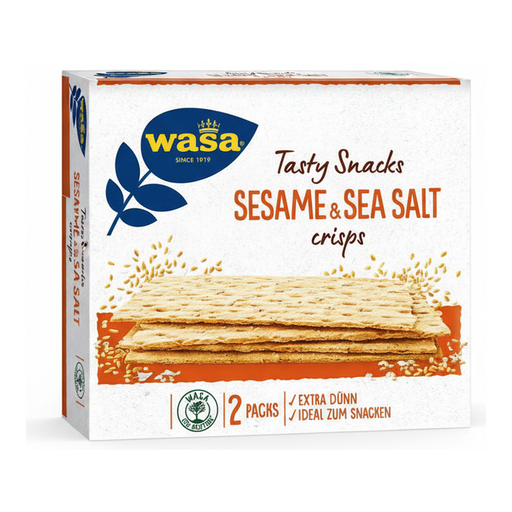
This round sesame and sea salt variety could suit you if its shape works well with your planned toppings. The pack contains 190 g; compare the salt content per 100 g in particular, and check the allergens.
 No image available
If you’re looking for crispbread with linseed to serve with toppings, you could consider this 210-g variety. Sesame is also mentioned in the product name; check the current ingredients list to see whether sesame is included or listed as a possible trace. This distinction is especially important if you have a sesame allergy.
Crispbread can provide the grain-based part of your supper; the rest depends on your toppings and sides. Try it with a bean or lentil spread, egg, tofu or cheese, and vegetables.
Yes. If allergens are relevant to your choice, read the label on the specific pack. According to the European Commission, prepacked foods in the EU must list their ingredients and highlight allergens; seeded crispbread may contain sesame and gluten-containing grains, for example.
No. The ‘gluten-free’ label addresses one specific ingredient requirement and doesn’t tell you anything about fibre, salt or sesame. Wasa sells a variety labelled Sesame & Sea Salt and described as gluten-free; if you need to avoid sesame, check the current pack for this product too.
Follow the storage instructions on the pack you buy and keep the crispbread somewhere dry. For Bio Knäcke Dinkel & Saaten, Dr. Karg's recommends storing it in a cool, dry place and protecting it from direct sunlight.