Hosts serving dips and spreads
If you’re putting out a selection of toppings, you’ll want a crisp base in a shape and with seeds that work well with your planned combinations.


For dips and spreads, you could choose sesame crispbread as a base. If wholegrain or a variety of seeds matters more to you, compare the ingredients and nutritional information for the specific options instead. If you’re serving guests with a gluten or sesame allergy, always check the packaging first: a gluten-free sesame option is not sesame-free.
If you’re putting out a selection of toppings, you’ll want a crisp base in a shape and with seeds that work well with your planned combinations.
You want to check the ingredients list for wholemeal flour and the nutritional information for fibre, rather than assuming that visible seeds tell you what grains have been used.
If any of your guests have specific dietary requirements, check for sesame, gluten-containing ingredients and ‘may contain’ warnings separately. A gluten-free label doesn’t tell you whether a product contains sesame.
First, decide which type of crispbread will go best with your toppings. Then check the wholegrain and fibre information. If anyone has a known allergy, the ingredients and labels on the specific pack are what matter.
| What to consider | What to check when buying | Who it matters most to |
|---|---|---|
| Texture and toppings | Match the type of seeds and shape of the crispbread to the dips and spreads you plan to serve. | I want a crisp base for my dips that works well with my toppings. Around 42% of consumers put texture first when making this choice. |
| Wholegrains and fibre | Look for wholemeal flour in the ingredients list and compare fibre content per 100 g. | The grain base matters more to me than the visible layer of seeds. For around 33% of consumers, the wholegrain and fibre profile is the priority. |
| Allergens and gluten | Check the ingredients, ‘may contain’ warnings and, where relevant, the explicit gluten-free label on the current pack. | I need to consider sesame and gluten separately for my guests. This check is the top priority for around 25% of consumers. |
Sesame and other seeds on the surface don’t tell you what flour has been used. The colour of the crispbread is no substitute for checking the ingredients list either.
Look for wholemeal flour or wholegrain meal, and compare fibre per 100 g if needed.
Sesame is an ingredient in specific crispbread varieties. For example, REWE lists 11% sesame in ja! Sesame Crispbread. If you have a sesame allergy, this isn’t a suitable choice.
Check any allergy requirements before shopping, and review the ingredients and possible ‘may contain’ warnings for every option you’re considering.
Wasa Sesame & Sea Salt, as described by REWE, is labelled gluten-free but also contains sesame. These two requirements need to be considered separately.
If needed, check both the gluten-free label and the sesame information on the specific pack.
Moisture can take away its crispness. The Verbraucherzentrale recommends protecting crispbread from moisture and storing it separately from other bread.
Put out only what you need for the buffet, and keep the rest dry in a tightly sealed container.
These examples show how specific crispbread varieties differ. Always check the details on the relevant pack before making your choice.
Wasa offers a couple of sesame options to consider for this buffet. REWE describes Sesame & Wholegrain as wheat-based, while Sesame & Sea Salt is labelled gluten-free.
ja! Sesame Crispbread is a specific example of sesame crispbread made with wholegrain rye.
Burger Fibre Crispbread is an option if you want to compare grain ingredients, seeds and the stated fibre content.
This selection includes crispbread varieties with sesame, chia or linseed, ideal for serving with dips and spreads. Product names can help you narrow down your options; for wholegrain content, nutritional information and allergen requirements, check the current pack.
 No image available
An option to consider if you’re looking for oat and sesame crispbread to serve with toppings. Compare the nutritional information per 100 g, and if you have allergy requirements, check the ingredients and ‘may contain’ warnings on the pack.
 No image available
A sesame option to consider as a base for dips. If wholegrains or fibre are important to you, compare the ingredients list and information per 100 g on the pack.
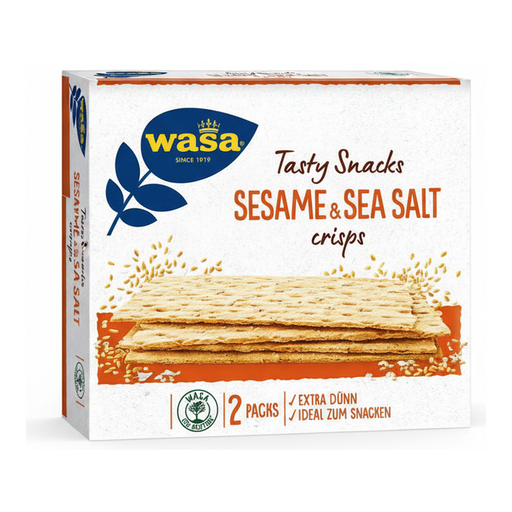 No image available
This round sesame and sea salt variety could work well if its shape suits your snack platter. It isn’t the same as the differently named gluten-free Wasa variety, so if you need a gluten-free option, check for an explicit label on this pack.
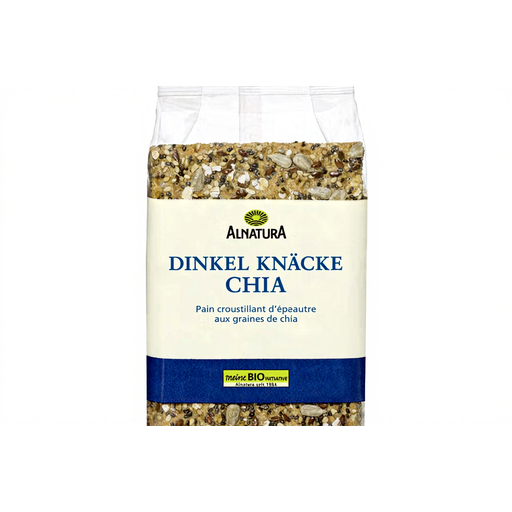 No image available
Consider this crispbread for a platter featuring a spelt and chia option. If you want to compare fibre content with other varieties, check the amount per 100 g on the pack. Be sure to check for allergens before serving too.
 No image available
If you’re looking for a linseed variety to serve with toppings, you can compare this one with the other packs. Check the current ingredients list for the sesame content in this variety; if you have an allergy, the product name alone isn’t enough.
Look for wholemeal flour or wholegrain meal in the product name and ingredients list. Visible seeds and a dark colour aren’t enough to tell you; use the nutritional information per 100 g to compare fibre content.
Not necessarily: the ja! Sesame Crispbread described by REWE contains wholegrain rye flour. If you need a gluten-free option, choose one that’s explicitly labelled gluten-free on the specific pack, and check sesame as a separate allergen.
Check the ingredients list, highlighted allergens and possible ‘may contain’ warnings on every specific pack. Lebensmittelverband Deutschland explains that the 14 main allergens must be labelled in the ingredients list; a gluten-free label doesn’t replace checks for other allergens.
Keep it dry and protected from moisture, and seal opened packs tightly. The Verbraucherzentrale advises against storing crispbread with other bread.