Which option is right for you?

Those focused on wholemeal and fibre

If you choose sliced bread for coffee based on its wholemeal content and fibre, compare the product name, ingredients and nutritional information. A hearty, seedy texture is only a good choice if it’s comfortable to chew.

People who find chewing difficult

If coarse seeds are uncomfortable to chew, consider finely milled wholemeal bread without whole seeds. The Verbraucherzentrale recommends these loaves as an alternative to coarse wholemeal varieties. If you have difficulty swallowing, the consistency specified by a healthcare professional for your individual needs is what matters.

People who need to watch out for allergens

If you need to avoid particular types of grain or other allergens, check the ingredients and any precautionary allergen statements on the specific pack. The term ‘seeded bread’ doesn’t tell you which ingredients you need to check.

What should you look for when buying?

First decide whether wholemeal content or a noticeable seedy texture matters more to you. Then check that the slice’s texture and the information on the pack suit the person who’ll be eating the bread.

What matters to you What to check when buying Who it matters to
Wholemeal and fibre Check the product name and wholemeal ingredients; compare fibre per 100 g. If I want wholemeal rather than just visible seeds, I need a clear product name and comparable nutritional information. This is the priority for around 40% of consumers.
Ease of chewing Check the size of any whole seeds and the actual texture of the slices; if you have difficulty swallowing, follow the consistency requirements set for you. Coarse seeds make chewing difficult for me, so I’m more likely to look for a finer-textured slice. Ease of chewing is the top priority for around 30% of consumers.
Allergens Check the ingredients list, highlighted allergens and any separate precautionary allergen statements on the pack. If I need to avoid certain ingredients, I don’t want to guess what’s in the bread from its type. Checking for allergens is the main priority for around 20% of consumers.
Pack size and freshness Choose a pack size and follow storage instructions that suit how much bread you’ll actually use. For a small coffee gathering, I only want to open as much bread as I can use sensibly. Around 10% of consumers prioritise convenience.

Common selection mistakes

  • Assuming visible seeds mean the bread is wholemeal

    Seeds and flakes alone don’t tell you how much of the grain is wholemeal. So if you’re specifically looking for wholemeal bread, you can’t rely on the front of the pack alone.

    Check the exact product name and ingredients list, and compare the stated fibre content per 100 g.

  • Choosing coarse seeds when you have trouble chewing

    Whole seeds and coarse grains can make chewing more difficult. Bread that feels soft doesn’t automatically have the right consistency if you have difficulty swallowing.

    If chewing is difficult, look for finely milled options without whole seeds. If you have or suspect you may have difficulty swallowing, follow professional advice on the right consistency.

  • Guessing the allergens from the product name

    Multigrain bread may contain different gluten-containing grains and other ingredients that some people need to avoid. Precautionary allergen statements can also vary from product to product.

    Before eating the bread, check the ingredients and precautionary allergen statements on the pack you’ve actually bought.

  • Opening a pack that’s too large

    If you only need a few slices for afternoon coffee, the rest may go stale or spoil.

    Choose a pack size that suits how much you’ll use. The Verbraucherzentrale recommends storing bread in a dry, dark place at room temperature. You can also freeze individual slices if needed.

Brands to consider

Golden Toast

Golden Toast offers sliced toast breads, including a multigrain loaf with seeds and flakes.

  • For Körner Toast, Golden Toast lists sunflower seeds, linseeds, and oat and rye flakes; it contains 5.3 g of fibre per 100 g.
  • The bread is described as multigrain, not wholemeal. If you need to avoid particular allergens, check the ingredients and precautionary allergen statements on the pack.

Harry Brot

Körner Balance Toast combines a multigrain toast base with seeds.

  • Harry Brot states that this product contains 8% wholemeal and 6.0 g of fibre per 100 g.
  • Its stated wholemeal content doesn’t make it an equivalent alternative for someone specifically looking for wholemeal bread. Check the ingredients and any potential traces of sesame to make sure it’s suitable for you.

EDEKA GUT&GÜNSTIG

The own-label range includes both a hearty sandwich toast and a wholemeal toast.

  • For its Körner Balance sandwich toast, EDEKA lists sunflower seeds and flakes. Its wholemeal toast is made with flour that is 90% wholemeal in the grain component.
  • The seedy texture and stated wholemeal content apply to different products. Check the information on the pack you choose.

EDEKA Herzstücke

The wholemeal sandwich loaf is a sliced option for shoppers specifically looking for wholemeal bread.

  • EDEKA describes its wholemeal sandwich loaf as ‘100% wholemeal’ and lists wholemeal wheat flour as the first ingredient.
  • The wholemeal label doesn’t tell you whether the texture of a particular slice will be comfortable to chew if you have difficulty chewing. Check the pack for allergens too.

Meister Bäcker Scherf

This local bakery is an option if you’d prefer a bakery loaf rather than packaged toast.

  • Meister Bäcker Scherf describes its production as local and says it supplies organisations, including care homes.
  • Before choosing a loaf for your coffee table, ask about its ingredients, allergens and slice texture.

Bread available at Joybuy

This pre-sliced bread is an option if you’re looking for a small pack of wholemeal bread to serve with afternoon coffee. Check separately whether its texture and the information on the pack are suitable for your guests.
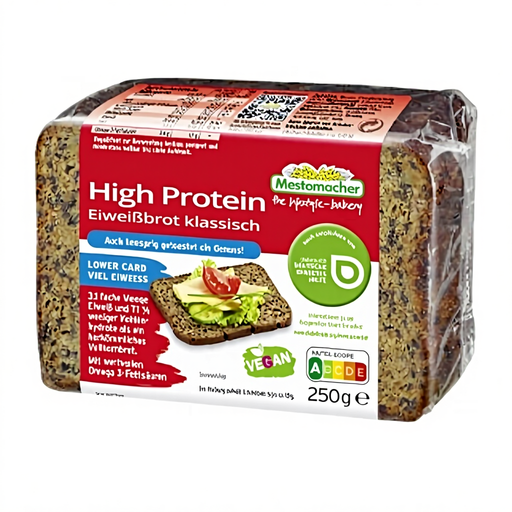
Mestemacher Classic Wholemeal Protein Bread, 250 g

Mestemacher Classic Wholemeal Protein Bread, 250 g

A pre-sliced 250 g pack for shoppers looking for wholemeal bread to serve with afternoon coffee. Compare the fibre content per 100 g on the pack, and check the seed size and slice texture if chewing is difficult. Always refer to the current information on the pack when checking for allergens.

View at Joybuy

Frequently asked questions

Is bread with visible seeds automatically wholemeal?

No. Visible seeds don’t prove that the bread has a high wholemeal content. Lebensmittelklarheit explains that, under the guidelines, at least 90% of the grain should be wholemeal for bread to be described as ‘wholemeal bread’. So check the exact product name and the ingredients.

Which sliced bread might be suitable if you have trouble chewing?

Finely milled wholemeal bread without coarse seeds may be a better option if you find chewing difficult than a slice containing whole seeds. The actual texture must suit the individual. If you have difficulty swallowing, this choice is no substitute for a consistency specified for you by a healthcare professional.

Which allergens should I check in multigrain bread?

Check the ingredients and precautionary allergen statements on the specific pack. Depending on the bread, wheat, rye, oats or barley may be relevant, as may statements about other allergens such as sesame, soya, milk, mustard or lupin.

How should I store bread for several coffee gatherings?

Store bread in a dry, dark place at room temperature, as recommended by the Verbraucherzentrale. If you only need a few slices, freezing them in portions can help. If you see any mould, throw away the whole loaf.