Bakers short on worktop space
Before choosing an oven size, allow space for the open door and the ventilation clearances specified for the particular model, as well as the appliance itself.


First, choose an appliance that fits safely on your worktop with the required clearances. Then compare the usable tray or basket area with the number of rolls you want to bake. A countertop oven gives you a baking tray and, depending on the model, a choice of top and bottom heat or fan-assisted cooking. An air fryer with a baking function is more suited to small batches that fit in the basket with space between them. Neither the litre capacity nor a baking function alone tells you how many seeded rolls will fit or how evenly they will brown.
Before choosing an oven size, allow space for the open door and the ventilation clearances specified for the particular model, as well as the appliance itself.
If you want to bake several rolls at once, the usable tray area is a more helpful guide than the oven capacity alone.
An air fryer with an explicitly stated baking function may also be suitable for a few rolls, provided the usable basket area is large enough for your batch.
First check that you have a safe place to position the appliance, then make sure the tray or basket can hold the amount you want to bake. Extra features are no substitute for comparing the usable area.
A good fit if: You want to arrange several shaped rolls side by side and have a suitable place for the appliance.
The trade-off: The tray gives you one continuous surface, but the usable capacity depends on the tray size, the dough portions and the space they need between them.
A good fit if: You’re baking a few rolls and they fit on the usable area in the basket with space between them.
The trade-off: The basket capacity doesn’t tell you whether there’s a suitable flat baking surface or how many rolls will fit.
A good fit if: You don’t have a safe space on your worktop for another appliance.
The trade-off: If you’re baking just a few rolls, compare the actual electricity used for each baking cycle.
| What matters | What to check when buying | Who is it important to? |
|---|---|---|
| A safe place to position it | Check the worktop space, room above and beside the appliance, rear clearance and door opening against the instructions for the particular model. | If my worktop space is limited, the appliance must fit safely with room for the door to open and the required clearances; around 36% of consumers put where to position it first. |
| Baking area and capacity | Compare the usable tray or basket area and shelf height with the size of your dough portions and the space they need between them. | I want to bake the planned number of rolls in as few batches as possible; around 29% of consumers prioritise baking capacity. |
| Heating method and browning | Check the heating methods available on the particular model, its temperature range and shelf position against your recipe. | If I want to choose the heat setting carefully and keep an eye on how the seeds brown, the right heating method is my main concern; around 21% of consumers pay particular attention to this. |
| Cost and other uses | Check what’s included and which parts can be cleaned; when comparing energy use, make sure you’re comparing similar baking cycles. | If I plan to use the appliance for other foods too, and cleaning and ongoing costs matter, these points come to the fore for me; around 14% of consumers feel the same. |
As well as its 44 cm width including the feet, the Rommelsbacher BG 1055/E needs the ventilation clearances specified for that model.
Measure the space you plan to use, including the clearances required in the instructions for the particular model.
The oven capacity and included accessories don’t tell you how many shaped seeded rolls will fit on a tray or in a basket with space between them.
Compare the size of your dough portions and the space they need with the usable area and shelf height.
If the area is too small, you may need to bake in additional batches.
A wattage figure isn’t a measurement of the electricity used to bake a batch of rolls. Braun’s speed comparison is based on frozen chips and doesn’t tell you anything about seeded rolls.
Only compare energy-use figures for similar baking cycles, and don’t assume results for other dishes will apply to rolls.
According to Rommelsbacher, the BG 1055/E is a compact oven with an 18-litre capacity.
According to Severin, the TO 2067 is a 20-litre baking and toast oven, with rolls listed by the manufacturer as one of its uses.
According to Steba, the KB M19 combines a 19-litre capacity with a tray and a choice of heating methods.
According to CASO Design, the Bake & Style 26 Touch has a 26-litre capacity and comes with a baking tray.
According to Braun, the MultiFry 7 HF 7056 is an air fryer with a stated baking function.
This selection includes compact countertop ovens with a tray, as well as air fryers with a clearly stated baking function. Whether the appliance can fit the number of rolls you want to bake depends on the usable area and the safe positioning requirements for each model.
 No image available
This countertop oven with a tray may be suitable if the space you have and the tray size work for your kitchen and the number of rolls you want to bake.
The product details list a temperature range of 100 to 250 °C, a 60-minute timer, a baking tray and rack, and a removable crumb tray.
 No image available
This compact tray model may suit smaller batches, provided the dough portions fit on the tray and the appliance fits safely on your worktop.
The product details list external dimensions of 37 × 26.5 × 21 cm, a temperature range of 100 to 230 °C, a programmable 60-minute timer, a baking tray and top and bottom heating elements.
 No image available
A tray and a choice of heating methods may be useful for recipes that suit the available area and the space you have for the appliance.
The listed features include a temperature range of 100 to 230 °C, a mechanical 60-minute timer, and top heat, bottom heat or both together. The product description also lists a baking tray and a removable drip tray.
 No image available
The stated baking function makes this basket-style appliance a possible option for small batches. Check that the rolls fit on the usable area with space between them.
The product description lists a 6.5-litre stainless steel basket, a viewing window, mechanical dials and a temperature range of 80 to 200 °C.
 No image available
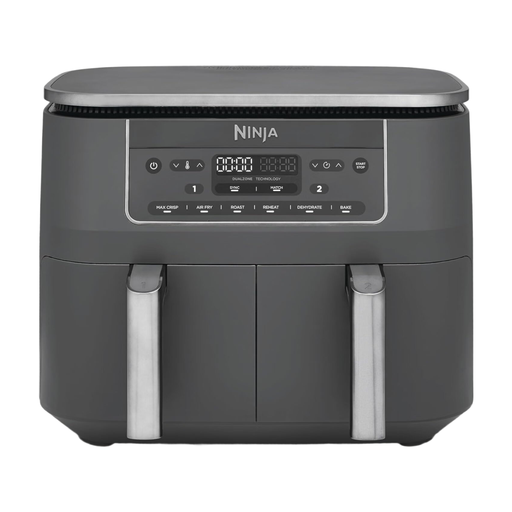
The baking function offers another option for small batches, provided the basket area is large enough for the rolls.
The product description lists two independently controlled cooking zones, a total capacity of 7.6 litres and six functions, including baking. The drawers and crisper plates are described as dishwasher-safe.
Only if you can meet the positioning requirements for the particular appliance in that spot. Rommelsbacher requires 4 cm of ventilation clearance at the sides and 1 m above the BG 1055/E, and warns against installing it in a fitted unit. These measurements don’t apply to all appliances.
King Arthur Baking describes using water or, depending on the bake, an egg wash to help the seeds stick. It also notes that seeds with a particularly high fat content can burn. The method described recommends using raw, untoasted seeds. Follow the instructions for your recipe and appliance; this doesn’t guarantee a particular setting for a specific mini oven.
Check whether the baking tray and crumb tray can be removed and how they should be cleaned. Severin’s instructions for the TO 2067 say to unplug the appliance and let it cool before cleaning. It must not be immersed in liquid.
If a product is faulty, you may have statutory rights against the seller; these legal rights are separate from a voluntary guarantee. The Verbraucherzentrale describes repair or replacement as the first step in seeking a remedy. The right to cancel an online purchase is separate and usually lasts 14 days from the date you receive the goods.
You can’t tell from the product name or litre capacity alone. The European Commission’s overview places small ovens outside the scope shown for ecodesign rules for domestic ovens. This doesn’t mean every specific appliance is exempt from labelling. Compare only energy-use figures that are actually provided and based on the same criteria.