
Lieferung heute & morgen

Qualitätsgarantie

Willkommens-Angebote freischalten: KOSTENLOSE Lieferung | Bis zu 80 % RABATT | Kostenlose 30-Tage-JoyPlus-Testphase
App herunterladen
Self-adhesive mirror tiles are a flexible solution for making rooms appear brighter and more spacious, or for adding creative accents without any structural changes. The idea of a drill-free wall mirror is especially appealing to renters and DIY enthusiasts. However, the market is crowded, and not every product lives up to its promises. Before you make a decision, it's important to understand the common flaws that can lead to disappointment.
This guide will help you identify the key quality features and make an informed choice.
The temptation to achieve a big impact with minimal effort is strong. However, with low-cost decorative items in particular, three specific flaws often lead to dissatisfaction.
To avoid the issues mentioned above, you should check three technical aspects before buying. These are crucial in determining the quality and functionality of your mirror decor.
The choice of material is critical for the quality of the reflection.
The thickness of the mirror element is directly linked to its stability and the quality of its reflection. A material thickness of 1 to 2 millimeters offers a good balance between flexibility for installation and the necessary rigidity to minimize warping and distortion. Materials thinner than 1 mm are more susceptible to wall imperfections and are more likely to produce the undesirable funhouse mirror effect.
A good adhesive mirror requires an adhesive that is strong enough for a secure hold but can still be removed. Pay attention to the manufacturer's specifications regarding suitability for different surfaces (e.g., smooth plaster, tiles, wood, textured wallpaper). Adhesion may be limited on structured walls like wood-chip wallpaper. It is advisable to test the adhesion in an inconspicuous area before applying all the elements.
Based on the criteria above, we have identified several products that represent a considered choice for specific needs and profiles.
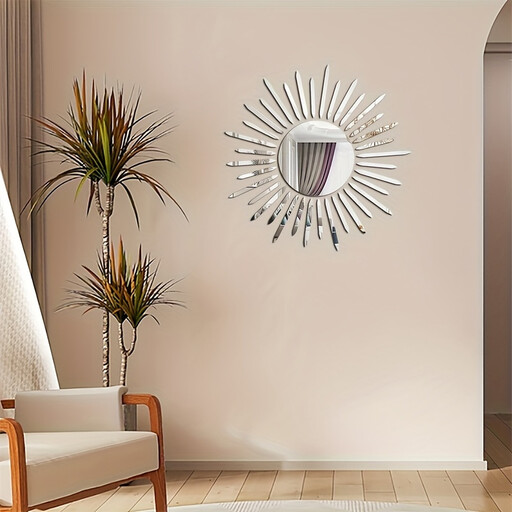
Why This Fits Their Persona: Ideal for individuals who want to create unique DIY wall decor. The set allows for the creation of an artistic mural that goes beyond simple geometric shapes to set a personalized accent.
Because it consists of many small, separate elements, the risk of large-scale distortion is minimized. The PVC base provides a better reflection than a simple foil.
A complete set for a cohesive, minimalist design. The 37 individual pieces offer high flexibility in wall arrangement.
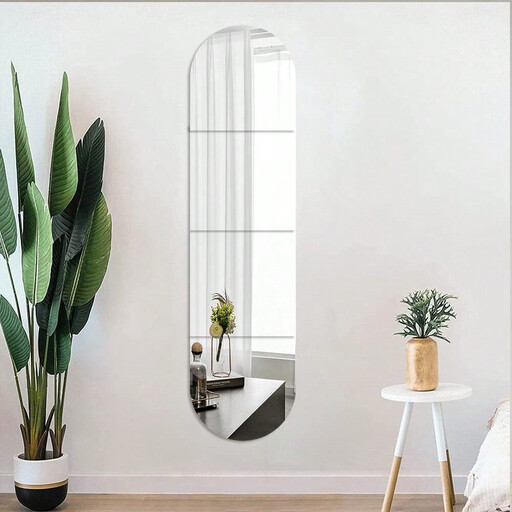
Why This Fits Their Persona: Perfect for renters who need a functional drill-free wall mirror for a dressing area or hallway. The four 30x30 cm tiles can be combined to create a larger mirror surface.
The relatively thick PVC tiles are more rigid than foil and reduce the funhouse mirror effect when mounted on a smooth wall. The adhesive is designed for lower-residue removal.
Large-format tiles (30x30 cm) allow for the creation of a usable mirror surface. The set is modular and expandable.
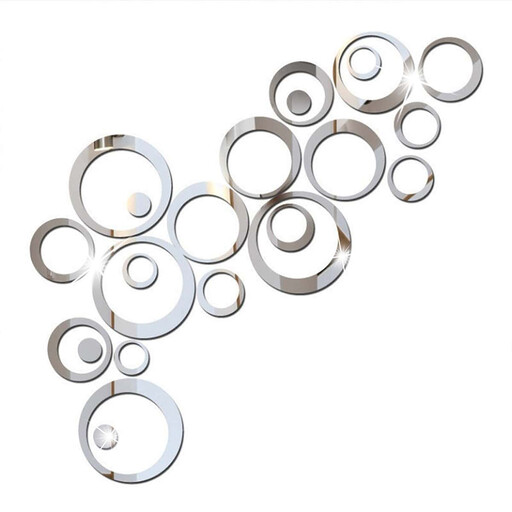
Why This Fits Their Persona: A cost-effective way to create light reflections and break up a blank wall with decorative mirrors. Ideal for small spaces or for adding a touch of elegance on a minimal budget.
With these small, decorative mirror stickers, a perfect, distortion-free reflection is not the primary goal. Any slight irregularities are not noticeable and are part of the decorative effect.
A large set with 24 pieces in various sizes (3.5-13.8 cm) for maximum creative freedom. The value for money is excellent for purely decorative purposes.
We have compiled a complete, up-to-date list of products that fully meet these strict selection criteria and applicable regulations.
Adhesion on textured wallpaper depends heavily on the texture's coarseness and the quality of the adhesive. On very rough surfaces, adhesion may be insufficient because the adhesive surface cannot make full contact. For optimal results, the smoothest, cleanest, and driest surface possible is recommended. When in doubt, it's wise to test the adhesion with just one tile in an inconspicuous spot first.
To remove the tiles, you should first soften the adhesive. Gently heat the tile's surface with a hairdryer on a low setting. Then, starting at a corner, slowly and carefully peel the tile away from the wall. Tools like dental floss or a plastic scraper can help cut through the adhesive. Any remaining residue can often be removed with rubbing alcohol or a specialized adhesive remover. However, always test such products on a hidden area first.
Slight distortion can occur with any mirror material other than glass, especially over large areas or if the mounting surface is not perfectly flat. The key to a clear reflection is the thickness and rigidity of the material. Thicker acrylic tiles (1-2 mm) applied to a smooth wall will offer a much clearer image than a thin, flexible mirror foil. For purely decorative purposes, such as with a mirror wall decal, minor distortions are generally insignificant.