
Lieferung heute & morgen

Qualitätsgarantie

Willkommens-Angebote freischalten: KOSTENLOSE Lieferung | Bis zu 80 % RABATT | Kostenlose 30-Tage-JoyPlus-Testphase
App herunterladen
Self-adhesive stickers are practical for decoration, labelling and organisation. They can transform bare surfaces, mark documents or place notices where they can be seen. However, the adhesive film, surface and residue upon removal differ significantly. If you choose based only on design or colour, you might buy a product that won't stick to your wall, is difficult to remove, or simply isn't suitable for its intended use.
The term removable PVC stickers primarily describes the material or the intended method of removal. The actual result also depends on the surface, how long the sticker has been in place, temperature and humidity. On freshly painted walls, porous plaster or untreated wood, adhesion can behave differently than on smooth glass.
Before applying a sticker to a large area, it's advisable to test it on an inconspicuous spot. When removing, the sticker should be pulled off slowly and as flat against the surface as possible. Heat can alter the adhesive, so it should only be used with caution.
A water-resistant sticker may be suitable for damp rooms, but it isn't automatically designed to withstand constant scrubbing, cleaning products or direct exposure to water. For toilet seat stickers and bathroom motifs, you should therefore check whether the product description explicitly mentions the intended use.
For areas that see heavy use, the edges, material thickness and cleaning method are crucial. A design that works on a dry bathroom wall won't necessarily adhere as well to a frequently cleaned toilet seat.
Wall stickers and wall decals need a smooth, clean and dry surface. Dust, grease or silicone residue can impair adhesion. With doors, you also need to consider whether the sticker will rub against the frame or fittings when opening and closing.
For mirror stickers, the design should not obstruct the viewing area, safety markings or the function of the mirror. Before buying, accurate measurements and a simple paper template at full size are very helpful.
Look for specific details such as removable, repositionable or residue-free on suitable surfaces. These indications should not be taken as a guarantee for every surface. Particularly delicate wallpaper, freshly painted doors and printed documents require careful testing.
The dimensions must suit the space. A format of 19.5 × 19.5 cm, for example, is suitable for individual mirror motifs, while small labels are intended for ring binders, shelves or colour codes. For document organisation, writeability, sheet format and the number of labels are also relevant criteria.

Why this product fits the profile: The design combines toilet seat stickers with decorative bathroom wall stickers, making it ideal for households wanting to start with a single design accent. According to the product description, the stickers are suitable for DIY application and are described as water-resistant and removable.
The product description states its intended use in the bathroom and its removable design. Nevertheless, adhesion should be tested on the specific surface beforehand.
Plant and flower motif; according to the product description, intended for DIY decoration, moisture and removability.
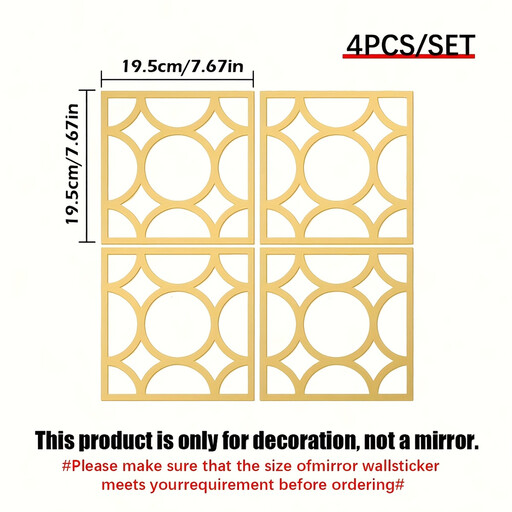
Why this product fits the profile: Four PVC mirror stickers with a floral pattern and a stated size of 19.5 × 19.5 cm offer a planned approach to decorating multiple surfaces or creating a cohesive arrangement.
The clearly stated quantity and size make planning easier. Before applying, mirrors should be clean, dry and free from grease or cleaning product residue.
PVC material; four identical formats with a floral pattern and gold colouring.
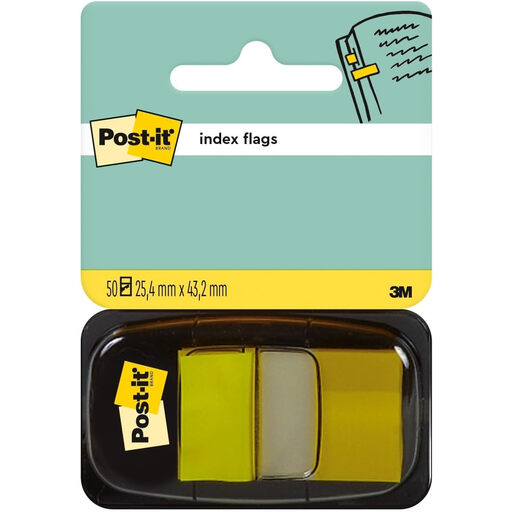
Why this product fits the profile: For offices, schools, students and businesses, yellow marking flags are an alternative to decorative wall stickers. The 25.4 × 43.2 mm format provides space for short notes or section markers.
The transparent design can leave text visible. According to the product description, the flags are writeable, repositionable and come in a pop-up dispenser.
Yellow colour, polyester film, 50 flags per dispenser and portable dispensing according to the product description.
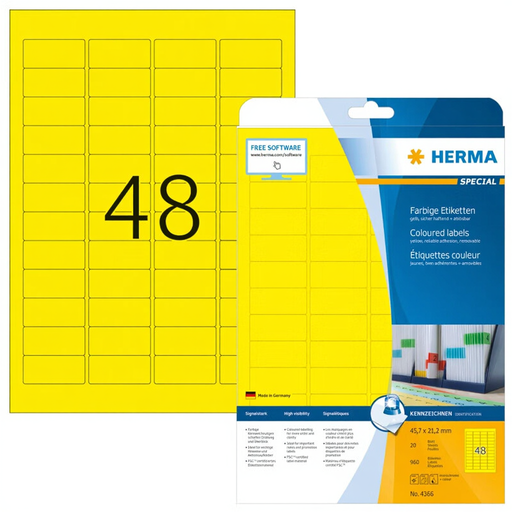
Why this product fits the profile: For extensive shelving, shipping, school materials or office organisation, A4 sheets with yellow office labels provide structured labelling via printer or copier.
The details on sheet format, number of labels and printer compatibility make quantity planning easier. The removable adhesive is intended for these labels according to the product description.
20 A4 sheets with 48 labels each, 960 in total; according to the product description, a matt paper surface and printer compatibility.
We have put together a complete, regularly updated list of products that fully meet these strict selection criteria and the safety regulations in force in the EU.
For documents: place marking flags as close to the edge of the page as possible and check before archiving whether the adhesive is compatible with the paper. For label sheets, the printer format, orientation and paper feed should match the manufacturer's instructions.
That depends on the adhesive, the surface and how long the sticker has been in place. Smooth, firm surfaces are usually easier to work with than wallpaper, plaster or untreated wood. Testing beforehand on an inconspicuous spot reduces the risk of adhesive residue or damage.
For the bathroom, depending on the surface, water-resistant PVC stickers, toilet seat stickers or suitable wall stickers are options. What matters is the specific product description, a smooth surface and the type of cleaning. Prolonged direct exposure to water and harsh cleaning products should not be assumed without a corresponding manufacturer's statement.
Post-it marking flags are suitable for temporary notes, page registers and highlighting text passages. Office labels are useful when ring binders, shelves or shipping documents need to be labelled permanently and in a structured way. For changing tasks, repositionable flags offer more flexibility; for large quantities, A4 label sheets are often more straightforward.