
Lieferung heute & morgen

Qualitätsgarantie

Willkommens-Angebote freischalten: KOSTENLOSE Lieferung | Bis zu 80 % RABATT | Kostenlose 30-Tage-JoyPlus-Testphase
App herunterladen
Self-adhesive wall mirrors are a practical way to transform your hallway, bedroom, living room or dressing area without drilling. Adhesive mirrors can be used as a single surface, geometric arrangement or creative mirror mosaic. However, not every product is suitable for every wall or room.
Three common buying misconceptions are particularly likely to lead to disappointment:
PVC mirrors are lightweight and suitable for flexible decorative arrangements. They are often available as square adhesive mirrors or multi-piece mirror stickers. Their low weight can make installation easier. Before buying, however, check whether the manufacturer provides guidance on mounting them on flat surfaces and cleaning them.
Acrylic mirrors are also offered as a lightweight alternative. They are suitable for DIY mirrors, decorative wall mirrors and small mosaics. Avoid abrasive cleaners and rough cloths on plastic surfaces, as these can leave scratches.
Glass mirrors offer a more classic reflection, but are heavier and more vulnerable during transport and installation. For larger formats, the load-bearing capacity of the adhesive solution must correspond to the product specifications. For children’s bedrooms, busy areas or moving doors, lightweight materials may be more practical for safety reasons. However, you should not assume that any product is suitable for every surface.
A suitable surface should be clean, dry, dust-free, grease-free and as smooth as possible. Rough walls, damp surfaces, loose wallpaper or freshly painted surfaces can impair adhesion. Before installation, it is advisable to test the product in an inconspicuous area.
Take particular care in the bathroom: water vapour and direct exposure to splashing water can affect the adhesive bond over time. For this reason, follow the installation instructions, intended area of use and care information for the relevant product. “Mirror without drilling” describes the installation method; it does not automatically mean unrestricted suitability for damp rooms.
For a clean, modern arrangement, self-adhesive square mirrors are particularly easy to align. Round wall mirrors, on the other hand, soften the straight lines of furniture and hallways. Narrow strips are suitable for vertical accents, while small tiles are designed for DIY projects and mirror mosaics.
Before placing your order, calculate the total area required:
The following products differ in material, format and intended use. The recommendations are based on the available product information and not on sweeping claims about quality.
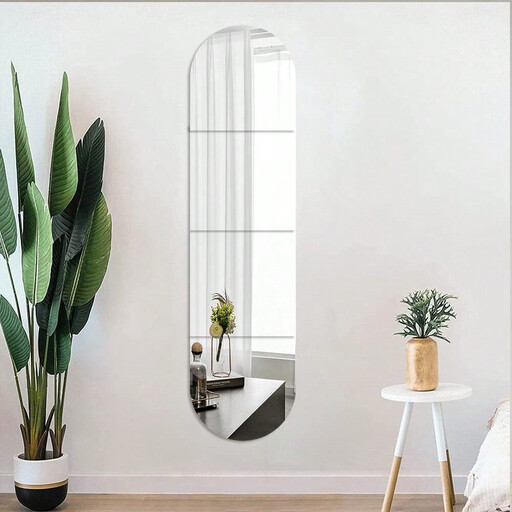
Why this product suits this profile: Four square PVC mirrors measuring 30 x 30 cm provide a manageable pack size for creating your first wall arrangements in the bedroom, hallway or dressing area.
The format and pack contents are clearly stated. This makes it easier to compare the area required with the wall size before buying.
PVC construction, four elements and a square format for flexible arrangements.
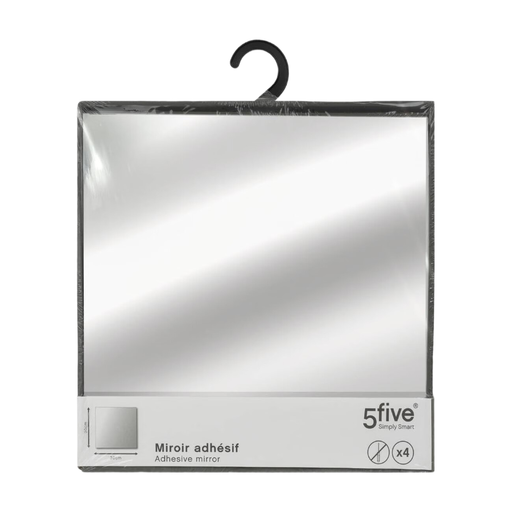
Why this product suits this profile: According to the product description, this set contains four glass mirrors measuring 30 x 30 cm, with a silver-grey surface and a total weight of 1.78 kg.
The glass construction and individual dimensions make it easier to assess the reflection, weight and installation effort realistically.
Glass construction, four equally sized squares and strong adhesive tape included, according to the product description.
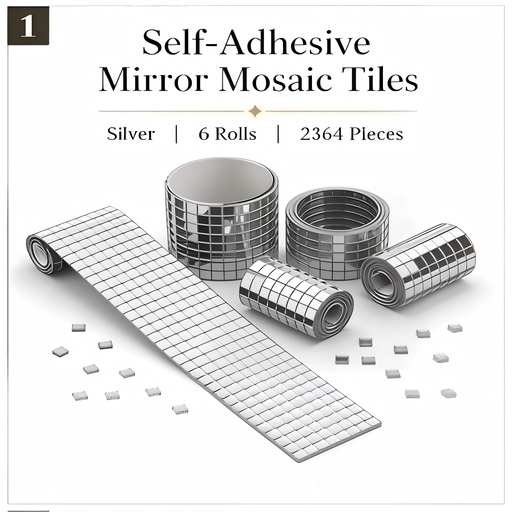
Why this product suits this profile: According to the product description, six rolls containing a total of 2,364 individual glass mosaic pieces are available for craft projects, frames, wall decorations or stage props.
The number of pieces is clearly stated. This allows you to plan the scale of a mirror mosaic without assuming that a large roll shown in the image will cover an entire wall.
Square glass pieces, a silver finish and a self-adhesive backing for creative DIY applications.
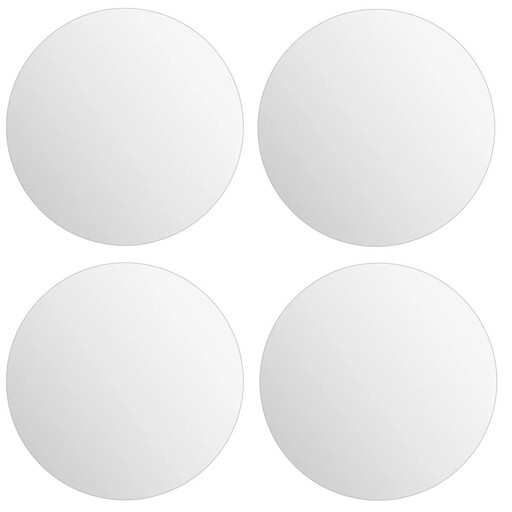
Why this product suits this profile: Four round wall mirrors, each with a diameter of 30 cm, are suitable for symmetrical groupings or individual decorative accents.
The diameter, material details and number of pieces are clearly specified. This prevents a round shape from being mistaken for a larger, continuous mirror surface.
Glass and aluminium details, four pieces, a silver colour and installation with adhesive strips included, according to the product description.
Before mounting the mirrors, mark out the desired arrangement using paper templates. This allows you to check the spacing, symmetry and height before removing the protective film. Next, clean the surface in accordance with the manufacturer’s instructions and allow it to dry completely.
For large or heavy elements, do not assess the adhesive strength based solely on advertising claims. The key factors are the surface, weight, temperature and the specific installation instructions. Additional restrictions may apply to doors, furniture or textured walls.
Depending on the material, a soft, dry or slightly damp cloth is sufficient for cleaning. Abrasive cleaners, hard sponges and aggressive cleaning products can damage PVC, acrylic or adhesive surfaces. With glass mirrors, you should also take care not to put pressure on the edges or surface.
We have put together a complete, regularly updated list of products that fully meet these strict selection criteria and the safety regulations applicable in the EU.
That depends on the type of wallpaper, surface texture and adhesive solution. Smooth, firm and dry surfaces are generally easier to assess. Adhesion may be limited on textured wallpaper, loose wallpaper or delicate paint. Testing the product in a concealed area is recommended.
Not every adhesive mirror is designed for high humidity or direct contact with water. Before buying, check the product information regarding the intended area of use. A dry, well-prepared surface and sufficient ventilation can improve the installation conditions, but they do not replace approval from the manufacturer.
It is not possible to give a general fixed lifespan. Among other things, durability is affected by the material, adhesive, surface, room climate and level of use. Carefully preparing the surface, observing the permitted weight and following the care instructions will help reduce common adhesion problems.