
Lieferung heute & morgen

Qualitätsgarantie

Willkommens-Angebote freischalten: KOSTENLOSE Lieferung | Bis zu 80 % RABATT | Kostenlose 30-Tage-JoyPlus-Testphase
App herunterladen
Self-adhesive wallpaper can refresh walls, furniture and cupboard fronts without paste. To get a neat finish in a rented flat, your own home or a renovation project, don’t choose based on colour and pattern alone. The surface, coverage, material and intended location all matter.
Terms such as water-resistant wall stickers, “waterproof” or “suitable for bathrooms” often refer to the surface or areas exposed to occasional splashes. Self-adhesive wallpaper is therefore not automatically suitable for showers, permanently damp walls or areas in the direct path of a water jet.
For example, the 3D wall panels considered here are stated to be unsuitable for showers, floors and outdoor use. In bathrooms, their use should therefore be limited to dry areas.
A 44 × 305 cm roll covers approximately 1.34 m² or 14.4 sq ft. You may therefore need several rolls for a complete feature wall. Longer 44 × 508 cm versions cover approximately 2.24 m² per roll and reduce the number of horizontal joins.
Measure the wall’s width and height before buying. It’s also worth allowing extra for trimming, sockets, corners and possible mistakes. If you need several rolls, try to buy them from the same batch to avoid slight colour variations.
Peel-and-stick wallpaper needs a smooth, flat, clean and dry surface. Dust, grease, loose paint and heavily textured walls can affect adhesion. On woodchip wallpaper, rough plaster or unsealed wood, edges may lift or surface irregularities may still show through.
If you’re renting, it’s also important to remember that “removable” doesn’t necessarily mean it will come away from every wall without leaving marks. Adhesive can react with paint, and removal may damage the finish. It’s best to test it in an inconspicuous area first.
PVC wallpaper, also known as PVC vinyl wallpaper, is wipe-clean and, according to the product details, suitable for smooth walls, sealed wood, doors and furniture panels. It can be used to create a decorative feature wall or to cover cupboard fronts and chest-of-drawers surfaces.
Self-adhesive wall panels made from PVC and EVA are usually more textured and designed to create a 3D effect. The panels considered here are about 3 mm thick and can be cut with scissors or a craft knife. PET tiles with a PE layer have a smooth, glossy finish and are described as suitable for kitchens and bathrooms. Even so, you should follow the relevant guidance on direct heat, shower areas and exposure to water.
Check the coverage per roll or pack, rather than relying on the product width alone. For example:
With patterns such as wood slats, stripes or floral designs, you’ll also need to consider the direction of the pattern. A straight first strip and carefully aligned joins have more impact on the finished look than a low material price.
Clean washable wallpaper with a damp cloth. Scouring products and harsh cleaners can damage the surface, print or protective layer. In kitchens, don’t install self-adhesive wall covering directly next to a cooker, fireplace or other strong heat source. For the panels mentioned here, a clearance of at least 30 cm from cookers and fireplaces is specified.
Thoroughly degrease furniture surfaces such as cupboard doors, drawer fronts and sideboards before applying wallpaper. If you’re looking for furniture film or self-adhesive cupboard wallpaper, check that you can work neatly around handles, edges and areas that are moved frequently.
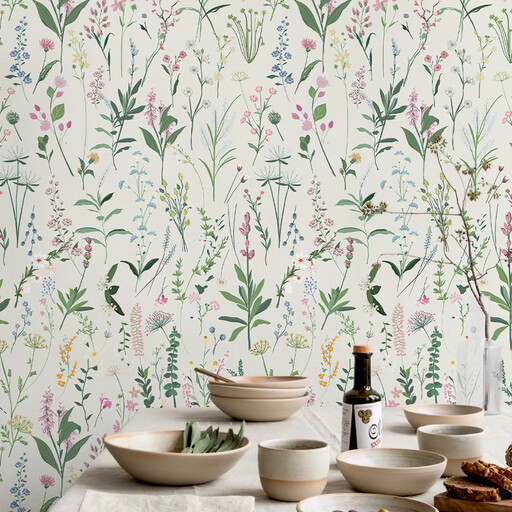
Why this product suits this use: With coverage of approximately 1.34 m², this compact roll is ideal for small feature areas, hall alcoves, bedroom spaces or furniture surfaces. Use the bright floral pattern as an accent rather than covering an entire wall.
The stated coverage per roll makes it easier to work out how much you need. The grid on the backing helps you make straight cuts; the wallpaper is designed for smooth, clean and dry surfaces.
PVC vinyl, self-adhesive application and a wipe-clean surface, according to the product details.
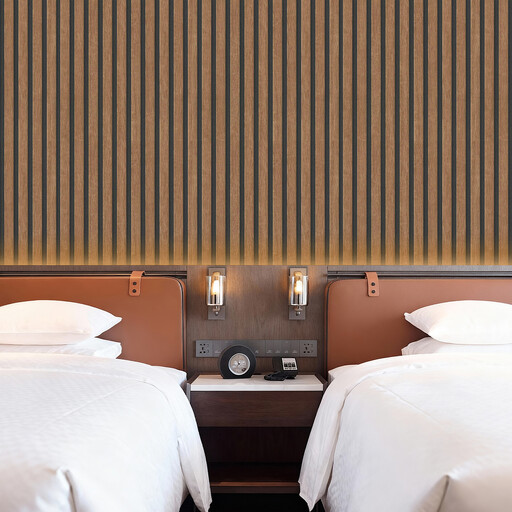
Why this product suits this use: At 60 cm wide and 508 cm long, this roll is designed for larger feature areas, such as behind a sofa, bed or desk. The vertical slat pattern needs to be aligned carefully.
According to the product details, the longer roll covers approximately 3.05 m², which can reduce the number of joins. You’ll still need a smooth, dry surface and a straight guide line.
23.6 inches wide, 200 inches long, PVC vinyl and a wipe-clean surface, according to the product description.
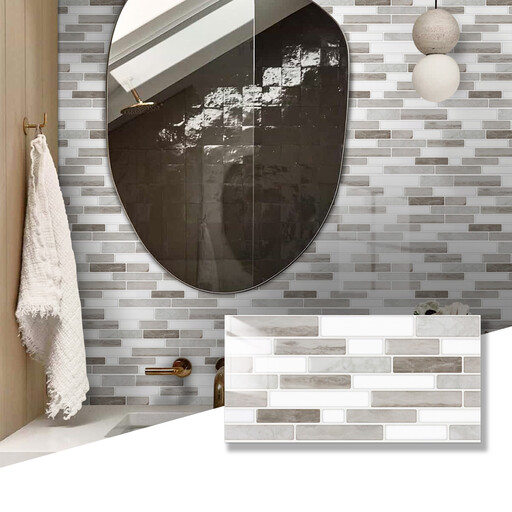
Why this product suits this use: Measuring 30 × 15 cm, these PET wall stickers are ideal for smaller areas such as kitchen splashbacks, dry areas in bathrooms or individual furniture surfaces where a smooth finish is wanted.
The product details specify PET and PE, a smooth, wipe-clean surface, and restrictions on use in showers, on floors and outdoors. This helps you choose the right place to use them.
PET and PE construction, a self-adhesive backing and, according to the product details, a water- and heat-resistant surface.
We’ve put together a complete, regularly updated list of products that meet these strict selection criteria and fully comply with the safety regulations in force in the EU.
Once 3D wall panels are installed, check the edges and joins to make sure they’re secure. For some sets, the manufacturer states that full adhesion can take up to 48 hours.
Woodchip wallpaper is generally not an ideal surface, as its texture reduces the area in contact with the adhesive. Smooth, flat, dry and clean walls are more suitable. Test a small section in an inconspicuous place to see whether it sticks properly and can be removed without damaging the existing paint.
There’s no single answer, as it depends on the surface, room conditions, cleaning, sunlight and how carefully it’s applied. Preparing the surface properly, pressing down the edges firmly and avoiding abrasive cleaners can help it last longer.
Depending on the product, kitchens and bathrooms may have suitable dry wall areas, furniture surfaces or splashbacks. Avoid areas exposed to direct water jets, shower surfaces and strong heat unless the product description specifically says otherwise. Always follow the application guidance for the product you choose.