
Lieferung heute & morgen

Qualitätsgarantie

Willkommens-Angebote freischalten: KOSTENLOSE Lieferung | Bis zu 80 % RABATT | Kostenlose 30-Tage-JoyPlus-Testphase
App herunterladen
A self-adhesive wallpaper can transform walls, doors, cupboard fronts or furniture surfaces without the need for paste. For smaller wall areas and accent zones, application is often straightforward. Nevertheless, unclear surface measurements, unsuitable substrates and bold patterns frequently lead to unnecessary costs.
This buying guide from the Joybuy Product Recommendation Officer highlights which details matter before you purchase, what typical pitfalls arise, and which product variants suit different living situations.
Specifications such as 44 × 305 cm or 44 × 508 cm describe the width and length of the roll, not automatically the usable area after cutting. Sockets, door frames, corners and pattern matching all create waste. For a wall area of, say, 2 m², you should therefore not order exactly 2 m² of material.
A practical extra buffer is around 10 to 15 per cent, and possibly more for large patterns or lots of cut-outs. Additionally, if you need several rolls for the same surface, try to source them from the same production batch to avoid slight colour differences between strips.
A peel-and-stick wallpaper can generally be applied without paste and often removed again. However, the result depends heavily on the substrate, the adhesive strength and the condition of the wall paint. On delicate, freshly painted or poorly adhering paint, removal may leave visible marks.
Tenants should test a small, inconspicuous area first and check their landlord's permission as well as any stipulations in the tenancy agreement. A self-adhesive wall covering is therefore not automatically the same as a guaranteed damage-free removal.
Floral wallpapers, geometric designs or dark wood effects can look different in product images than they do under your own room lighting. Large patterns also require careful strip planning. For small areas, rolls of around 14.4 sq ft (approximately 1.34 m²) are often more practical. For longer accent walls, 24.1 sq ft (approximately 2.24 m²) per roll can mean fewer seams.
Many variants are made from PVC vinyl with a self-adhesive backing. This material is generally durable and can be wiped clean with a damp cloth. A washable wallpaper is therefore suitable for everyday dirt, but is not automatically intended for direct moisture, permanent humidity or outdoor use.
For kitchens and bathrooms: only use in dry areas and away from splash zones. Abrasive cleaning products can damage the surface and the print. If you are choosing a wallpaper to stick onto furniture, also check that the front is smooth, sealed, grease-free and sufficiently load-bearing.
A wallpaper for smooth walls adheres most reliably to flat, dry and dust-free surfaces. Suitable options include painted walls, sealed wood panels, doors, cupboard fronts and furniture panels. Rough plaster, heavily textured wallpaper, flaking paint and uneven wood can cause bubbles, visible bumps or lifted edges.
Before applying, remove dust, grease and any cleaning product residue. The surface must be completely dry. On glossy surfaces, a test on a small area is recommended, as adhesion and later removability depend on the specific material.
A narrow roll of 44 cm width is relatively easy to align in smaller areas. Longer rolls of 508 cm reduce the number of horizontal breaks on tall walls or longer accent surfaces. Wider rolls of 60 cm, on the other hand, may require fewer strips on larger areas.
For application, you will typically need:
The backing should be peeled off gradually. Each strip is smoothed from top to bottom and from the centre outwards. The strips should be applied edge to edge without overlapping. Particularly with a concrete-effect wallpaper, a graphic pattern or a black floral wallpaper, crooked lines and uneven transitions are very noticeable.
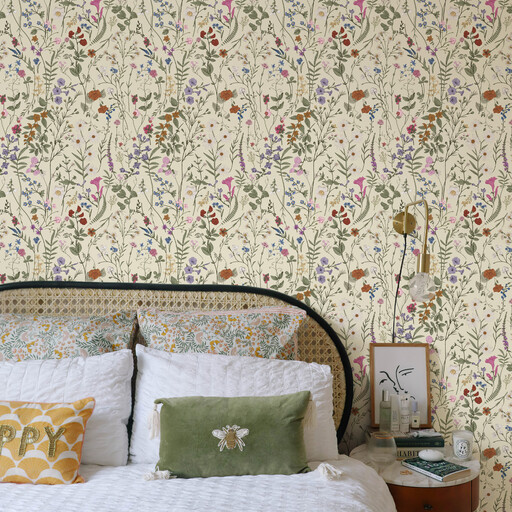
Why this product suits the profile: The roll covers approximately 14.4 sq ft (around 1.34 m²) and is ideal for alcoves, smaller accent areas, hallway furniture or cupboard doors. The floral pattern creates a clearly defined decorative accent without requiring a full room renovation.
The limited roll area keeps material planning manageable for small projects. The dense pattern can make minor visual irregularities less noticeable, but does not replace careful alignment.
PVC vinyl, self-adhesive backing and wipe-clean surface; suitable for smooth, clean and dry surfaces.
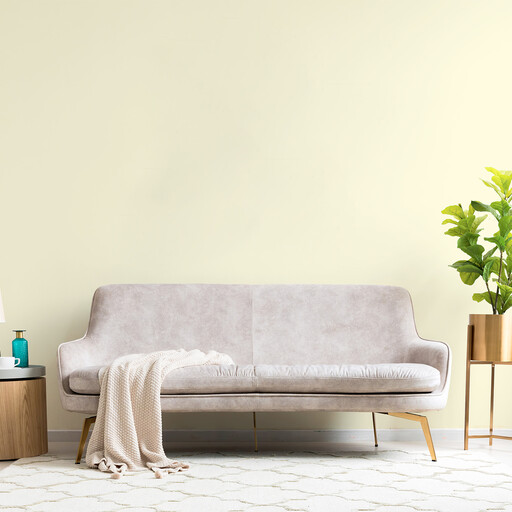
Why this product suits the profile: The 60 cm wide and 508 cm long roll covers approximately 32.8 sq ft (around 3.05 m²) according to the product specification. The solid cocoa cream shade is designed for a calm accent wall behind a sofa or bed, as well as for several furniture panels.
The longer roll can reduce the number of joins and pattern transitions on larger surfaces. With a solid colour design, there is also no need for complex pattern matching.
Premium PVC vinyl, longer roll format, self-adhesive application and wipe-clean surface for indoor use.
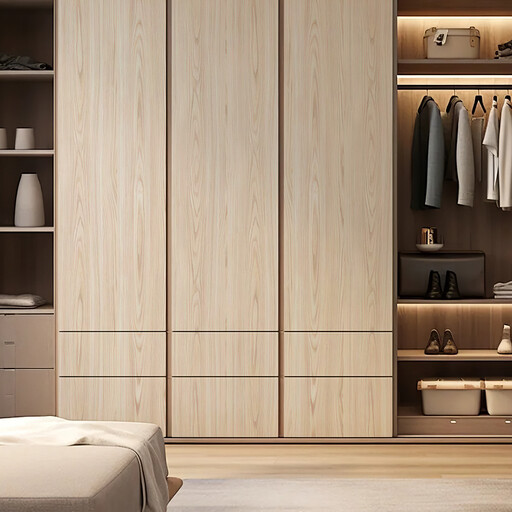
Why this product suits the profile: The wood-effect wallpaper is designed for cupboard doors, drawer fronts, chests of drawers and smaller wall sections. A roll area of approximately 19.7 sq ft (around 1.83 m²) is sufficient for manageable furniture or hallway projects.
The stated roll width and the grid on the backing make cutting easier. By deciding on the grain direction in advance, you can avoid an inconsistent overall appearance.
PVC vinyl with wipe-clean surface; suitable for smooth furniture and wall surfaces as well as for DIY projects without additional paste.
We have compiled a complete, regularly updated list of products that fully meet these strict selection criteria and the safety regulations in force in the EU.
When using a wall film in rented accommodation, a test piece is recommended. For dry bathroom areas, avoid direct water exposure and permanently high humidity. Keep open flames and strong heat sources away from PVC products at all times.
A general lifespan cannot be given. The key factors are the substrate, cleaning, room climate, UV exposure and the quality of the application. On smooth, dry and well-prepared surfaces, edges can adhere better than on rough or damp walls. Product claims such as 'permanent' should therefore not be taken as a fixed number of years.
Many adhesive wallpapers can be removed by carefully peeling them off. Whether the wall remains undamaged depends on the wall paint, substrate and adhesive. Particularly in rented flats, you should test a small area first. Peeling off slowly at a shallow angle can reduce the risk of paint chipping, but offers no guarantee.
The PVC and vinyl wallpapers described here are stated by the product information to be wipeable with a damp cloth. This does not mean they are designed for abrasive cleaners, intensive cleaning or direct water contact. For care, a soft, slightly damp cloth is usually sufficient.