
Lieferung heute & morgen

Qualitätsgarantie

Willkommens-Angebote freischalten: KOSTENLOSE Lieferung | Bis zu 80 % RABATT | Kostenlose 30-Tage-JoyPlus-Testphase
App herunterladen
As a Joybuy Product Recommendation Officer, I see pet owners every day searching for solutions to make living with their four-legged friends easier and cleaner. A common problem is pet hair that spreads everywhere and the grooming effort that comes with it. A self-cleaning dog brush promises a solution, but not every model delivers on its promise. Many buyers invest in a product that becomes unusable after a short time or causes discomfort to their pet.
This guide is designed to help you avoid the typical pitfalls and make an informed decision. We will focus on the objective features that define a good grooming brush.
When choosing a brush, poor purchasing decisions are often influenced by clever marketing. Two problems are particularly common:
To avoid these problems, you should check three technical aspects before purchasing. These determine whether a brush is effective as well as safe and durable.
The heart of any slicker brush is its bristles. Look for models with bristles made of stainless steel, as this material is robust and hygienic. However, protecting the skin is crucial. Seek out brushes whose bristle tips are fitted with small plastic or rubber caps (massage beads). These glide gently through the coat and massage the skin instead of irritating it. A slightly angled bristle head (e.g., 135° or 150°) also helps to effectively grab loose undercoat without pulling on the healthy topcoat. This is particularly relevant for an undercoat brush or de-matting brush for long-haired pets.
A good self-cleaning mechanism should be simple and work completely. When you press the button, the bristles should retract fully into the brush head. This releases the collected wad of hair from the bristles as a single, cohesive mat that can be disposed of in one piece. Check that the mechanism feels sturdy and leaves no gaps between the moving part and the housing where hair could get trapped.
Grooming can take some time, depending on the size and coat condition of your pet. An ergonomically shaped handle made of a non-slip material like TPR (Thermoplastic Rubber) or ABS plastic ensures a secure and comfortable grip. A lightweight, well-balanced handle prevents hand fatigue and gives you more control during grooming.
Based on the criteria above, we have selected a few products from our range that are suitable for different needs and user profiles.
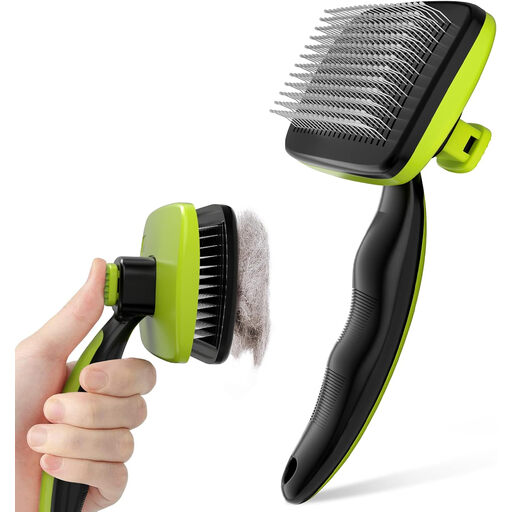
Why This Fits Their Persona: A straightforward and effective solution for getting started. It solves the core problem—tedious brush cleaning—without unnecessary extra features and is suitable for dogs, cats, and other small animals.
The fine 135° stainless steel bristles feature gentle massage beads that prevent skin irritation. The cleaning mechanism fully retracts the bristles, allowing the wad of hair to be removed easily.
Simple one-click cleaning mechanism; Ergonomic and lightweight handle (89 g) made of non-slip TPR and ABS material.
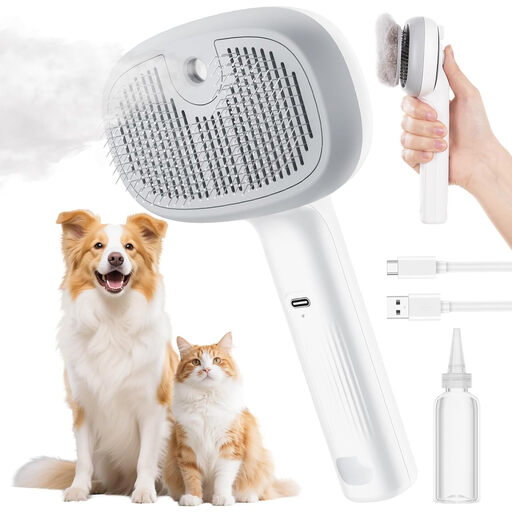
Why This Fits Their Persona: Ideal for owners looking for an advanced solution. The spray function reduces static electricity, tames flyaway hairs, and makes the coat more manageable during brushing.
This model combines a gentle slicker brush with a cool mist spray function. Dampening the coat prevents skin irritation from dry brushing and effectively traps loose hair and dander.
2-in-1 design with spray function and one-touch self-cleaning; Rechargeable battery and large water tank for extended use.
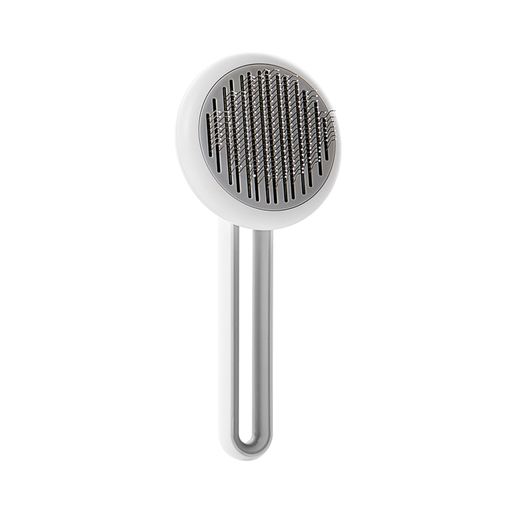
Why This Fits Their Persona: A versatile brush designed for both short and long coats on dogs, cats, and rabbits. It's well-suited for multi-pet households or for owners who want a durable, all-round tool.
The 150°-bent stainless steel needles penetrate deep into the coat without scratching the skin, as they are equipped with skin-friendly rubber tips. This avoids the pitfall of aggressive, unprotected bristles.
Improved, shape-retaining stainless steel wire bristles for a long service life; Suitable for all coat types and various animal species.
We have compiled a complete, up-to-date list of products that fully meet these strict selection criteria and German safety regulations.
The frequency depends on the breed, coat length, and time of year. During the shedding seasons in spring and autumn, daily use can be beneficial to remove loose hair. Outside of these times, brushing 1-3 times a week is sufficient for most dogs with medium to long coats to prevent matting and keep the coat healthy.
Yes, many models are explicitly designed as self-cleaning cat brushes. For cats with long, fine hair, pay special attention to brushes with long, flexible bristles and rounded protective caps. These penetrate gently through the topcoat to the undercoat without irritating the sensitive skin or pulling out hair.
A good indicator is bristles with visible rounded tips or protective caps. You can gently test the firmness of the bristles on your own forearm. Run it over your skin with light pressure. If it feels scratchy or unpleasant, it will likely be the same for your pet. Also, observe your pet's reaction during grooming. If it shows signs of discomfort, use less pressure or check the brush for damage.