
Lieferung heute & morgen

Qualitätsgarantie

Willkommens-Angebote freischalten: KOSTENLOSE Lieferung | Bis zu 80 % RABATT | Kostenlose 30-Tage-JoyPlus-Testphase
App herunterladen
A self-cleaning litter box promises a clean home and more time for what truly matters: quality time with your cat. But the market is flooded with models whose promises often don't hold up in practice. As a Joybuy Product Recommendation Officer, I'm here to help you separate the wheat from the chaff and make an informed decision. In this guide, we'll highlight the most common pitfalls and the crucial features to look for before you buy.
Many cat owners invest in an expensive device, only to be disappointed a few months later. This is often due to overlooked flaws that aren't mentioned in the marketing materials.
To avoid these pitfalls, you should focus on the technical fundamentals. Three parameters are critical for the function and longevity of an automatic litter box.
The cleaning method—usually a rotating sifter—is fundamental. Pay attention to how the system separates solid waste from clean litter particles. Even more important, however, is what happens next. An effective system features a fully sealed waste container that securely traps odours. Some models offer additional automatic deodorising functions that actively neutralise odour molecules rather than just masking them.
A reliable device combines multiple sensor technologies. These include weight sensors in the feet that detect if a cat is inside, infrared sensors at the entrance that register movement, and a mechanical anti-pinch protection that instantly stops the motor if it encounters resistance. Especially in a multi-pet household, such a multi-stage safety system is indispensable to ensure safe use for any litter box for multiple cats.
A smart litter box offers more than just automation. A litter box with app control should allow you to manually start cleaning cycles, check fill levels, and receive notifications. Advanced models go a step further: a litter box with a camera and weight sensors can not only distinguish between different cats but also log their toilet habits (frequency, duration, weight). This data can be an early indicator of health problems, offering real value beyond mere convenience.
Based on the criteria above, we have identified several models suitable for different needs and households.
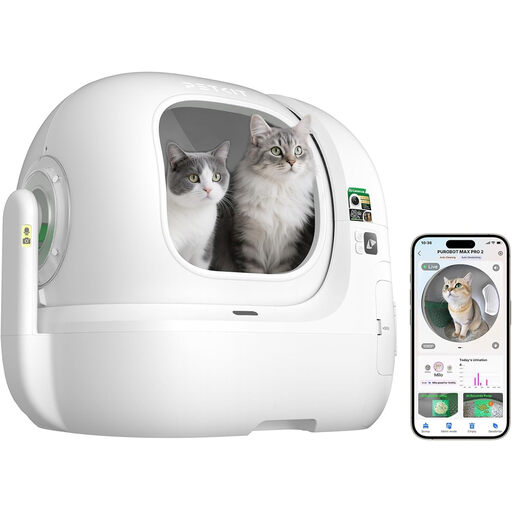
Why This Fits Their Persona: Ideal for owners who want data-driven insights into their cat's health. The AI camera, meow detection, and urine pH monitoring (with compatible litter) deliver valuable information directly to their smartphone.
Tackles the "odour trap" with a three-stage odour control system that combines a sealed container with two different deodorising technologies.
Detailed health monitoring via AI camera and sensors; dual-band Wi-Fi (2.4 & 5 GHz) for a stable connection.
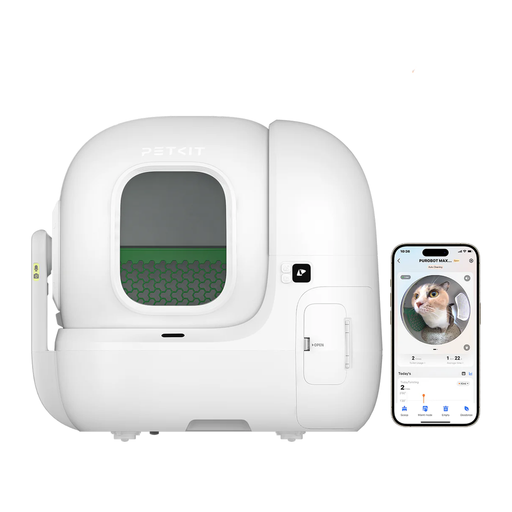
Why This Fits Their Persona: Manages the complexity of multiple cats through facial and weight recognition to track each cat's habits individually. The large 8-litre waste bin significantly reduces the frequency of emptying.
Counteracts "deceptive safety claims" with an xSecure system that combines multiple high-precision sensors and structural anti-pinch protection to ensure the safety of all cats.
Individual recognition and logging for each cat; large capacity waste bin (up to 17 days for one cat, according to the manufacturer).
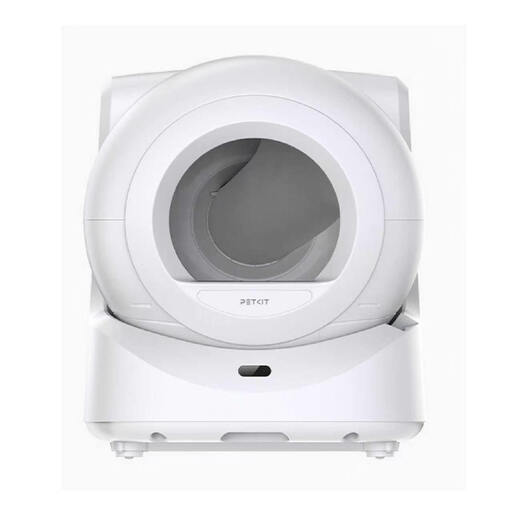
Why This Fits Their Persona: This user wants a reliable, automated solution that just works. The Purobot Ultra offers robust self-cleaning and odour control, providing a balanced solution for maximum hygiene with minimal effort.
Avoids the "maintenance nightmare" with a design that simplifies the deep-cleaning process and uses a special liner to reduce sticking.
Reliable automatic cleaning and odour reduction; spacious, enclosed design for cat privacy and less litter tracking.
We have compiled a complete, up-to-date list of products that fully meet these strict selection criteria and German safety regulations.
The transition requires some patience. First, place the new device next to the old litter box without activating the automatic cleaning function. Add some used litter from the old box to the new one to create a familiar scent. Once your cat accepts the new box, you can remove the old one and turn on the automatic mode.
This depends on the model, the number of cats, and the litter used. The waste container needs to be emptied every 1 to 3 weeks, depending on its size and usage. A thorough cleaning of the drum and sensors is recommended by most manufacturers every 1 to 3 months to ensure hygiene and functionality.
No, most models are optimised for use with high-quality, hard-clumping cat litter (e.g., bentonite or tofu-based). Non-clumping, silica, or paper-based litters are often incompatible with the sifting mechanism and can cause malfunctions. Always check the manufacturer's recommendations.