
Lieferung heute & morgen

Qualitätsgarantie

Willkommens-Angebote freischalten: KOSTENLOSE Lieferung | Bis zu 80 % RABATT | Kostenlose 30-Tage-JoyPlus-Testphase
App herunterladen
The idea is tempting: a litter box that cleans itself, neutralises odours, and frees you from the daily, unpleasant task of scooping. A self-cleaning litter box promises just that. However, the market is filled with models whose marketing promises often fall short in practice. Before you make a considerable investment, it's crucial to understand the common pitfalls that can lead to disappointment and, ultimately, a costly mistake.
Many buyers only realise after a few weeks that their new device has two fundamental problems:
This guide will help you avoid these and other problems and make an informed decision.
To find a model that truly makes daily life easier, you should be guided not by advertising slogans, but by objective parameters. Three factors are non-negotiable.
Capacity specifications can be misleading. Manufacturers often state the total volume of the device, but not the usable interior space of the drum for the cat. However, for your cat's comfort, the internal footprint and height are what matter.
An automatic litter box is an electrical appliance with moving parts. Your cat's safety is the top priority. Do not rely on models with only a single weight sensor. Modern and safe devices combine multiple technologies:
A system with at least three different types of sensors offers a high level of safety.
The self-cleaning litter box relieves you of daily scooping, but not the occasional deep clean. This is where the best are separated from the rest. Pay attention to how easily the device can be disassembled. A completely removable and washable drum is a significant advantage. Also, check what type of cat litter is recommended. Most models work exclusively with clumping cat litter (e.g., bentonite or tofu). Using the wrong litter can jam the mechanism and lead to damage.
Based on these objective criteria, we have compiled a selection of models suitable for different needs and households.
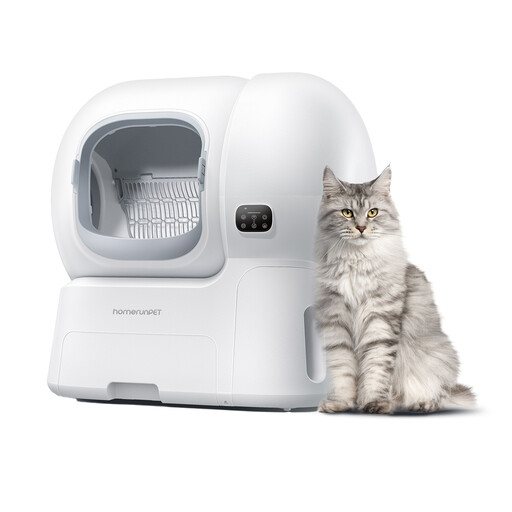
Why This Fits Their Persona: Ideal for owners of Ragdolls, Maine Coons, or simply very large cats who need maximum space and comfort. Its suitability for cats up to 10 kg ensures that even robust animals won't feel confined.
This model directly addresses the most common pitfall: insufficient size. With a total volume of 106 litres and a spacious interior, it maximises cat acceptance.
Massive Capacity: The 8-litre waste bin and automatic litter refill system significantly reduce maintenance intervals. Safety Design: An anti-pinch protection feature ensures the pet's safety.
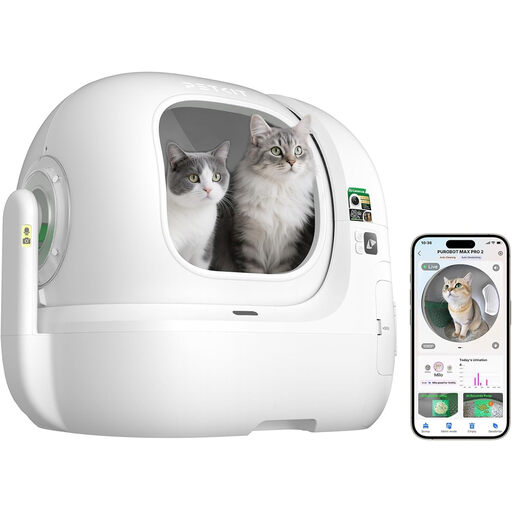
Why This Fits Their Persona: Perfect for households with multiple cats and tech-savvy owners who want detailed insights into their pets' health and behaviour. The smart litter box with an app provides the ideal platform for this.
The AI camera with facial and weight recognition solves the problem of unreliable identification in multi-cat households. The system can track and log the usage of each individual cat.
Health Monitoring: The system can monitor urine pH (with special litter) and stool behaviour. Comprehensive Safety: A patented anti-pinch mechanism and 12 sensors ensure maximum safety.
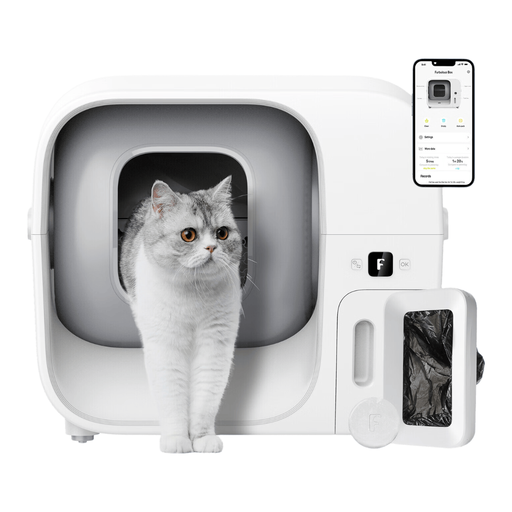
Why This Fits Their Persona: For users who demand the highest level of convenience and hygiene and want to completely avoid contact with waste. This model also automates the final step: packing the trash.
It solves the problem of unhygienic emptying. By automatically packing and sealing the bag, it minimises the release of odours and germs during disposal, making it a truly odour-free litter box.
Automatic Packing: The device seals the full waste bag and prepares a new one. Large Volume: The 60-litre drum is also suitable for larger cats and multi-cat households.
Some needs are very specific. If the models presented here aren't an exact match, you can find other vetted products in our main category that meet our strict selection criteria.
First, place the new device next to the old litter box without turning it on. Fill it with your cat's usual litter. Give your cat a few days to inspect and use the new box. Once they have accepted it, you can remove the old box and activate the automatic mode.
Modern devices are relatively quiet. The operating noise level is often between 35 and 50 decibels, which is roughly equivalent to a quiet conversation or a modern refrigerator. The cleaning cycle only lasts a few minutes and should not be disruptive in a normal living environment. Check the manufacturer's decibel rating.
Yes, many models are explicitly designed for multi-cat households. The key factors here are a large waste bin capacity and a robust mechanism. Models with app control and individual cat recognition, like the PETKIT litter box, offer the advantage of monitoring the toilet habits of each cat, which can be helpful in identifying health issues.