
Lieferung heute & morgen

Qualitätsgarantie

Willkommens-Angebote freischalten: KOSTENLOSE Lieferung | Bis zu 80 % RABATT | Kostenlose 30-Tage-JoyPlus-Testphase
App herunterladen
The idea is appealing: a litter box that cleans itself, neutralises odours, and provides insights into your cat's health via a camera. A self-cleaning cat litter box with camera promises to make life for cat owners significantly easier. However, the market is filled with models whose marketing promises often suggest more than the technology can deliver. Before you make a considerable investment, it's crucial to understand the common pitfalls that can lead to disappointment and unnecessary expense.
As your Joybuy Product Recommendation Officer, I'll help you separate fact from fiction. We'll focus on the facts and the critical technical features so you can make an informed decision.
Many buyers regret their decision because they fell for exaggerated marketing claims. Pay special attention to these three points:
To avoid the problems mentioned above, you should check three core technical areas before buying. These define the quality and reliability of a smart litter box.
A comprehensive safety system is non-negotiable. Look for a combination of several technologies:
Systems like the xSecure system used by PETKIT combine several of these sensors to ensure a high level of safety.
The integrated camera is far more than just a gimmick. Its true value lies in cat health monitoring. High-quality models use AI algorithms to:
Some advanced systems, like that of the PETKIT Purobot Max Pro 2, even offer the ability to analyse the urine's pH value using special litter.
The method of cleaning and disposal determines day-to-day convenience. A rotating drum mechanism that separates clumps from clean litter through a sieve has proven to be efficient. However, what happens next is crucial. A good system features:
Based on the criteria above, we have identified a few models that are suitable for different user profiles.
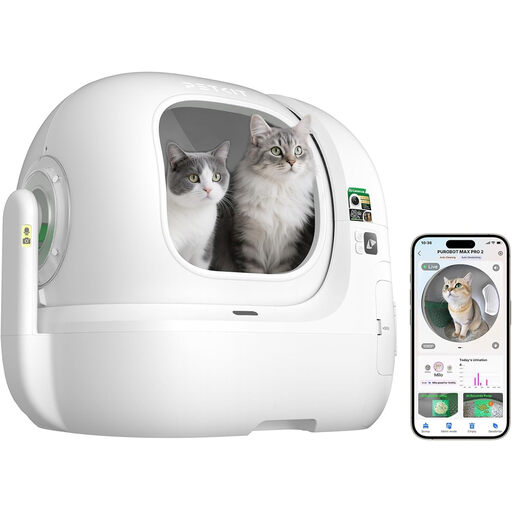
Why This Fits Their Persona: Ideal for multi-cat households and tech-savvy owners. The AI camera with a 210° wide-angle lens recognises individual cats, monitors their health data, and supports dual-band Wi-Fi (5G & 2.4GHz) for a stable connection. The large 8-litre waste container is designed for multiple animals.
The triple odour control system (N60/N50 Eliminator, sealed container) actively combats odours. The patented safety system with 12 sensors minimises risks. It is compatible with various types of clumping litter, avoiding strict system lock-in.
Comprehensive health analysis via AI camera and pH value detection (with special litter). Quiet operation at approx. 35 dB.
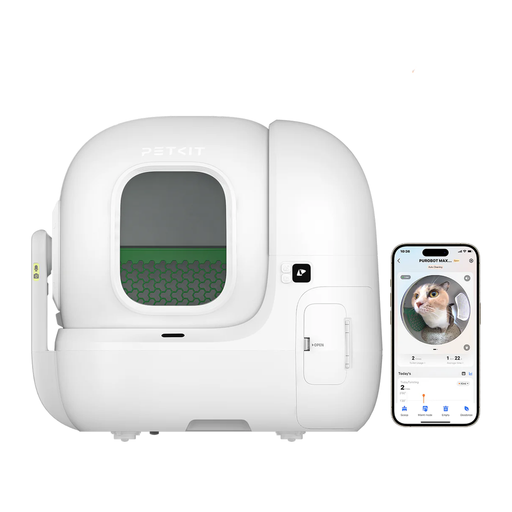
Why This Fits Their Persona: Perfect for apartment dwellers where effective odour control is a top priority. Its core feature is the contact-free, automatic sealing of the waste bag, which securely traps odours and makes disposal maximally hygienic.
Directly addresses the odour nuisance pitfall with a three-stage system of a sealed door and two deodorising modules. The xSecure safety system and compatibility with common litter types bypass the other common problems.
The automatic sealing technology offers a high level of hygiene and convenience. The AI camera still allows for reliable health monitoring.
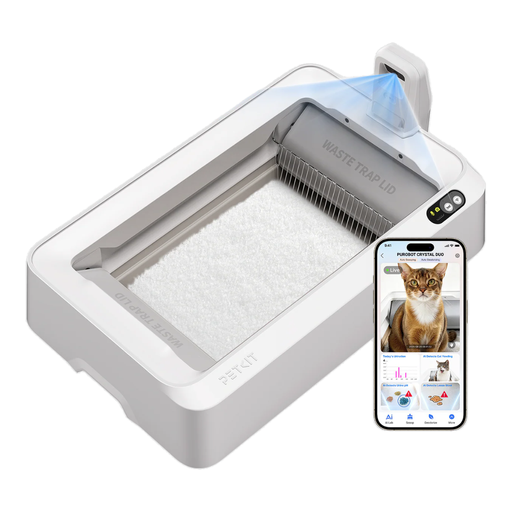
Why This Fits Their Persona: This model is aimed at users seeking maximum convenience with minimal maintenance. It uses disposable trays with crystal litter, which the manufacturer claims can last up to 30 days for one cat. Contact with used litter is completely eliminated.
This model deliberately uses a closed system (pitfall 2), which is positioned here as a convenience feature. It has a four-fold safety sensor system and an AI camera for health monitoring, thereby avoiding the other pitfalls.
Extremely low-maintenance due to the disposable tray system. Still offers AI-powered health monitoring and a high level of safety.
We've compiled a complete, real-time list of products that fully meet these strict selection criteria and German safety regulations.
1. How long does it take for a cat to get used to a self-cleaning litter box? The adjustment period varies from cat to cat and can range from a few hours to several weeks. To ease the transition, place the new litter box next to the old one. Deactivate the automatic cleaning function for the first few days to allow your cat to get used to the new device without being disturbed. Adding a small amount of the old, used litter to the new box can also help due to the familiar scent.
2. What are the running costs associated with a smart litter box? The running costs vary depending on the model. Factors to consider include:
3. Is a self-cleaning litter box with a camera suitable for multiple cats? Yes, many modern devices are explicitly designed for multi-cat households. Look for models with AI-powered cat recognition via the camera and weight sensors. This feature is crucial for individually tracking and logging the health data (weight, frequency of visits) of each cat. Also, check the capacity of the waste container to ensure it is large enough for the number of cats you have.