
Lieferung heute & morgen

Qualitätsgarantie

Willkommens-Angebote freischalten: KOSTENLOSE Lieferung | Bis zu 80 % RABATT | Kostenlose 30-Tage-JoyPlus-Testphase
App herunterladen
The daily chore of cleaning the litter box is one of the less glamorous aspects of living with our feline companions. A self-cleaning litter box promises significant relief: better hygiene, less odour, and more precious time back in your day. However, the market is filled with models whose marketing promises don't always stand up to reality. Before you make an investment, it's crucial to understand the common pitfalls that can lead to disappointment and wasted money.
This guide serves as a compass to help you separate the good from the bad and make an informed decision.
Many products advertise complete autonomy, but in practice, they often reveal weaknesses that undermine the promised convenience. Pay special attention to these three points:
To avoid the problems mentioned above, you should base your choice on objective technical features. The following three parameters are critical for the function, safety, and longevity of an automatic litter box.
A comprehensive safety system is non-negotiable. Modern, reliable devices combine multiple technologies to accurately detect your cat's presence at all times. Look for a combination of:
A system that integrates several of these sensors offers the highest level of protection and prevents malfunctions.
A device's efficiency depends on its sifting mechanism and its capacity. A good automatic litter box should be compatible with common clumping litters (e.g., bentonite, tofu, or mixed materials). The drum should be large enough for even larger cats to feel comfortable and turn around.
Capacity is especially crucial for owners of multiple pets. Check two values:
A smart litter box with app control is more than just a tech gimmick. It offers tangible benefits for management and health monitoring:
Based on the criteria above, we have identified a few models that offer a suitable solution for different needs and households.
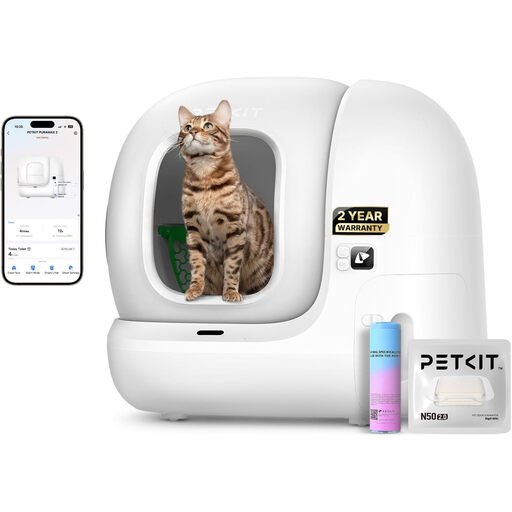
Why This Fits Their Persona: Ideal for households with multiple cats or for owners who value maximum autonomy and health data. The large 76-litre capacity and 7-litre waste container significantly minimise maintenance. The PETKIT app allows for detailed monitoring of each individual cat.
The XSecure system combines heat, infrared, weight, and anti-pinch sensors, directly addressing the pitfall of unreliable sensors. Its modular design simplifies cleaning the drum and mat. The N50 2.0 Deodorizer actively neutralises ammonia, providing effective odour control.
Combines a very large capacity for long maintenance intervals with detailed health monitoring via the app. Compatible with common clumping litters.
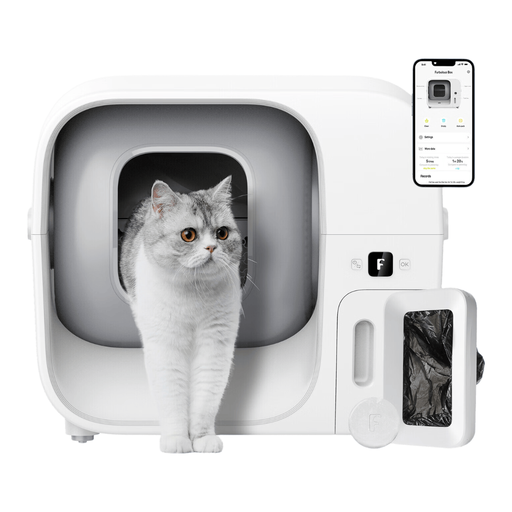
Why This Fits Their Persona: For users whose top priorities are odour elimination and minimal contact with waste. The unique auto-packing and sealing feature for the waste bag sets a high standard for hygiene and convenience.
This model directly tackles the trap of ineffective odour control by not just collecting waste, but hermetically sealing it. This prevents odours from escaping far more effectively than a simple lid or filter.
Automatic packing and thermal sealing of the waste bag. The system also automatically refills the bin liner, further simplifying the maintenance process.
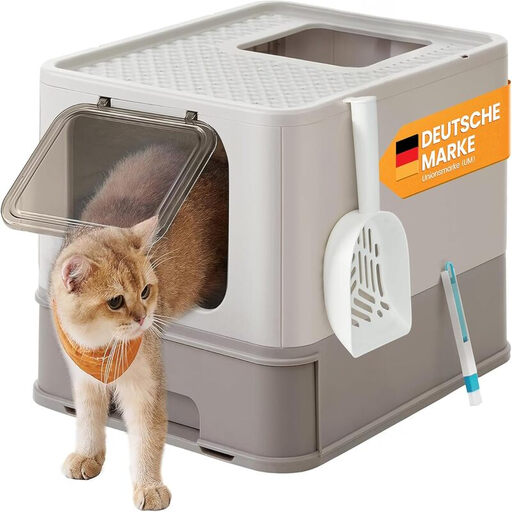
Why This Fits Their Persona: An excellent choice for cat owners who aren't ready for a fully automatic system but want to eliminate the drawbacks of an open tray (odour, scattered litter). It offers a significant improvement in hygiene at a fraction of the price.
This model bypasses the trap of complicated cleaning as it has no complex mechanics. The pull-out tray and smooth surfaces are easy to clean. The enclosed, top-entry design effectively reduces odours and litter tracking.
Effective odour and litter scatter prevention through an enclosed, top-entry design. The pull-out tray makes manual cleaning significantly easier.
We have compiled a complete, real-time list of products that fully satisfy these strict selection criteria and UK safety regulations.
The transition requires some patience. First, place the new unit next to the old litter box with the automatic function turned off. Fill it with your cat's usual litter. Once your cat accepts and regularly uses the new box, you can remove the old one. After a few more days, you can activate the automatic cleaning function.
Most self-cleaning litter boxes are optimised for use with high-quality, fast-clumping litter. This ensures the clumps are solid and don't break apart during the sifting process, which maximises cleaning performance. Check the manufacturer's recommendations, but bentonite or tofu litters are often a good choice.
The interval depends on the number of cats, the size of the waste container, and the animals' individual habits. As a rule of thumb: for a single cat and a model with a 7-litre waste container, like the PETKIT Pura Max 2, the emptying interval can be about every 15 days. The companion app will usually notify you when it's time for a change.