
Lieferung heute & morgen

Qualitätsgarantie

Willkommens-Angebote freischalten: KOSTENLOSE Lieferung | Bis zu 80 % RABATT | Kostenlose 30-Tage-JoyPlus-Testphase
App herunterladen
Purchasing a new built-in oven is a major decision for any kitchen. A key feature of modern appliances is the pyrolytic self-cleaning function, designed to make tedious scrubbing a thing of the past. However, the market is saturated with marketing promises and technical jargon that can make choosing difficult. Before you invest, it's crucial to understand the most common pitfalls that can lead to disappointment and unnecessary expense.
Common Pitfalls When Buying an Oven:
To avoid a poor purchase, you should focus on objective, technical features that determine an appliance's utility and longevity.
Pyrolysis is a thermal cleaning process. The oven heats its interior to temperatures of up to 500°C. At this heat, all food and grease residues are incinerated into ash, which can be simply wiped away with a damp cloth after the oven has cooled down.
What to look for:
A modern oven should do more than just top and bottom heat. A good selection of heating modes is essential for versatile cooking and baking results.
Important Heating Modes:
A standalone oven has its own controls and can be installed independently of a hob—for example, in a tall cabinet at eye level. This offers maximum flexibility in kitchen planning. Such an oven requires its own dedicated electrical connection, which must typically be installed by a professional.
Instead of making a blanket recommendation, we have identified models tailored to specific user profiles and their requirements.
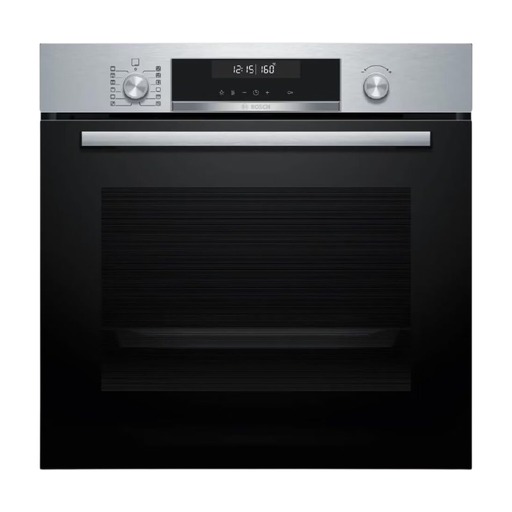
Why this model is a great fit: This Bosch Series 6 model is designed for households that value reliability, a wide range of functions, and convenience. It combines proven technology with modern features for everyday use.
The appliance offers a full-fledged pyrolytic function that reliably eliminates even stubborn grime, not just a superficial steam clean.
3D Hot Air for even baking results, an integrated Air Fry function, and 30 automatic programmes (AutoPilot 30) for effortless preparation.
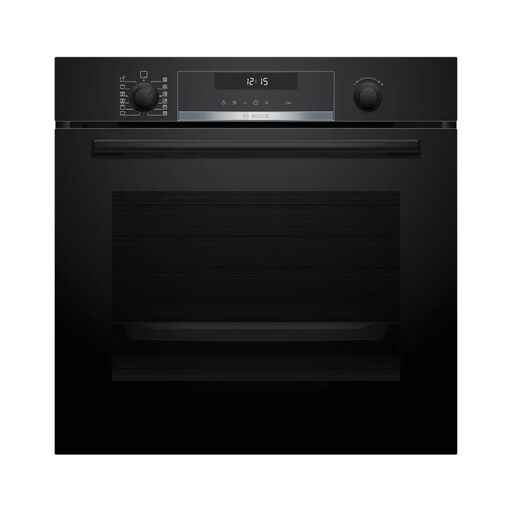
Why this model is a great fit: Ideal for users who want to integrate their kitchen appliances into a smart home system and benefit from remote control and additional digital content.
The Home Connect app provides real added value, such as preheating on the go, end-of-cycle notifications, and access to a recipe database, rather than just duplicating the control knobs.
Full app control via Home Connect, compatibility with voice assistants, and all the core functions of a self-cleaning Bosch oven, including pyrolysis and Air Fry.
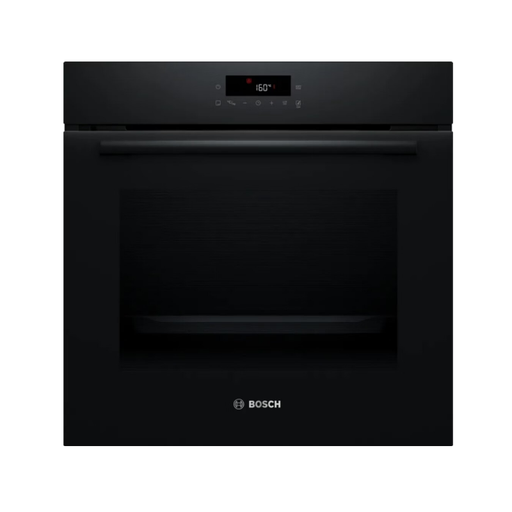
Why this model is a great fit: This appliance is aimed at buyers who are renovating their kitchen and want the core benefits of a modern oven—pyrolysis and fan-assisted heat—without paying for extra features they don't need.
Focuses on essential, high-quality functions. The A+ energy efficiency class is backed by concrete, solid consumption values, which saves costs in the long run.
Offers the crucial features like pyrolytic self-cleaning and 3D Hot Air in a package with excellent value for money.
We have compiled a complete, up-to-date list of products that fully meet these strict selection criteria and UK safety regulations.
A pyrolytic cycle typically lasts between 1.5 and 3 hours, consuming about 3 to 5 kWh of electricity. Assuming an electricity price of €0.30 per kWh, the cost of one cleaning cycle is approximately €0.90 to €1.50. Considering the time and effort saved, as well as the cost of chemical cleaners, this is a worthwhile investment for many households.
The main difference lies in the temperature and the principle of operation.
Yes, in principle, a standalone oven can be installed in any kitchen as it is not tied to a specific hob. This allows for flexible placement, for example, in an ergonomically convenient tall cabinet. The prerequisite is a separate, dedicated power connection at the desired installation location. For safety reasons, the installation should always be carried out by a qualified electrician.