
Lieferung heute & morgen

Qualitätsgarantie

Willkommens-Angebote freischalten: KOSTENLOSE Lieferung | Bis zu 80 % RABATT | Kostenlose 30-Tage-JoyPlus-Testphase
App herunterladen
An unexpected guest, a camping trip, or the transition period during a move—there are many situations that call for a quick and comfortable sleeping solution. A self-inflating air mattress seems like the ideal answer: it offers compact storage and is ready to use in minutes. However, the market is flooded with models whose marketing promises often suggest more than the products deliver. Many buyers experience the same problems after a short time: overnight air loss, an unstable sleeping surface, or difficult handling.
As your Joybuy Product Recommendation Officer, I'm here to help you identify these common pitfalls. This guide focuses on the crucial technical features that distinguish a reliable air bed from a useless one, so you can make an informed decision.
Before choosing a model, you should be aware of the design flaws that often only become apparent after the purchase.
Creeping Air Loss: Arguably the most frustrating problem is an air bed that noticeably loses firmness overnight. The cause is often not a puncture, but two other factors: material stretching and valve design. New PVC material naturally stretches during its first few uses, which can be mistaken for a leak. However, persistent, significant air loss points to a low-quality valve or weak welded seams. Look for models with double-lock valves and materials explicitly described as stretch-resistant (e.g., Tritech or Fiber-Tech).
The Unstable "Hammock" Surface: Budget-friendly air beds often have a simple chamber structure. Under weight, the middle sags downwards while the edges are pushed up. The result is an unergonomic sleeping position. High-quality models use a complex internal structure of thousands of polyester fibres or vertical air chambers (beam construction). These support the body evenly and create a stable, flat sleeping surface that comes much closer to a conventional bed.
Don't be fooled by marketing jargon. These three technical parameters are crucial for the longevity and comfort of your air bed.
With air beds, the term "self-inflating" usually refers to an integrated pump. There are important differences here:
The internal construction determines how well the air bed distributes your weight. Look for manufacturer specifications on technologies like:
Height is an often-underestimated comfort factor. A high-profile air bed (42 cm and up) not only makes getting in and out easier but also provides better insulation from the cold floor. As for size:
Here are some recommendations tailored to specific use cases that are designed to avoid the pitfalls mentioned above.
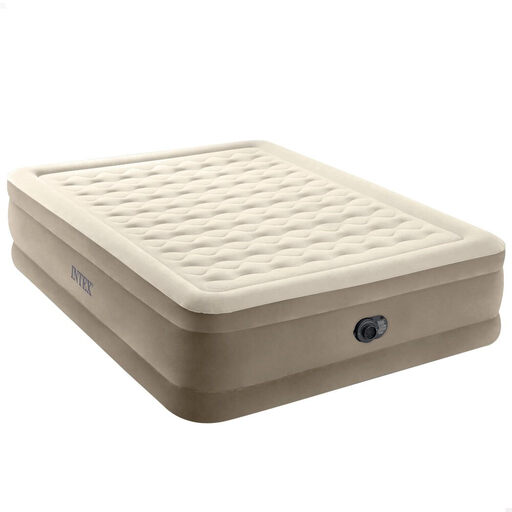
Why This Fits Their Persona: Ideal for hosts who want to offer their guests more than just a makeshift solution. The generous 46 cm height and Queen-size dimensions create a real bed feel. The integrated 220V pump makes setup effortless in just a few minutes.
The Fiber-Tech internal construction provides a stable, flat sleeping surface and counteracts the "hammock" effect. The flocked top and raised edges prevent slipping.
Comfortable height (46 cm) for easy standing. Integrated electric pump for inflation and deflation in about 4 minutes. Includes a carrying bag.

Why This Fits Their Persona: Perfect for camping or festivals where there's no power outlet in sight. The integrated pump runs on 4 D-cell batteries, offering independence from the grid without sacrificing the convenience of a quick setup.
According to the manufacturer, the Tritech material is designed to minimise material stretching and maintain consistent air pressure overnight. The quick-release valve makes deflation easy in the morning.
Battery-powered pump for maximum flexibility. Durable Tritech material for outdoor use. Inflation time of approximately 3 minutes.
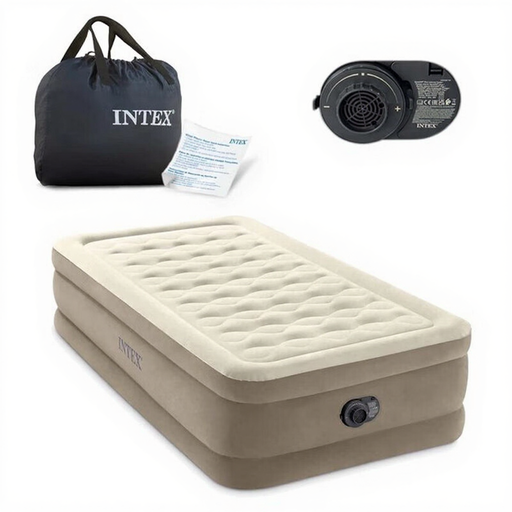
Why This Fits Their Persona: For students, people who are moving, or as a longer-term temporary solution. This twin bed combines a very comfortable 46 cm height with a stable construction, making it an adequate bed replacement for a limited time.
The combination of a Fiber-Tech structure and a dual-layer comfort top (Pillow-Top) provides an exceptionally stable and comfortable sleeping surface that retains its shape even with daily use.
Very high sleeping surface (46 cm). Quick setup in about 3 minutes thanks to the integrated 220V pump. Velvety surface for superior sleeping comfort.
We've compiled a complete, up-to-date list of products that fully meet these strict selection criteria and all applicable safety regulations.
1. Does every air bed lose air? A slight loss of air overnight can be normal. This is often due to the PVC material stretching during the first few uses or to temperature fluctuations (cold air contracts). However, if you have to significantly re-inflate the bed every night, it indicates a leaky valve or damage.
2. How long does an air bed last with regular use? The lifespan heavily depends on the material quality, internal structure, and care. High-quality models with reinforced PVC and a robust internal construction can last for several years with proper use (avoiding sharp objects, not overloading, storing correctly). Cheaper models often show signs of wear after just a few months.
3. What is the difference between a self-inflating air bed and a self-inflating sleeping pad? The term is used differently. For an air bed, "self-inflating" almost always means an integrated electric pump (mains, battery, or USB-powered) does the work. For a sleeping pad for camping, "self-inflating" means that an open-cell foam core inside expands as soon as the valve is opened, thus drawing in air. This often still requires some manual top-up inflation to achieve the desired firmness.