
Lieferung heute & morgen

Qualitätsgarantie

Willkommens-Angebote freischalten: KOSTENLOSE Lieferung | Bis zu 80 % RABATT | Kostenlose 30-Tage-JoyPlus-Testphase
App herunterladen
A natural-looking tan without the sun can be easily incorporated into your skincare routine with the right self-tanner. However, products for the face and body differ significantly in texture, colour development and application. Marketing terms such as "instant tan", "for all skin types" or "with skincare benefits" alone tell you little about whether a product will work for you in daily life.
This buying guide highlights what to look for in self-tanning lotion, self-tanning mousse, self-tanning gel and self-tanning drops. The selection is based on clear product features such as ingredients, body area, development time and handling.
A self-tanner cosmetically colours the uppermost layers of the skin and does not automatically provide protection against UV radiation. This also applies to products that create a bronzed complexion or are labelled as "tanning". Only when a specific sun protection factor is stated does the product offer additional, designated sun protection.
A DHA self-tanner without SPF therefore does not replace sunscreen. If you are spending time outdoors, you should use a suitable sunscreen separately and according to the instructions for use.
Tinted formulations often show a visible colour immediately after application. While this helps with guidance, it can adhere more strongly to dry areas, knees, elbows or ankles. An even, streak-free tan therefore depends not only on the product but also on preparation and dosage.
Progressive products develop their colour gradually. They are suitable for those who want to build up the shade slowly and have better control over the intensity.
Sensitive or dry skin can react to fragrances, alcohol or certain preservatives. When making a purchase, you should check the current INCI list on the packaging. A small patch test on an inconspicuous area of skin is advisable before the first full application. If irritation occurs, discontinue use.
Dihydroxyacetone, or DHA for short, is a commonly used tanning agent in self-tanners. Depending on the formulation, the colour develops over several hours and can be intensified through repeated application. Some self-tanning drops combine DHA with erythrulose and allow for individually adjustable application.
Pay attention to the stated development time. A product for your morning facial routine should be used differently from a self-tanner for the body, which can be left to develop undisturbed for several hours.
Glycerin, aloe vera juice, panthenol, hyaluronic acid or plant oils may be included in a formulation. These details describe the composition but are not automatic proof of efficacy. If you wish to avoid fragrances, you should specifically look for a fragrance-free self-tanner and check the full ingredients list.
Before application, a gentle exfoliation is recommended, especially on dry areas. The skin should be clean and dry. After application, wash your hands thoroughly or use an application mitt. Light-coloured clothing should only be put on once the product has fully absorbed.
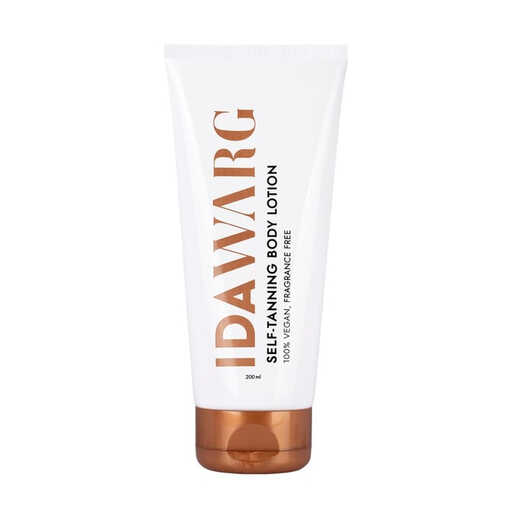
Why this product suits the profile: The lotion is intended for the body and can be built up gradually with repeated application. The colourless texture is practical for those who do not need an instant tint.
Gradual application reduces the risk of an overly strong first colour. According to the product description, the formula is fragrance-free and vegan.
200 ml content, glycerin and saccharide isomerate in the INCI list, gradual colour intensity.
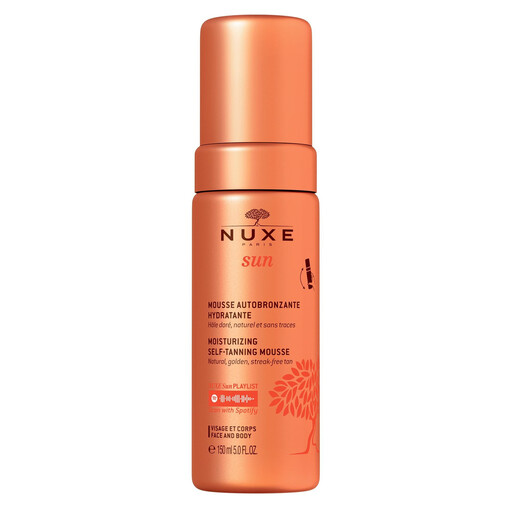
Why this product suits the profile: The mousse is aimed at users looking for a lightweight texture, a gradual golden tint and added moisturising ingredients.
The airy texture and DHA, according to the product description, suit a controlled application rather than an unclear instant intensity.
150 ml content, DHA as per product information and glycerin and sodium hyaluronate in the INCI list.
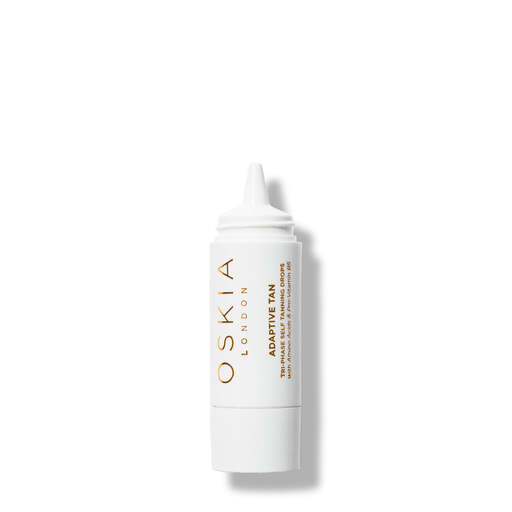
Why this product suits the profile: The drops can be mixed with a moisturiser, serum or oil, making them particularly suitable for the face, neck or targeted body areas.
The dosage of 1 to 3 drops allows for gradual adjustment and avoids an uncontrolled amount on smaller areas.
15 ml, DHA and erythrulose according to the INCI list, with variable dosage for face and neck.
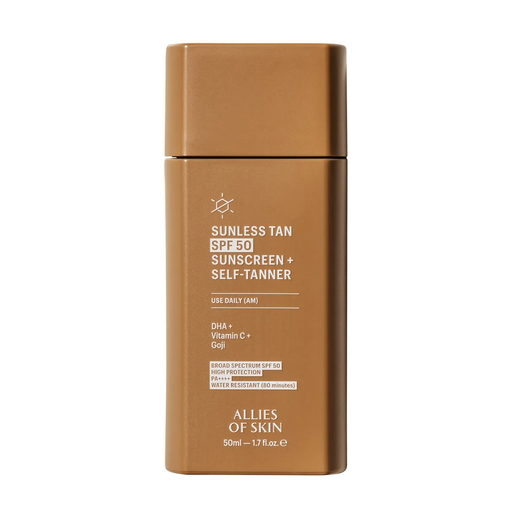
Why this product suits the profile: According to the product description, this face cream combines a self-tanning agent with a stated SPF 50 and is intended for daily use on the face.
The specifically stated SPF 50 makes the difference from a pure self-tanner clear. Application and reapplication should follow the sun protection instructions.
50 ml, DHA in the INCI list and SPF 50 according to the product description.
We have compiled a complete, regularly updated list of products that fully meet these strict selection criteria and the safety regulations in force in the EU.
The skin should be clean, dry and as free as possible from very dry patches. A gentle exfoliation the day before can smooth the surface. Apply the product in thin, circular motions and use less on knees, elbows, hands and feet. Wash your hands after application and observe the stated development time.
The longevity of the visible colour depends on the formulation, skincare routine, showering and natural skin exfoliation. With progressive products, the desired intensity can be built up through repeated application and then maintained with further applications. The information on the respective packaging is decisive.
Only a product with an explicitly stated sun protection factor offers the corresponding designated UV protection. A self-tanner without SPF does not protect against sunburn. Even with a product containing SPF, the amount applied, reapplication interval and the manufacturer's instructions should be followed.