
Lieferung heute & morgen

Qualitätsgarantie

Willkommens-Angebote freischalten: KOSTENLOSE Lieferung | Bis zu 80 % RABATT | Kostenlose 30-Tage-JoyPlus-Testphase
App herunterladen
An even complexion without unwanted patches starts not with the colour, but with the right product category. Self-tanners and sun tan products serve different purposes: self-tanners create a visible tint without UV exposure, while sun tan products are designed for use while you are out in the sun and, depending on the product, contain a sun protection factor.
If you choose products based only on colour promises or packaging design, you can easily overlook important details. What really matters is the actual UV protection, the intended area of the body, and how the product performs.
A self-tanner containing DHA can colour the surface of your skin, but it does not automatically protect against UVA or UVB radiation. This also applies to products labelled "Sunless" or "without sun". Only an explicitly stated sun protection factor offers a defined level of protection within the scope of the stated application.
A self-tanning lotion such as the Australian Gold Instant Sunless Lotion contains no sun protection factor according to the product description. It is therefore not a suitable replacement for a sunscreen SPF 30.
Terms like "natural-looking tan" can refer to the colour development, the ingredients, or simply the marketing language. Instead, look for verifiable information:
A vegan self-tan also does not automatically describe a fragrance-free or particularly gentle formula. For sensitive skin, the full INCI list on the packaging is what matters.
"Water-resistant" does not mean that a product provides unchanged protection after swimming or towel drying. With sun protection, you must reapply after swimming, sweating, and towel drying. With self-tanners, water can affect colour development or longevity.
A self-tanner for the face should be easy to apply evenly and in a controlled manner. Facial skin is often more sensitive to fragrances or certain preservatives. Products like a facial moisturiser with self-tanner are usually lighter in formula and available in smaller pack sizes.
For the body, lotions or larger mousse bottles are practical. Applying a self-tanner for the body requires even distribution, especially around the knees, elbows, hands, and feet. These areas tend to absorb colour more intensely.
Before applying, it is a good idea to do a small patch test. For an even result, you can gently exfoliate your skin beforehand and then moisturise dry areas with a neutral care product. After application, wash your hands thoroughly.
The SPF value primarily refers to UVB protection. A product with SPF 30 is not automatically water-resistant and should be applied generously and regularly. For prolonged sun exposure, shade, protective clothing, and a hat are additional protective measures.
The Collistar Ultra Protection Tanning Cream SPF 30 is intended for face and body according to the product description and is labelled as water-resistant. It contains UV filters as well as sunflower oil and carrot root extract. The product information and the actual INCI list should be checked on the packaging before purchase, as formulations can vary.
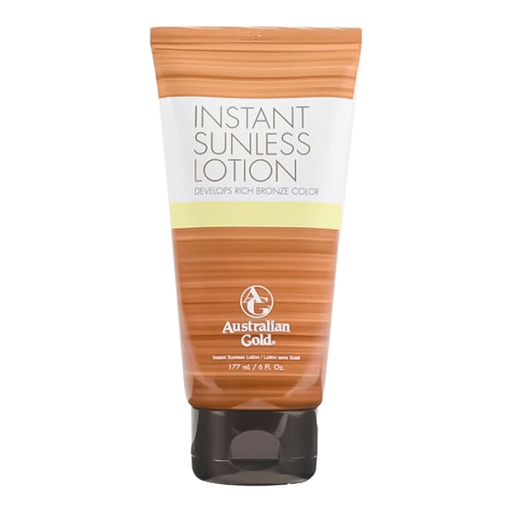
Why this product fits the profile: The lotion offers an instantly visible light tint and can be easily dispensed from the practical tube. It is suitable for users who are looking for a straightforward body care product without UV exposure.
The visible tint makes even application easier. The lack of SPF is clearly stated, preventing confusion with a sunscreen.
177 ml lotion, instantly visible tint, and vitamin C listed according to the product description.
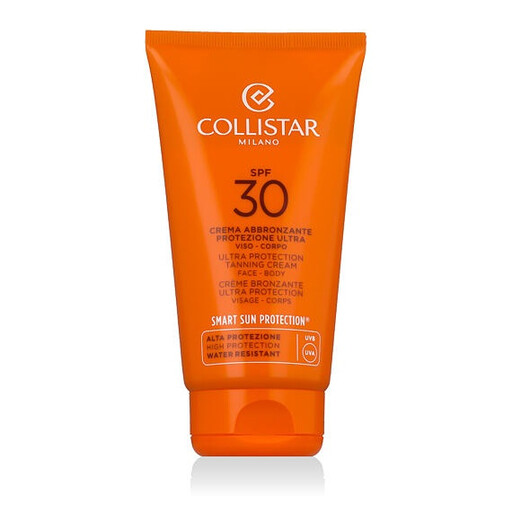
Why this product fits the profile: For sunny days, this cream offers SPF 30 according to the product description, can be used on face and body, and has a water-resistant formula.
The SPF value is clearly stated. Nevertheless, it remains important to reapply regularly and not to confuse this sunscreen with a self-tanner.
SPF 30, 150 ml content, and water-resistant application according to the product description.
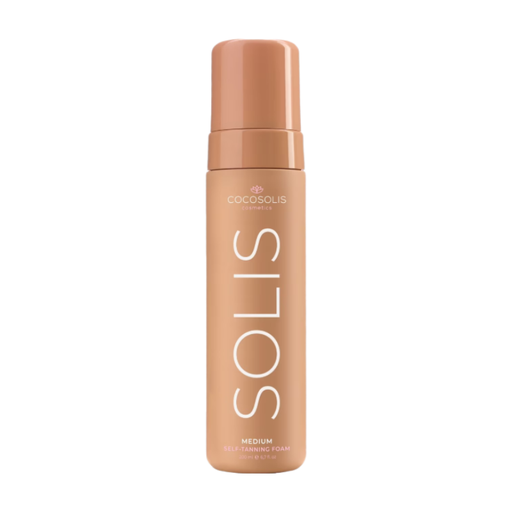
Why this product fits the profile: According to the product description, this mousse is intended for face and body, is vegan and cruelty-free, and has a development time of around eight hours.
The stated development time makes application easier to plan. Allergens such as limonene, citral, and linalool are listed in the product information.
200 ml mousse, Medium shade, plant-based DHA according to the product description, and suitable for face and body.
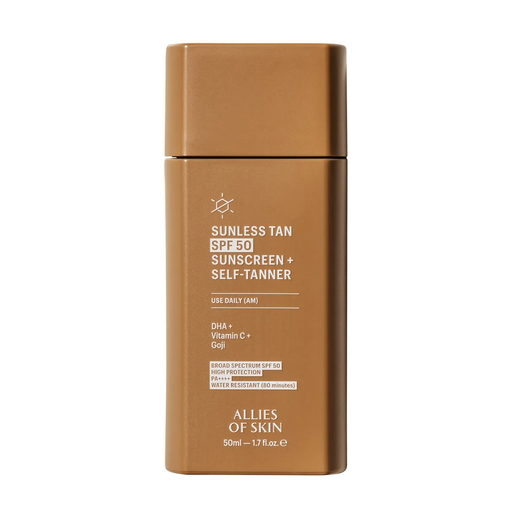
Why this product fits the profile: According to the product description, this face cream combines DHA with SPF 50 and is intended for daily use on the face and neck.
The combination of tint and stated SPF reduces the risk of using a facial self-tanner without sun protection. The sun protection must still be reapplied regularly.
50 ml face cream, SPF 50 and DHA according to the product description; reapplication is recommended after two hours as well as after swimming or sweating.
We have put together a complete, regularly updated list of products that fully meet these strict selection criteria and the safety regulations in force in the EU.
For an even result, apply self-tanner to clean, dry skin. Spread the product in circular motions and initially avoid the hairline, palms of your hands, and soles of your feet. After application, wait before showering or putting on tight clothing. The exact development time is stated on the packaging.
Self-tanners do not replace daily moisturising care or sun protection. The shelf life after opening varies by product: for the Australian Gold Instant Sunless Lotion, for example, 12 months is stated, while other products refer to a printed best-before date. Store the products in a cool, dry place away from direct sunlight.
Depending on skin renewal, your shower routine, care, and the product itself, the tint usually lasts for several days. Evenly reapplying moisturiser can help balance out fading. Before reapplying, your skin should be as free as possible from any old colour residue.
Only if the manufacturer explicitly states both areas. A specific self-tanner for the face is designed for controlled application on the more delicate facial area. With products intended for both face and body, you should blend particularly carefully around the hairline, eye area, and neck.
No, unless a sun protection factor is stated. A water-resistant self-tanner is also not automatically a sunscreen. For time spent outdoors, you will need an additional suitable sun protection product with a stated SPF and must follow the usage instructions.