
Lieferung heute & morgen

Qualitätsgarantie

Willkommens-Angebote freischalten: KOSTENLOSE Lieferung | Bis zu 80 % RABATT | Kostenlose 30-Tage-JoyPlus-Testphase
App herunterladen
By the Joybuy Product Recommendation OfficerUpdated August 30, 2026
Modern planters are more than just containers for plants; they are central elements of interior design. Yet, the search for the perfect piece can quickly lead to disappointment. Many products that look appealing online only reveal their weaknesses after purchase. Before you make a decision, it's helpful to know the most common pitfalls that often lurk behind an attractive facade.
This guide focuses on the objective criteria that distinguish a good planter from an impractical one. We'll highlight three common problems:
To avoid these problems, you should focus on a few fundamental parameters. These will help you objectively evaluate a product's quality and functionality.
The material determines not only the look but also the durability and weight of the planter.
A designer planter must also be functional. Two aspects are non-negotiable here.
With a planter with a stand, stability is everything. Look for a solid construction where the legs are firmly connected, for example, with a cross brace. A wide base reduces the risk of tipping. The stand should be able to support the weight of the pot, soil, and plant without bending or wobbling.
Based on the criteria above, we have identified some products that are suitable for different living situations and needs.

Why This Fits Their Persona: The rectangular shape is ideal for narrow surfaces like windowsills, desks, or shelves. The minimalist, matte black design blends seamlessly into modern interiors without being obtrusive.
This model solves the drainage problem directly: It features two drainage holes and a matching, detachable ceramic saucer. This protects surfaces from water stains and plant roots from rot.
Space-saving rectangular format. Integrated drainage system with saucer.
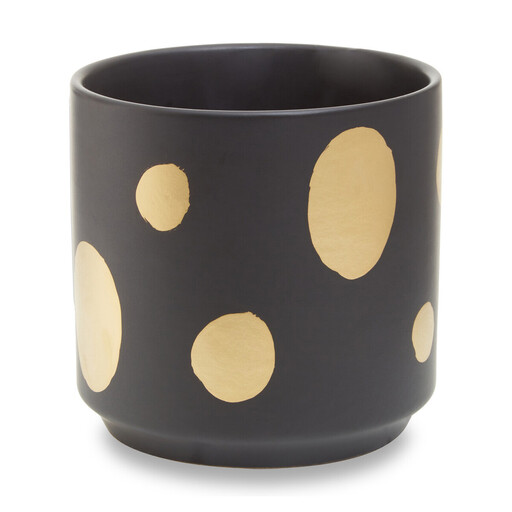
Why This Fits Their Persona: Ideal for those who want to make a strong visual statement with a compact object. The interplay of black ceramic and warm metallic dots looks sophisticated and modern without dominating the space.
This planter is made of solid stoneware, making it resistant to scratches and chipping. It avoids the trap of cheap materials whose appearance quickly deteriorates. The high-quality craftsmanship ensures long-lasting aesthetic appeal.
Made from durable stoneware. Striking yet elegant design for decorative purposes.
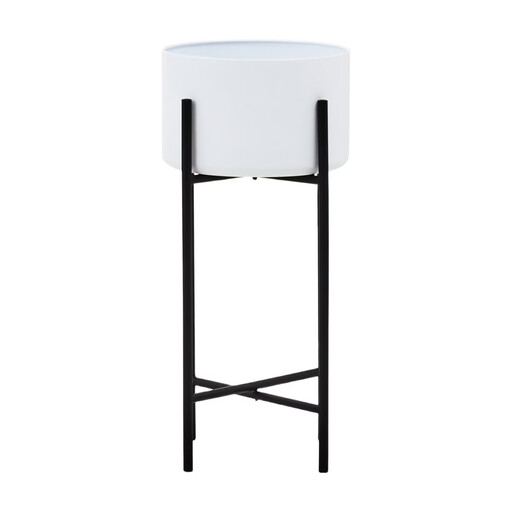
Why This Fits Their Persona: This large, floor-standing planter is a true design statement. It's perfect for filling empty corners in a living room or office with a large plant like a Monstera or a Bird of Paradise, creating an architectural focal point.
The iron leg frame is connected by a cross brace, ensuring high stability. This directly addresses the risk of unstable constructions in tall planters and provides a secure footing.
Generous dimensions for large plants. Stable metal construction with a cross brace.
We have compiled a complete, up-to-date list of products that fully meet these strict selection criteria and applicable regulations.
Not necessarily. It's important to distinguish between a planter and a cachepot (or decorative pot). Planters usually have one or more holes for drainage. Cachepots, on the other hand, are often designed as purely decorative shells without holes. If you use a cachepot, you should keep the plant in a separate, smaller plastic pot with holes and place it inside the cachepot.
The right size is crucial for plant health. As a general guideline, the diameter of the new pot should be 2 to 4 centimetres (about 1-1.5 inches) larger than the current root ball. For fast-growing plants, you can go a bit larger; for slow-growing ones, a smaller increase is sufficient. A pot that is too large holds too much moisture, which can damage the roots.
That depends heavily on the material and its coating. Most metal plant stands designed for indoor use are not suitable for permanent outdoor placement. Rain, snow, and humidity can cause the metal to rust unless it is explicitly declared as weatherproof (e.g., made of galvanized steel or with a special outdoor coating). Always check the manufacturer's specifications for this.