
Lieferung heute & morgen

Qualitätsgarantie

Willkommens-Angebote freischalten: KOSTENLOSE Lieferung | Bis zu 80 % RABATT | Kostenlose 30-Tage-JoyPlus-Testphase
App herunterladen
When our loyal companions enter their golden years, more than just the colour of the fur around their muzzle changes. Their metabolism, activity levels, and nutritional needs all evolve. Choosing the right senior pet food is therefore a crucial decision to maintain the quality of life for ageing dogs and cats. However, the market is saturated with products whose marketing promises often create more confusion than clarity.
As your Joybuy Product Recommendation Officer, I'm here to help you separate the crucial facts from pure advertising. We'll highlight the most common pitfalls when buying and show you which objective criteria truly matter, so you can make an informed decision for your senior pet.
Many well-intentioned purchases turn out to be unsuitable because they are based on common misconceptions. Pay special attention to these two points:
To make the right choice, you should focus on verifiable facts. The following three parameters are decisive for the quality of a food for older pets.
As dogs and cats age, their energy requirements often decrease as they become less active. A food that is too high in calories can quickly lead to obesity, which places additional strain on joints and organs. A good dog food for seniors or cat food for ages 7+ is therefore characterised by a moderately reduced fat content.
At the same time, maintaining muscle mass is essential in old age. For this, seniors need high-quality and easily digestible protein. Pay attention to the declaration: a high-quality animal protein source (e.g., chicken, lamb, fish) should be at the top of the ingredients list.
Certain nutrients can specifically support health in old age. Instead of being guided by advertising slogans, check the composition for the following points:
The decision between wet food for seniors and dry food for seniors depends on the individual needs of your pet.
Mixed feeding can combine the advantages of both types of food.
Based on the objective criteria mentioned above, we have identified some products that are suitable for the specific requirement profiles of senior pets.
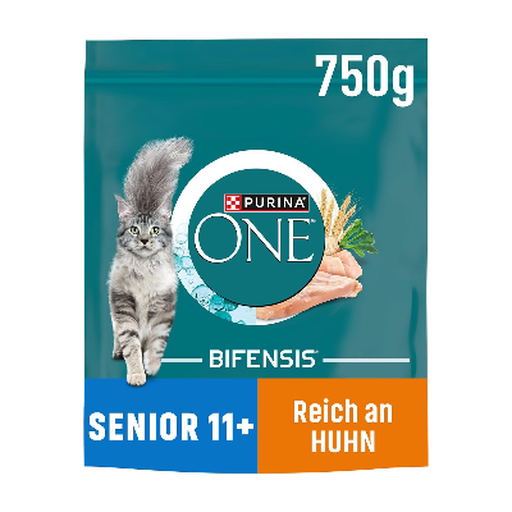
Why this product is a great fit: This food is specially designed for the needs of cats aged 11 and over. The focus is on supporting the immune system and healthy digestion through the BIFENSIS formula with heat-treated lactic acid bacteria.
Offers a clearly defined age specification (11+) and a specific nutrient formula, rather than just using a generic "Senior" label.
Contains Vitamin D and minerals to support healthy bones, as well as an adapted protein-to-fat ratio to counteract age-related weight loss.
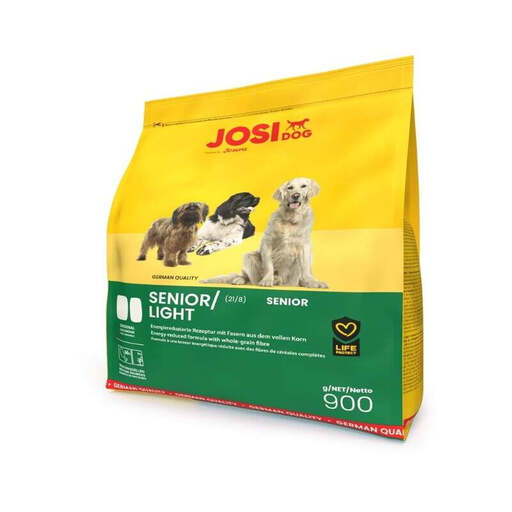
Why this product is a great fit: The energy- and fat-reduced formula (only 8% fat) is specifically tailored to the needs of less active, older, or overweight-prone dogs, thus supporting weight management.
Focuses on a clear, measurable benefit (reduced energy and fat content) instead of vague health claims. The composition is transparently designed for weight management.
Contains dietary fibre for a good feeling of fullness and dried meat from the New Zealand green-lipped mussel, an ingredient often associated with supporting joint health.
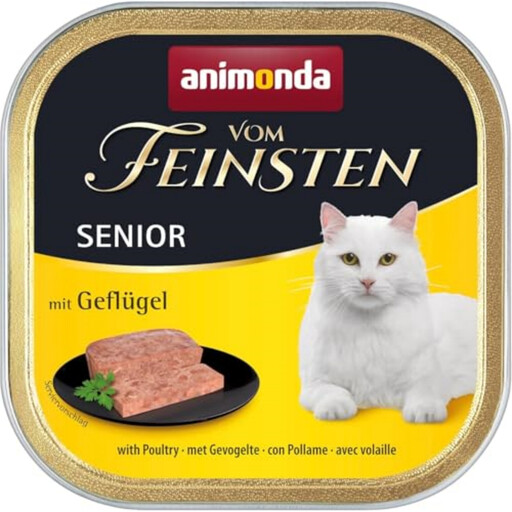
Why this product is a great fit: As a **grain-free senior food** in a p?té form, it is ideal for dietarily sensitive older cats or those with dental problems. The soft texture makes it easy to eat.
Fulfills a specific need (grain-free) without presenting it as a universal solution. The composition is transparent and reduced to the essentials, without unnecessary fillers.
A high meat content of 63% and the complete absence of sugar, soy, and artificial colours, preservatives, and flavourings make it a highly digestible option.
We've compiled a complete, up-to-date list of products that fully meet these strict selection criteria and UK regulations.
There is no one-size-fits-all answer, as the ageing process is individual. As a general guideline:
Observe your pet: decreased activity, weight gain, or a duller coat can be signs that a change in diet is advisable.
A sudden change in diet can lead to digestive issues. Proceed gradually: over a period of 7 to 10 days, mix a steadily increasing amount of the new senior food with the usual food until you have completely replaced it.
Not necessarily. Grain-free senior food is primarily useful for pets with a diagnosed grain intolerance or allergy. For most seniors, the crucial factor is not the absence of grain, but the quality and digestibility of the entire recipe, especially the proteins and fats. Well-processed grains in moderation can be a valuable source of energy and dietary fibre.