
Lieferung heute & morgen

Qualitätsgarantie

Willkommens-Angebote freischalten: KOSTENLOSE Lieferung | Bis zu 80 % RABATT | Kostenlose 30-Tage-JoyPlus-Testphase
App herunterladen
A newborn's and baby's skin is exceptionally delicate and permeable. That's why choosing the right care products, especially for daily diaper changes, is a crucial decision for many parents. The market offers a vast array of options, which can make it difficult to find your way. This guide is designed to help you understand the features of sensitive baby wipes and make an informed choice that meets your child's needs.
To find the right product for sensitive baby skin, a few objective criteria can help guide your decision.
The formula is crucial for skin compatibility. Products labelled as fragrance-free and alcohol-free wipes reduce the potential for irritation. A minimalist composition is often a sign of a gentle formula. Look for products where water is the main ingredient, such as wipes with 99% water. Ingredients like parabens, dyes, or phenoxyethanol are intentionally avoided in many sensitive products. A short and easy-to-understand ingredient list is therefore a positive sign.
The wipe's material affects both the cleaning sensation and the ecological footprint. Many wipes are made from a blend of synthetic and natural fibres. There is a growing availability of plastic-free wipes, which are often made from cellulose or cotton and can be biodegradable. An alternative is organic baby cotton pads, made from 100% cotton and moistened with plain water. These offer maximum control over ingredients and provide a completely plastic-free option for your baby's gentle cleansing.
A baby's skin has a natural protective acid mantle. Products that maintain or restore the skin's pH level can help prevent skin irritation. Look for labels like "pH-balanced." Certifications or dermatological tests from independent institutes can also indicate good compatibility. Terms like hypoallergenic baby care suggest that the formula is designed to minimise the risk of allergies.
Here is a selection of products tailored to the needs of sensitive baby skin.
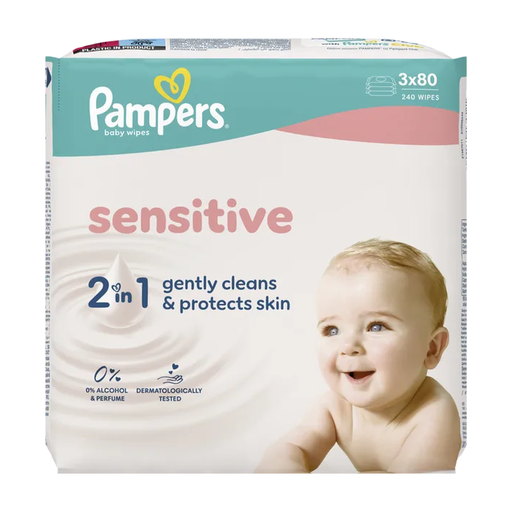
Pampers Sensitive Wipes 3 x 80 Count
Why it stands out: These wipes feature a special formula that, according to the manufacturer, helps maintain the skin's natural pH level better than cleaning with cotton wool and water.
Benefits:
Who is it for? For parents looking for a product specifically designed to maintain the skin's own pH level, making it especially suitable for newborn skin.
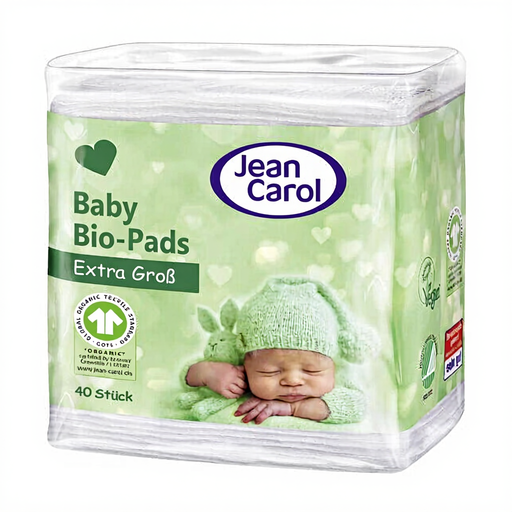
Jean Carol Organic Baby Cotton Pads, Extra Large 40 Count
Why it stands out: This is a minimalist and eco-conscious alternative to conventional wet wipes. The pads are made from 100% certified organic cotton and contain no additives whatsoever.
Benefits:
Who is it for? For parents who want maximum control over ingredients and prefer a chemical-free, plastic-free cleaning solution. Ideal for hypoallergenic baby care using only pure water.
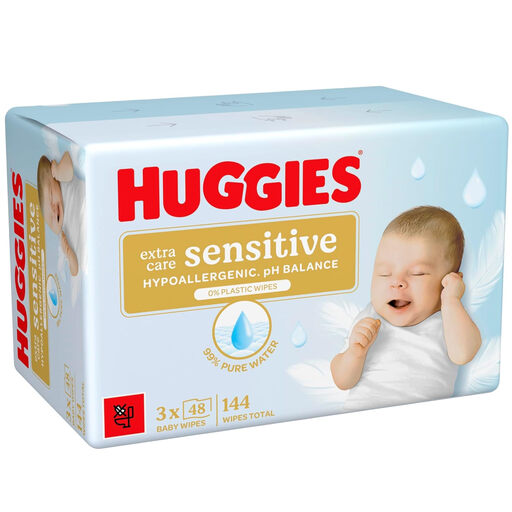
Huggies Pure Baby Wipes, Sensitive Skin - 4 Pack x (3x48 Wipes) - 99% Water, Plastic-Free
Why it stands out: These wipes combine two highly sought-after features: a formula with 99% pure water and a plastic-free material.
Benefits:
Who is it for? For parents who value a water-based clean and are also looking for a more eco-conscious, plastic-free option. A great choice for the daily care of highly sensitive skin.
The right equipment makes daily life with a baby much easier. If you're looking for other products besides wipes, such as diapers, changing mats, or care creams, you'll find a wide selection in our Baby Care Accessories category.
Yes, many sensitive wipes are specifically designed for newborn skin. It is recommended to choose products explicitly labelled as wipes for newborns. These are typically hypoallergenic and free from potentially irritating substances like alcohol and fragrance.
A common alternative is using soft washcloths or cotton pads with lukewarm water. Organic baby cotton pads made from 100% cotton, like those from Jean Carol, are a practical and hygienic option for this. They allow for cleaning without any additives.
You can recognise good sensitive wipes by a short, easy-to-understand ingredient list with a high water content. Look for labels like "fragrance and alcohol-free", "hypoallergenic," and "pH-balanced." Dermatological tests and the material (e.g., plastic-free) are other important quality indicators.