
Lieferung heute & morgen

Qualitätsgarantie

Willkommens-Angebote freischalten: KOSTENLOSE Lieferung | Bis zu 80 % RABATT | Kostenlose 30-Tage-JoyPlus-Testphase
App herunterladen
When buying sensitive baby wipes, a low price per wipe and a claim such as “gentle” on the packaging aren’t the only things that matter. For newborns and babies, the formula, moisture level, material and closure are all important. With frequent nappy changes, unclear ingredients or a pack that doesn’t seal properly can lead to unnecessary waste.
Baby wipes with 99% water usually contain other ingredients as well, such as mild cleansing agents, acidity regulators or preservatives. That’s why it’s important to check the full INCI list. A high water content can be a useful guide, but it doesn’t replace checking for fragrance, alcohol and other ingredients.
The term wipes for sensitive skin doesn’t automatically mean the product has a standardised formula. Check whether it is actually fragrance-free, alcohol-free and suitable for use from birth. If allergies or atopic eczema run in your family, read the ingredients particularly carefully. Stop using the product if you notice any unusual skin reactions, and seek medical advice if needed.
A low price per wipe can make bulk packs seem like an attractive option. However, if a pack is opened frequently or isn’t sealed properly, the wipes can dry out. Smaller packs with a reliable closure are often more practical for your changing bag. At home, a multipack can be worthwhile if you can store it properly and expect to use it all.
Short, easy-to-understand formulas are often easier to assess when choosing sensitive baby wipes. Look for:
“Paraben-free”, “no colourants” and “pH skin-neutral” each describe a specific property. None is a blanket guarantee that a product will suit every individual.
A wipe should be moist enough without dripping. Wipes that are too dry require more rubbing, while very thin versions can tear more easily during thorough cleaning. For everyday use, look for soft, tear-resistant materials and a size suited to how you plan to use them.
If you choose plant-based or biodegradable fibres, check the disposal instructions too. Wipes described as biodegradable generally shouldn’t be flushed down the toilet unless the packaging specifically says otherwise.
These questions can help you choose baby wipes:
After taking out a wipe, close the pack fully. Store it in a cool, dry place away from direct sunlight.
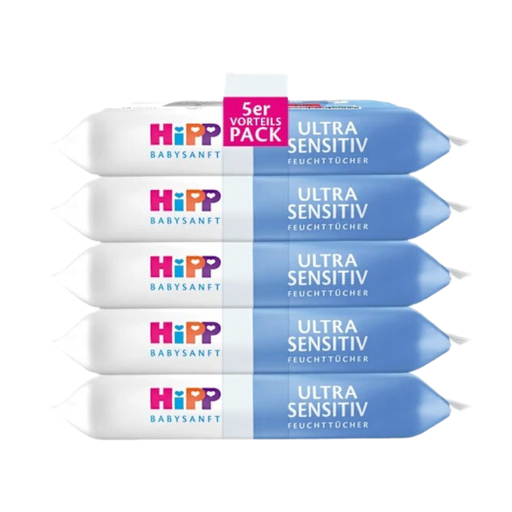
Why this product suits this profile: The set contains five packs of 48 wipes, and the product information says they’re suitable from birth. The listed formula includes water, Octyl/Decyl Glucoside, Citric Acid, Sodium Citrate and Sodium Benzoate.
The ingredients are clearly listed, and the manufacturer highlights the 99% water content and suitability for newborns. This makes it easier to check key buying criteria before ordering.
Five individual packs containing 240 wipes in total. According to the product description, they’re suitable for the face, hands and nappy area.
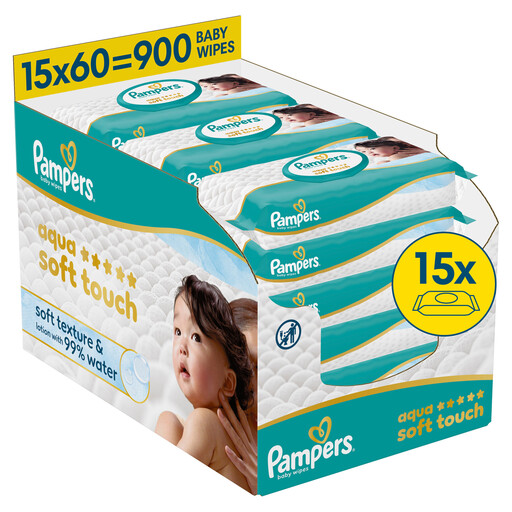
Why this product suits this profile: This bulk pack contains 15 packs of 60 wipes. According to the product information, the wipes are fragrance-free and alcohol-free, suitable from day one and made with a water-based lotion.
The claims of 0% alcohol and 0% fragrance make it easier to choose wipes to suit your needs. Splitting the total into separate packs also means you won’t need to open one large pack as often.
900 wipes in total. The product description highlights a soft texture, 99% water in the lotion and no plastic in the wipe.

Why this product suits this profile: The option with 12 packs of 80 wipes is designed for households that use a lot of wipes. According to the product information, they’re fragrance-free, made with purified water and plant-based fibres.
The large quantity is divided between 12 packs. The stated three-layer material may be useful at nappy-changing time, but compare it with your own preferences for softness.
960 wipes, a fragrance-free formula and, according to the product information, OEKO-TEX certification number 25.HUS.21538.
We’ve put together a complete, regularly updated list of products that meet these strict selection criteria and fully comply with the safety regulations in force in the EU.
It depends on the information provided for each product. Look for a clear statement such as “from birth” or “from day one”. You should also check the ingredients and instructions for use. Recommendations may vary for the face, hands and nappy area.
There’s no single time limit that applies to every product. Follow the packaging instructions and store the wipes as directed. Seal the pack after each use and keep it in a cool, dry place. Don’t use the product if the wipes have an unusual smell, visible discolouration or have dried out.
Generally, no. Fragrance-free wipes and wipes described as biodegradable usually belong in your household waste. Follow the manufacturer’s instructions only if the packaging specifically says the wipes are suitable for flushing. For regular baby wipes, putting them in the bin is the safest option.