
Lieferung heute & morgen

Qualitätsgarantie

Willkommens-Angebote freischalten: KOSTENLOSE Lieferung | Bis zu 80 % RABATT | Kostenlose 30-Tage-JoyPlus-Testphase
App herunterladen
A sensor night light should make routes visible in the dark without staying brightly lit all the time. However, children’s bedrooms, hallways, stairs and bathrooms each call for different sensor types, light colours and mounting options. If you focus only on a low price or terms such as “smart”, it is easy to overlook important details.
A motion-sensor night light switches on when movement is detected. A twilight-sensor night light, on the other hand, responds to the ambient light level and usually stays on automatically in the dark. Some models combine both functions.
For a hallway that the family regularly uses at night, a motion sensor can reduce energy consumption. For consistent orientation lighting in a child’s bedroom, a twilight sensor is often more practical.
The Kelvin value describes the light colour:
A plug-in night light is quick to install, but it takes up a socket. The sensor area must not be covered by furniture, curtains or decorations. For bathrooms, only use lights whose product details expressly permit use in damp areas. For example, a model with IP20 is intended for dry indoor spaces and not for direct contact with water.
Check whether the light responds only to brightness, only to movement or to both factors. With motion sensors, the detection angle and range are crucial. A model with a range of up to 3 metres and a 120° detection angle may be sufficient for short hallways or the area in front of a staircase. For a ceiling light with a presence sensor, the size of the room should also match the intended detection coverage.
LED lights use little energy compared with many older light sources. With a stated consumption of 0.5 W, you can estimate the approximate annual consumption for continuous operation:
0.5 W × 24 hours × 365 days = 4.38 kWh per year.
With a motion sensor, actual consumption may be lower because the light only switches on when movement is detected. Battery-powered models, on the other hand, do not require a socket, but do need their batteries to be checked regularly.
A dimmable night light should offer several clearly distinguishable settings. Compact dimensions are equally important, so that adjacent sockets are not blocked. Also look out for:

Why this product suits this profile: Two plug-in lights make it possible to equip, for example, both a hallway and a child’s bedroom. The automatic twilight sensor switches the lights on when it gets dark.
The three brightness levels let you adjust the light output instead of having to rely on a single fixed setting that may be too bright.
2700 K warm white, three brightness levels and a stated power consumption of 0.5 W.
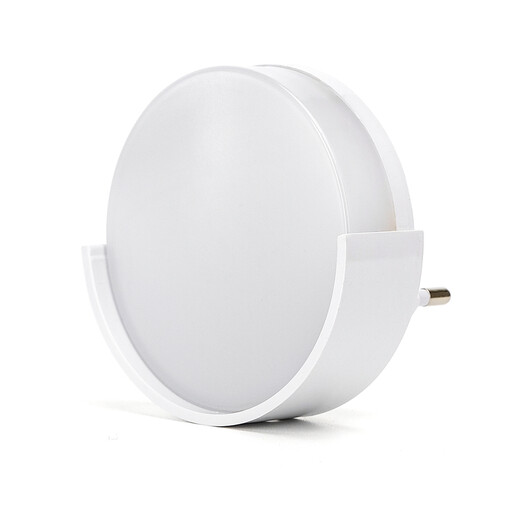
Why this product suits this profile: This model is designed for direct indoor use and requires neither batteries nor charging.
The stated activation threshold of below 20 lux clearly indicates when the sensor is designed to respond.
1 W power, 40 lm luminous flux, IP20 for indoor spaces and a stated service life of 25,000 hours.

Why this product suits this profile: For hallways, stairs and frequently used routes, this model combines motion and twilight sensors.
The automatic switch-off after 60 seconds without movement prevents the light from staying on unnecessarily.
Five brightness levels, a range of up to 3 m, a 120° detection angle and 0.5 W power consumption.
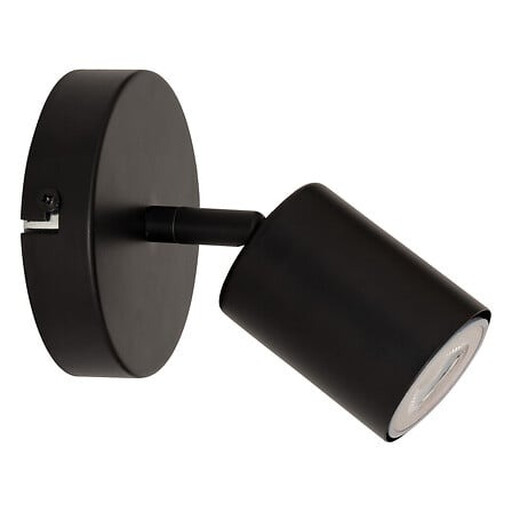
Why this product suits this profile: As a black wall light, it complements hallways, bedrooms or living spaces when fixed, directional lighting is preferred over automatic operation.
The product description clearly states that self-installation and secure mounting are required. This prevents it from being mistakenly treated as a plug-in light.
Black steel housing, compact dimensions of 10.5 × 15 cm and an adjustable spotlight.
We have put together a complete, regularly updated list of products that fully meet these strict selection criteria and the safety regulations applicable in the EU.
An integrated light sensor measures the brightness of the surrounding area. When it falls below a certain threshold, the light switches on. In daylight or when the room is bright enough, it switches off again. The sensor should be unobstructed and must not point directly at another lamp.
This depends on the stated power rating and the actual operating time. A model rated at 0.5 W uses approximately 4.38 kWh per year when operated continuously for 24 hours a day. With a motion-sensor light, consumption is usually lower, depending on how often it is used. For an accurate cost calculation, multiply the consumption in kilowatt-hours by your electricity tariff.
A twilight sensor can keep the light active throughout the hours of darkness. A motion-sensor model, by contrast, usually switches on only when movement is detected and switches off again after a set period. Before buying, therefore, check the sensor type and the switch-off delay.