
Lieferung heute & morgen

Qualitätsgarantie

Willkommens-Angebote freischalten: KOSTENLOSE Lieferung | Bis zu 80 % RABATT | Kostenlose 30-Tage-JoyPlus-Testphase
App herunterladen
A sensor night light should help you find your way at night without staying on all the time. For families, older people and households with dark hallways or stairs, the colour of the light isn’t the only thing that matters. The type of sensor, how the light switches off, its power supply and how it’s installed all affect how practical it is in everyday use.
Many disappointing purchases come down to three common marketing traps:
A motion-sensor night light switches on when it detects movement. This is useful for routes you only use briefly, such as a hallway, bathroom or staircase. Check the detection angle, range and switch-off time. A range of several metres can be useful in a long hallway, while in a small child’s room it may cause the light to switch on too often.
A light-sensor night light responds to the ambient light level. It switches on when it gets dark and off again in daylight. This is a good option for lighting that helps you find your way around whenever it’s dark, such as in a bedroom, child’s room or entrance hall.
A combination of dusk and motion sensors can be especially practical: the light only comes on when it’s dark and movement is detected. That means it stays off during the day and doesn’t switch on at night without a reason.
A warm white night light of around 2,700 to 3,000 Kelvin is often considered gentler than cool white light. For hallways and bedrooms, the light should help you find your way without being unnecessarily bright or dazzling.
A dimmable night light or dimmable LED lamp gives you more control. Check whether you can adjust the brightness in steps or continuously. On some products, the dimming function only applies to the warm white light, while the RGB modes work separately.
Compare the stated range in metres, detection angle and automatic switch-off function. A model with a 60-second delay before switching off may be enough for quick trips. For longer tasks in the bathroom or kitchen, a longer activation time, or one that resets when movement is detected again, is more practical.
Positioning matters too: don’t install a plug-in night light behind furniture or curtains. The sensor needs a clear view of the route. On stairs, avoid positioning the light so it shines directly into your eyes.
LED technology generally uses little power in small night lights. Check the specific wattage rather than relying on the label ‘energy-saving’. A product rated at 0,3 W, 0,5 W or 1 W will use different amounts of power if left on continuously.
IP20 is a common rating for indoor use. It doesn’t mean the product is protected against water. Even a night light for the bathroom should only be used in line with the manufacturer’s instructions and kept a sufficient distance from water sources. Before buying, also check the mains voltage, EU plug, material details and cleaning instructions.
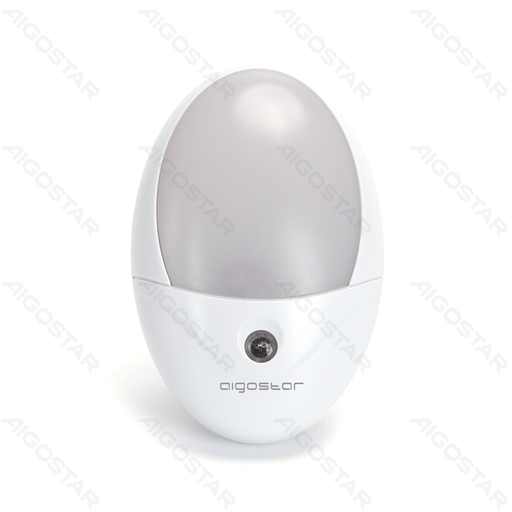
Why it suits this profile: This compact plug-in night light uses PIR motion detection and doesn’t need batteries. It’s suitable for indoor hallways, bedrooms, bathrooms and stairs.
The sensor type, 120° detection angle and range of up to 7 m are clearly stated. The warm white light has a colour temperature of 3,000 K.
1 W power consumption, 20 lm luminous flux and direct connection to 220–240 V, with no batteries required.

Why it suits this profile: Designed for a child’s room, this night light combines motion and dusk sensors with five brightness settings. It’s also intended for use in hallways, on stairs, in kitchens and in bedrooms.
Choose from five brightness levels, from 20% to 100%. According to the product details, it switches off automatically after 60 seconds without movement.
2700 K warm white LED light, 0,5 W power consumption, a 3 m range and a 120° detection angle.
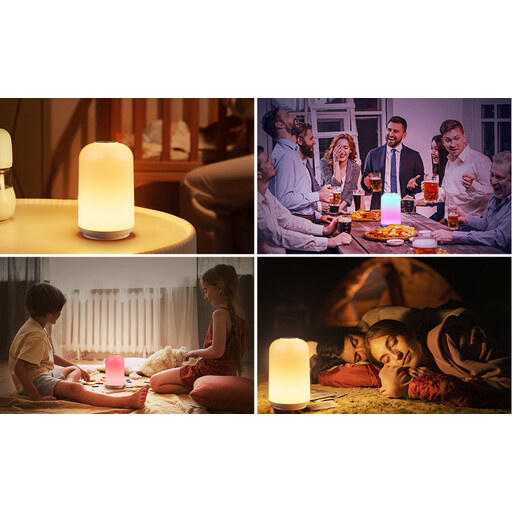
Why it suits this profile: This rechargeable night light is suitable for bedside tables, shelves and children’s rooms when you want cordless use and a choice of warm white or coloured light.
The operating modes are described separately: warm white with continuous dimming, and RGB with a steady light or colour-changing mode. The built-in sensor responds to light levels of up to 40 Lux.
1 W power consumption, USB charging at 5 V/1 A, 40 lm luminous flux and 12 SMD LEDs.
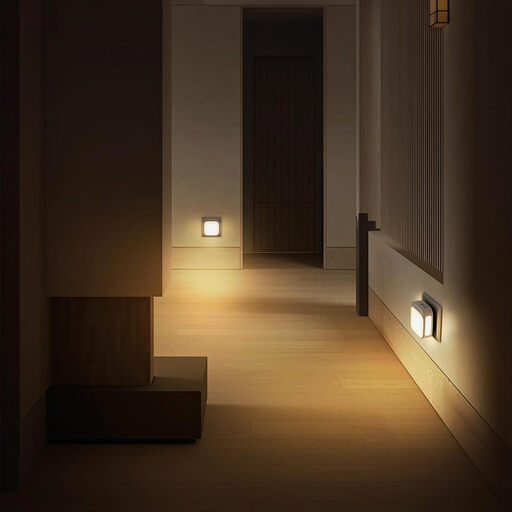
Why it suits this profile: This two-pack is ideal for households looking to fit a simple light sensor to several sockets in hallways, nurseries or bedrooms.
According to the product details, the automatic light sensor switches on at 20 Lux or below and off in daylight. There’s no need to switch it on and off manually.
0,3 W power consumption per light, warm white 2800–3000 K and continuous dimming from 10% to 100%.
We’ve put together a complete, regularly updated list of products that meet these strict selection criteria and fully comply with the safety regulations in force in the EU.
Position a sensor night light so its detection range covers the route you actually use. In a hallway, make sure it isn’t completely obscured by doors or furniture. For stairs, side-on installation is often more suitable than placing it directly at eye level.
Only clean electrical lights when they’re disconnected from the power supply, using a dry, soft cloth. Plug-in models and lights that aren’t water-resistant must not come into direct contact with water. If the casing, cable or plug is visibly damaged, stop using the product.
Its energy use depends on the power rating and how long it’s on. Products rated at 0,3 to 1 W have low nominal consumption. A motion sensor can reduce usage further by limiting the light to short periods. To calculate the cost accurately, you’ll need your household electricity tariff and the actual daily operating time.
Hallways, stair landings, bathrooms and routes between the bed and the door are all suitable. The sensor should have a clear view of the area where movement is likely. After installation, test whether it switches on too early or too late, or is triggered by movement passing nearby.
Its lifespan depends on the LED module, electronics, heat generated and how it’s used. Check the operating life stated by the manufacturer and whether the LED module can be replaced. For rechargeable models, battery lifespan is another important factor.