
Lieferung heute & morgen

Qualitätsgarantie

Willkommens-Angebote freischalten: KOSTENLOSE Lieferung | Bis zu 80 % RABATT | Kostenlose 30-Tage-JoyPlus-Testphase
App herunterladen
A sensor night light for a socket should help you find your way at night without shining brightly all the time. It’s particularly useful for families when children need to go to the bathroom, parents are walking through the hallway or stairs need to be easier to see in the dark. Adults can also benefit from automatic lighting that doesn’t need batteries replacing.
However, models vary considerably in their sensors, light colour and intended use. Some lights respond only to darkness, while others also detect movement. An RGB night light can be decorative, but it won’t always be the best choice for finding your way at night. It’s worth checking a few common pitfalls before you buy.
A night light with a motion sensor switches on when it detects movement. Ideally, it should also have a dusk sensor so it isn’t triggered unnecessarily during the day. A motion sensor on its own may respond even when the room is already bright enough, wasting energy.
A night light with a dusk sensor works differently: it switches on when the ambient light level drops, whether or not anyone is moving. This can be useful if you want a constant, low-level guiding light. If you only need light when you walk past at night, a combination of motion and dusk sensors is usually a more targeted choice.
Bright, cool-white light can feel unpleasant at night and may be disruptive in children's bedrooms or other bedrooms. A warm-white night light of around 2700 to 3000 Kelvin is often a better choice for hallways, children's bedrooms and bathrooms when you want gentle guidance.
RGB lighting offers a choice of changing colours, but it isn’t automatically suitable for every use. In a child's bedroom, the colour function can be decorative. On stairs or in a hallway, even lighting and clearly visible edges matter more than colour effects.
The stated range needs to suit the size of the room and the position of the socket. Furniture, doors and curtains can partially block the sensor. The detection angle also matters: a 120-degree sensor covers a different area from one with a narrower angle.
Before you buy, check:
Sensor functions are particularly important in an automatic night light. A model with a PIR motion sensor detects physical movement, while a light-sensitive sensor measures the ambient brightness. Automatic switch-off after a set time prevents the light from staying on unnecessarily.
The GRIFEMA light has a stated switch-off time of 60 seconds without detected movement. Its detection range is up to 3 metres and 120 degrees. This may be sufficient for short routes in a hallway, by a child's bedroom or on the stairs. For larger rooms, compare the range with the planned socket location.
Several brightness settings make it easier to adjust the light to where you’ll use it. A lower setting is often enough in a child's bedroom, while you may need a little more light on the stairs. The GRIFEMA light offers five brightness levels from 20 to 100 per cent and uses 2700 Kelvin warm-white LED light.
The AIGOTECH NL01 light is specified as having 20 lumens, 3000 Kelvin and a colour rendering value of Ra ≥ 80. Lumens describe the luminous flux, or the amount of light emitted. The CRI or Ra value indicates how naturally colours may appear under the light. For a simple guiding light, these specifications are more useful than broad marketing claims such as ‘extra bright’.
An energy-saving night light should use as little power as possible when it’s on. Depending on the model, the products listed use 0.5 to 1 watt. A 0.5-watt model uses 0.5 kWh over 1,000 hours of operation. Actual costs depend on your electricity tariff and how long the light is on.
Only use the light indoors as indicated by its labelling. Some models are intended for dry rooms only. Do not damage or cover the socket, casing or sensor openings, or allow them to come into contact with water. Always unplug the light before cleaning it with a soft, dry cloth.

Why this product suits this need: The five adjustable brightness levels make it easy to tailor the light to a child's bedroom, hallway, kitchen or stairway. It plugs straight into the socket, so you won’t need batteries.
The motion and dusk sensors work together. The light switches on when it detects movement in a dark environment and switches off after 60 seconds without movement.
2700 Kelvin warm-white LED light, five brightness levels, 0.5-watt power consumption and a detection range of up to 3 metres and 120 degrees.
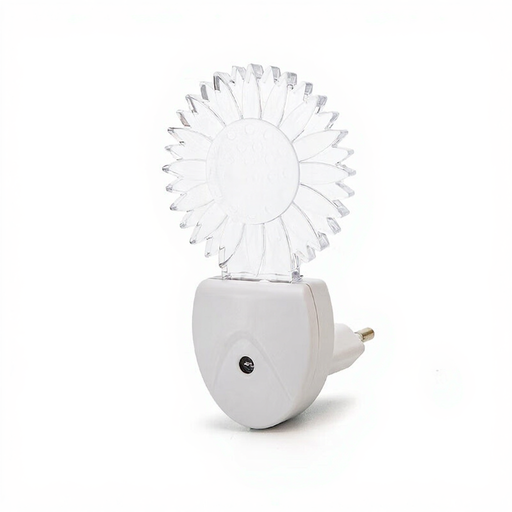
Why this product suits this need: Its decorative design and RGB function make it a good choice if you’re looking for a socket light with an added decorative touch for a child's bedroom or your own bedroom.
The built-in dusk sensor switches the light on when brightness falls below 20 lux and turns it off in daylight. This means you don’t need to operate it manually.
RGB light, stated luminous flux of 30 lumens, maximum power consumption of 0.5 watts and 230-volt socket operation without batteries.
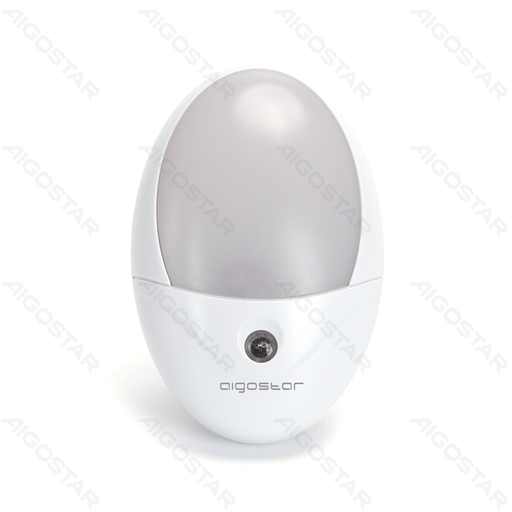
Why this product suits this need: This model is designed for hallways, bathrooms, kitchens and stairs, with a PIR sensor offering a greater stated range and warm-white light.
The PIR motion sensor has a stated detection range of up to 7 metres and 120 degrees. The light switches on automatically when the ambient light level is low.
20 lumens, 3000 Kelvin warm-white light, 1-watt power consumption, fire-resistant PC casing and battery-free operation.
The night light plugs directly into a suitable wall socket. Keep the sensor clear of curtains, furniture and other objects. On stairs, choose a position where it can detect movement approaching the first step, without overloading the socket or obstructing the route.
In bathrooms, cellars or garages, check that the product is suitable for the level of moisture in the room. The models listed are intended for indoor use; avoid water, splashes and outdoor use. A night light is not a toy, so position it where children can’t pull at it or open it.
We’ve put together a complete, regularly updated list of products that meet these strict selection criteria and fully comply with the safety regulations in force in the EU.
A built-in PIR sensor detects changes caused by movement. The LED light switches on automatically in the dark. Depending on the model, it stays on for a set time or switches off again after a period without movement.
It depends on the power consumption and how long the light is on. At 0.5 watts, it uses 0.5 kWh for every 1,000 hours of operation. A 1-watt model uses 1 kWh under the same conditions. A dusk sensor or automatic switch-off can limit the actual running time.
The manufacturer or supplier gives the lifespan in operating hours. The Aigostar RGB model is listed as lasting 25,000 hours, while the Aigostar NL01 model is listed as lasting 10,000 hours. These are guide figures for the LED and don’t replace checking the casing, sensor and socket during everyday use.