
Lieferung heute & morgen

Qualitätsgarantie

Willkommens-Angebote freischalten: KOSTENLOSE Lieferung | Bis zu 80 % RABATT | Kostenlose 30-Tage-JoyPlus-Testphase
App herunterladen
Sensor lights and sensory toys serve different purposes: an LED sensor light makes it easier to find your way through the hallway, while a musical baby toy combines auditory, visual and motor stimulation. What both product groups have in common is that technical specifications and safety details matter more than eye-catching marketing claims.
“Automatic lighting” says little about how a product actually performs. For a PIR sensor cabinet light, the range, detection angle and switching behaviour should be stated. A motion sensor light, for example, may only activate within a specific area. A shorter range may be sufficient for a small cupboard, while hallways or ceilings have different requirements.
A night light with a dusk sensor will not necessarily operate at every brightness level you require either. The stated lux value is relevant, where the manufacturer provides one. Furniture, curtains or dust can affect the light sensor.
A high battery capacity does not automatically indicate a specific operating time. Brightness, sensor activation frequency, charge level and usage patterns all affect battery life. You should therefore check:
With a rechargeable under-cabinet light, the fixing method is also important. Adhesive strips are convenient, but they require a clean, dry and sufficiently sturdy surface.
When buying learning toys for babies, check the recommended age range, any small parts that could be swallowed, edges and cleaning options beforehand. Statements such as “BPA-free” or “CE compliant” should be understood as manufacturer information and do not replace supervision by adults. Electric RGB night lights are not toys and should also be kept out of the reach of young children.
A PIR sensor detects changes in the thermal radiation emitted by moving people. It is often suitable for cupboards, shelving, kitchen areas and hallways. A dusk sensor, by contrast, responds to the ambient brightness. For a night light, this may be more practical than motion detection, as the light activates automatically when it gets dark.
For a ceiling light with presence or motion detection, consider the installation height, room size and the switching zones you require. For illuminating a specific work surface, a slim LED light with a clearly defined mounting position is often easier to manage.
Several colour temperatures make it easier to adapt the light to different situations:
With an RGB night light, the focus is on creating different colours. However, for orientation lighting in a child's bedroom, light intensity, positioning and glare-free alignment are also important.
For household use, moisture-protected products are only suitable if an appropriate protection rating is specified. Without this information, a light should be kept dry and not used in the immediate vicinity of water.
For toys, rounded edges, sturdy components and a clear age recommendation are important. With sensory floor tiles, look for a non-slip underside, sealed surfaces and suitability for indoor use. Even when materials are described by the manufacturer as non-toxic, regular checks for cracks or leaks are still advisable.

Why this product suits this profile: According to the product description, the two compact lights are suitable for smaller kitchen cupboards, shelves or wardrobes and do not require drilling.
The specifications state a PIR detection range of 3–5 m, USB charging and a capacity of 800 mAh instead of making a blanket claim about battery life.
20 cm length, three stated colour temperatures and two lights per set.
Why this product suits this profile: The longer design and 41 LED components are intended for larger cupboard surfaces, shelving or work areas.
The product data states dimensions of 300 × 38 × 10 mm, 1100 mAh, USB charging and a PIR range of 3–5 m.
Three colour temperatures, a slim metal-ABS housing and two lights included.
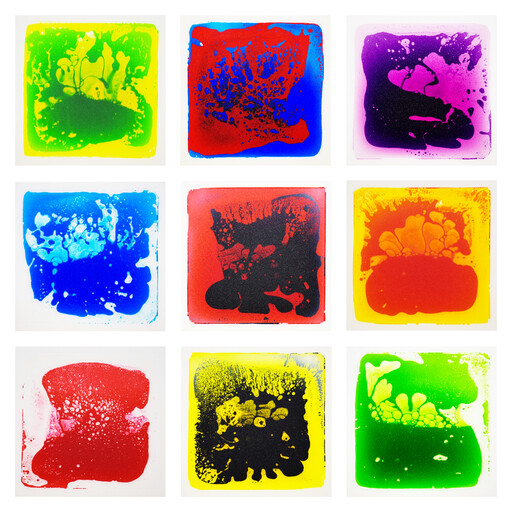
Why this product suits this profile: The nine tiles can be arranged flexibly in playrooms, nurseries or pre-schools and, according to the description, do not require permanent installation.
The selection takes account of a reinforced PVC underside and the explicitly stated suitability for indoor use.
Nine tiles per pack, a non-slip base according to the product description and easy placement without installation.
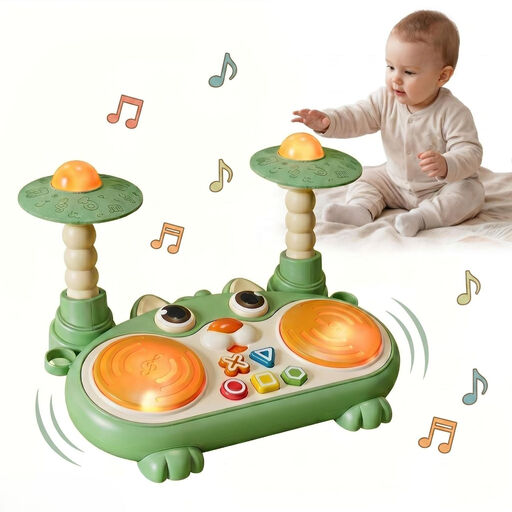
Why this product suits this profile: This musical baby toy combines drum surfaces, lights, animal sounds, and shape and colour sorting for shared play under supervision.
The product description states that it is made from ABS and BPA-free materials, with rounded edges and an age range of 6–36 months. Batteries are not included.
Several play modes, five geometric shapes and a stable, non-slip base according to the manufacturer.
We have put together a complete, regularly updated list of products that fully meet these strict selection criteria and the safety regulations applicable in the EU.
Only attach an LED sensor light to a clean, dry surface. Before completing the installation, test whether the sensor detects the area you want it to cover. If using adhesive mounting, do not attach the light above damp surfaces or in places where it could fall and injure someone.
Rechargeable lights should only be charged with compatible USB power sources. Damaged devices, swollen batteries or damaged cables should no longer be used. Dry cleaning with a soft cloth is usually sufficient.
With sensory floor tiles, checking them before every extended period of use is advisable. For babies and toddlers, the rule is: toys with lights, sounds or moving parts should be used in accordance with the age recommendation and under supervision.
A PIR sensor detects people’s movement by identifying changes in thermal radiation. The light switches on within the stated detection range and switches off again after a set period. The range and mounting position affect reliability.
For rechargeable models, the main costs are charging losses and, where applicable, the electricity used for USB charging. A night light with a dusk sensor can remain permanently connected. For the Aigostar Sunflower RGB night light, the manufacturer states a maximum power consumption of 0.5 W and operation at 230 V. The actual cost depends on your electricity tariff and how long the light is used.
This depends on the individual product. The musical baby toy mentioned above is stated as suitable from six months. Always check the specific manufacturer’s recommendation, inspect the toy regularly and never leave babies or toddlers unsupervised while playing with electrical products or items containing small parts.