
Lieferung heute & morgen

Qualitätsgarantie

Willkommens-Angebote freischalten: KOSTENLOSE Lieferung | Bis zu 80 % RABATT | Kostenlose 30-Tage-JoyPlus-Testphase
App herunterladen
By the Joybuy Product Recommendation OfficerPublished July 28, 2026
Sensory floor tiles, often called liquid floor tiles, transform any room into an interactive landscape. They respond to pressure and movement, causing the colourful liquids inside to create mesmerising patterns. They are an especially popular tool for sensory development in children's rooms, daycares, or therapy spaces. However, the market is crowded, and not every product delivers on its promises. Before you invest, it's important to understand the common pitfalls that often only become apparent after purchase.
Many buyers report three central problems:
A smart purchase is based on understanding key product features, not just marketing promises.
To make an informed decision, you should examine three core technical specifications. These features determine the tiles' safety, longevity, and practical usability.
The quality of the outer material, usually PVC (polyvinyl chloride), is crucial for durability. Look for information on material thickness and ensure the tiles are properly sealed to prevent liquid from leaking. Even more important is the composition of the liquid itself. Manufacturers who prioritise safety will state that the liquid is non-toxic, often describing it as a cosmetic-grade fluid. This is an essential criterion if the tiles are to be used as interactive floor tiles for kids or as a sensory development tool.
A high-quality sensory tile features a specially designed, non-slip backing. This ensures the tile stays securely in place even during dynamic use, such as on a children's dance floor. A reinforced backing also protects the underlying flooring from scratches. Products lacking this feature are unsuitable for use in play areas or public facilities.
The most common size for sensory tiles is 30 x 30 cm (approx. 11.8" x 11.8"). This standard dimension allows multiple tiles to be flexibly combined into a larger play mat in a child's room. Before buying, check the exact dimensions and the number of tiles per set to correctly calculate the required coverage for your kid's room flooring. The modular design allows you to expand or reconfigure the play area at any time.
Based on the quality criteria mentioned, we have compiled a selection of products suitable for different needs and locations.
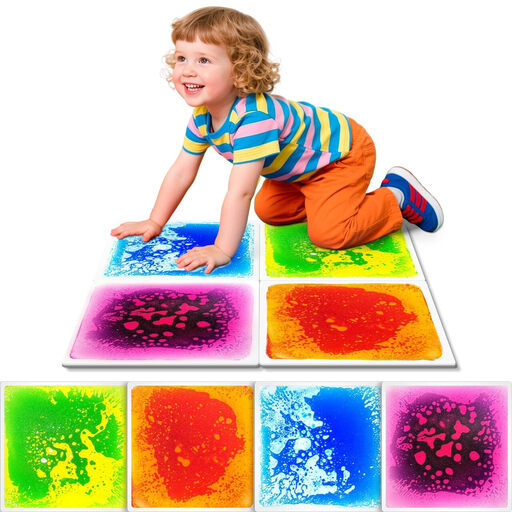
Why it's a good fit: This set is perfect for parents looking to create a small yet impactful sensory corner in a child's room without committing to a large area. It offers a cost-effective entry point to observe how a child interacts with the material.
The product description highlights its durable PVC construction, suggesting higher resilience and longevity compared to no-name products and minimising the risk of cracks or leaks.
The 4-pack, featuring various colours, allows for flexible and creative arrangements in a small space and is easy to install.
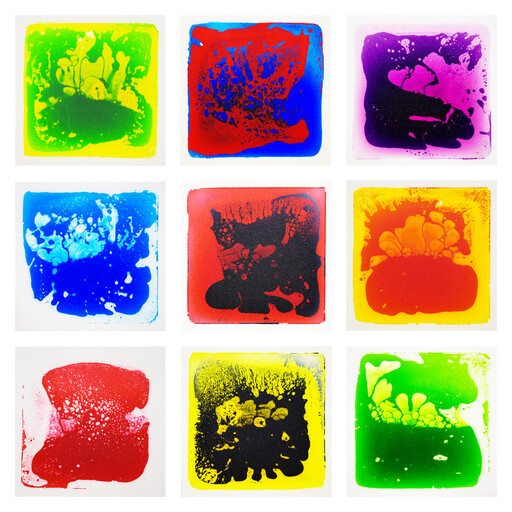
Why it's a good fit: Use in educational settings requires greater coverage and proven safety. This 9-pack is suitable for creating larger play areas and is explicitly marketed for use in classrooms and preschools.
The manufacturer states that the tiles are made from non-toxic, eco-friendly materials and feature a reinforced, non-slip PVC backing. This directly addresses the core issues of material safety and slip resistance.
The larger quantity per set and the explicit mention of safety standards make it a practical choice for professional users.
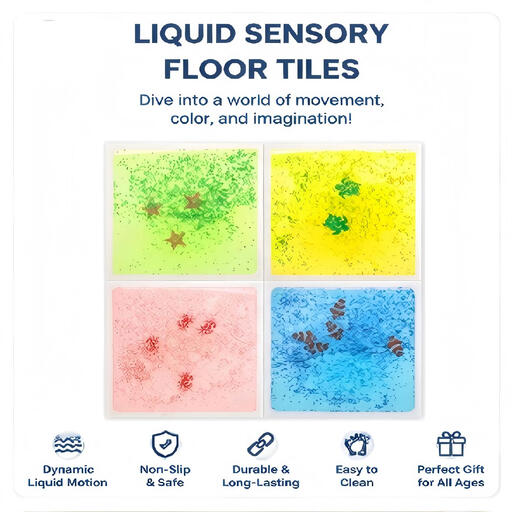
Why it's a good fit: For users seeking not just function but also a specific design. The ocean theme is excellent for creating imaginative play worlds or adding a unique decorative touch to a room.
This product emphasizes an "advanced non-slip backing" that ensures a firm grip. This directly counters the risk of slipping on smooth floors and guarantees a safe user environment.
The unique ocean design stands out from standard colour gradients and allows for targeted, thematic room decor.
We have compiled a complete, up-to-date list of products that fully meet these strict selection criteria and safety requirements.
1. How do you clean sensory floor tiles? Cleaning is generally straightforward. Use a soft, damp cloth and a mild detergent. Avoid abrasive or harsh chemicals, as they can damage the PVC surface. The tiles are water-resistant but should not be submerged in water.
2. Are liquid floor tiles suitable for all floor types? Yes, they can be used on most hard, flat surfaces like hardwood, laminate, vinyl, or tile. A non-slip backing is crucial to prevent them from shifting. Their function is limited on high-pile carpets, as pressure is not transferred evenly.
3. Can the tiles withstand the weight of an adult? High-quality models are designed to support an adult's weight. Pay attention to the manufacturer's specifications regarding load capacity. Products marketed for use in public areas or as dance floors typically offer greater stability and are also suitable for use by adults.