
Lieferung heute & morgen

Qualitätsgarantie

Willkommens-Angebote freischalten: KOSTENLOSE Lieferung | Bis zu 80 % RABATT | Kostenlose 30-Tage-JoyPlus-Testphase
App herunterladen
Sensory toys for babies are designed to encourage perception, movement and independent discovery. However, shops are full of products making similar promises: music, lights, movement and “Montessori-inspired” features may sound appealing, but they are not automatically suitable for every child or home environment.
A toy with numerous buttons, melodies and light effects may appear versatile. For a baby, however, an overloaded control panel can be confusing. What matters is whether the child can activate the features through simple actions such as grasping, pressing, shaking or turning.
“From 6 months” is a general guideline and does not replace a specific safety check. A moving toy may be suitable for crawling children, while a product with small sorting shapes should initially only be used under direct supervision. The transition between 12 and 18 months is also important, for example with ride-on, push-along or activity toys.
Batteries are often not included with musical baby toys. The toy should also have a volume control, or its sound should only be used at a moderate level. Textile products need to be washable, while plastic toys should be easy to clean with a damp cloth. These ongoing practical considerations have a greater impact on everyday usefulness than a long list of features.
For Baby 6-36 Monate, the age range shown on the product page should match the child’s current stage of development. For tummy time, choose flat, easy-to-reach toys with interesting surfaces, mirrors or moderate sounds. A rolling toy can encourage visual tracking and later crawling, but should only be used on a safe, clear surface.
For children from around 12 months, more stable products such as an activity toy for toddlers, a sorting game or a push-along model may be suitable. With products featuring seating or push-along functions, load limits, locks and safety warnings are particularly important.
Look for:
ABS and BPA-free materials, for example, may be specified for plastic products. This information should come from the product description or labelling. A BPA-free design alone is not a substitute for checking the quality of construction and the presence of small parts.
Sensory play is not limited to lights and music. Crinkle fabric, different textures, grasping shapes, rollers and sorting openings can all provide different stimuli. In a home with several people or thin walls, volume control and quiet operation are practical features. With electronic interactive baby toys, you should also check whether the automatic shut-off can be used.
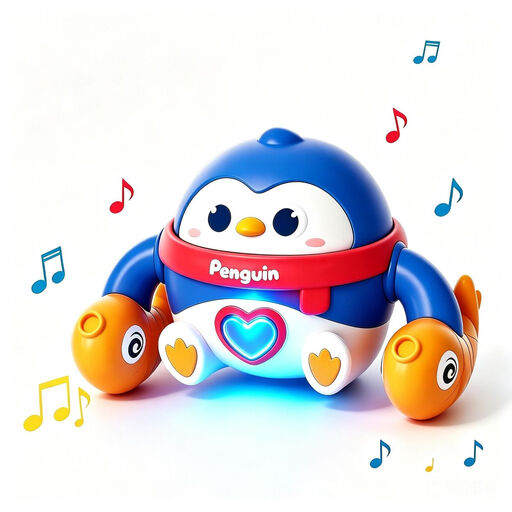
Why this product suits this profile: According to the specified age range of 6 to 36 months, the rolling penguin combines movement, lights and music in a compact toy. Activation by clapping or tapping enables simple cause-and-effect interaction.
The features focus on grasping, tapping and visual tracking, rather than simply offering a long list of hard-to-access modes. Batteries are not included and need to be purchased separately.
ABS plastic, BPA-free materials, rounded edges and 360-degree rolling movement, according to the product description.
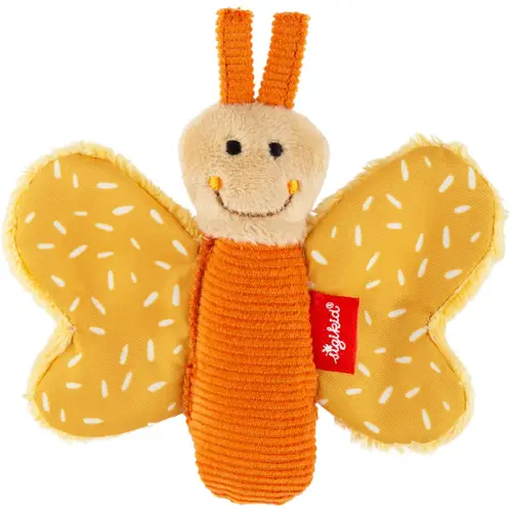
Why this product suits this profile: This textile grasping toy is ideal for parents looking for simple, quiet and easy-care sensory play. According to the product information, it is suitable from 0 months, making it an interesting option for younger babies too.
It does not use batteries, flashing electronics or a difficult-to-control level of background noise. According to the product information, it can be machine-washed at 30 °C.
Crinkle paper in the wings, different textile surfaces and washable polyester, according to the product information.
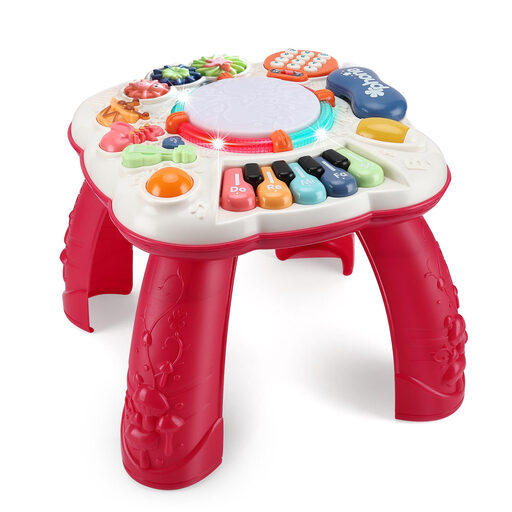
Why this product suits this profile: According to the product description, the table can be used with its legs removed as a floor play panel and later as a standing activity table. This makes it suitable for different playing positions.
According to the supplier, the volume can be adjusted; a quiet mode is also available. Before buying, check the dimensions of approximately 30 × 30 × 31 cm and the batteries required.
Six play areas with piano keys, drum, gears and telephone function, plus removable legs, according to the product description.
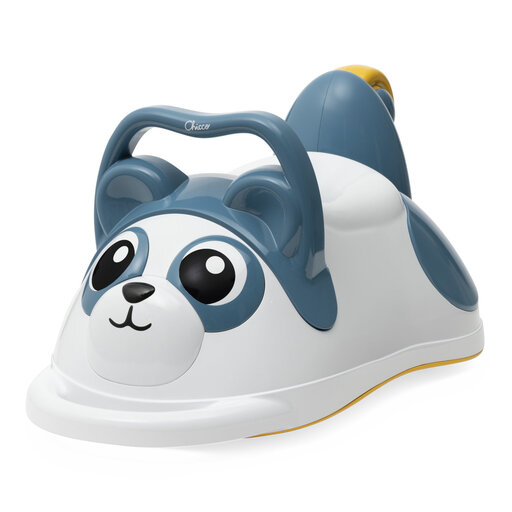
Why this product suits this profile: This model is suitable for children aged 12 to 36 months and switches between ride-on vehicle, sorting station and wheelbarrow configuration. It is aimed at families looking for a movement-focused product with several ways to play.
The configurations and age ranges are clearly stated. As there is no braking system, the safety instructions concerning stairs, slopes and roads must be followed carefully.
Three ways to use it, a stated maximum load of 20 kg and a storage compartment beneath the seat.
We have put together a complete, regularly updated list of products that fully meet these strict selection criteria and the safety regulations applicable in the EU.
Regardless of the model, parents should:
A purported educational benefit is no substitute for spending time playing together. Children benefit when adults describe actions, imitate sounds and follow the child’s pace.
Flat grasping toys, crinkle toys, soft balls or a clearly visible toy with gentle movement may be suitable for tummy time. A clear play area, rounded or soft materials and close supervision are essential. Stop the play session if the baby becomes tired or unsettled.
How long a toy lasts depends on its materials, how intensively it is used and how well it is cared for. With suitable care, textile grasping toys can often be used for a longer period. Electronic products require batteries and should be checked regularly for loose covers or damaged housings. With ride-on and push-along toys, the wheels, axles and locks are particularly important.
The ongoing costs mainly come from batteries. Before buying, check whether batteries are included, which type is required and whether the product has an automatic shut-off or quiet mode. If the toy is used frequently, a model with volume control and an easily accessible on/off switch may be more practical in everyday use.