
Lieferung heute & morgen

Qualitätsgarantie

Willkommens-Angebote freischalten: KOSTENLOSE Lieferung | Bis zu 80 % RABATT | Kostenlose 30-Tage-JoyPlus-Testphase
App herunterladen
Sensory toys for babies and toddlers should encourage them to grasp, listen, look and move. At the same time, they need to suit the child’s age, stage of development and the family’s everyday routine. With glowing buttons, musical functions, grasping toys and activity cubes to choose from, finding the right option can be difficult.
A toy with lots of functions is not automatically useful. Some products quickly lose their appeal, while others are difficult to clean or too complex for the stated age group. The following criteria can help you narrow down your choice objectively.
Lights, melodies, animal sounds and moving parts may seem versatile at first glance. However, an overload of stimuli can be impractical for babies. Especially with baby toys from 6 months, a few clearly recognisable responses are often enough: pressing a button produces a sound, or grasping something changes the position of an element.
So make sure your child can trigger an action independently. A clear connection between action and reaction supports independent discovery, without adults having to explain every function.
A toy designed for 6 to 36 months will not be equally suitable at every stage of development. A crawling baby needs different stimuli from a two-year-old who is already sorting, imitating and beginning simple role play.
As well as checking the age recommendation, ask yourself:
With baby products, it is not just the material claims that matter. Rounded edges, a securely closed battery compartment, strong connections and clear cleaning instructions are also important. A CE mark alone does not replace adult supervision and is not a quality ranking.
Whenever you buy a toy, follow the product warnings, manufacturer’s information and usage instructions. Toys should be checked for cracks, loose parts and damaged seams before every use.
Product descriptions for plastic toys often mention ABS and BPA-free materials. What matters is whether this information is clearly stated in the description or on the packaging. Smooth, rounded edges reduce the risk of uncomfortable pressure points. For textile toys, strong seams and washable materials are practical features.
The European EN 71 series of standards covers various toy safety requirements. The CE marking indicates that the manufacturer has declared compliance with the relevant EU requirements. Both should be treated as useful guidance, not as a substitute for adult supervision.
Sensory toys can engage different areas of perception:
A grasping toy or soft rattle is often suitable for the first few months of life. A Montessori toy with sorting shapes, cogs or simple slot-in elements is more suitable for children who can grasp intentionally and enjoy exploring connections.
For frequently used learning toys for babies, easy cleaning is an important factor in both cost and convenience. Some products can be wiped clean, while others can be partly machine-washed or cleaned in the dishwasher. Electronic toys should generally not be fully immersed in water.
Also check:
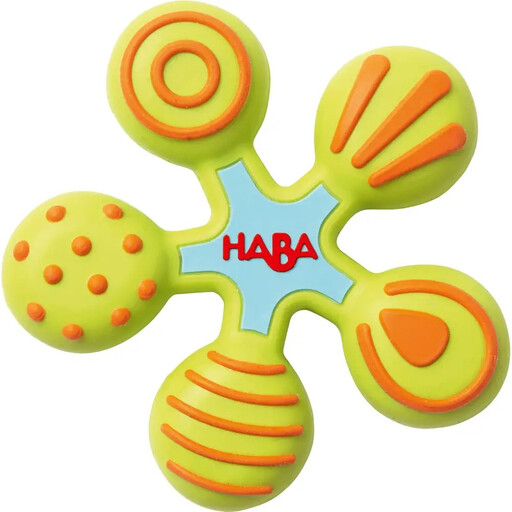
Why this product suits this profile: This compact grasping toy is designed for babies from 6 months and focuses on a range of surface textures. According to the product information, the silicone material is dishwasher-safe.
It does without batteries, lights and numerous electronic modes, keeping care and operation straightforward.
A variety of textures, silicone construction and easy cleaning; use under supervision only.
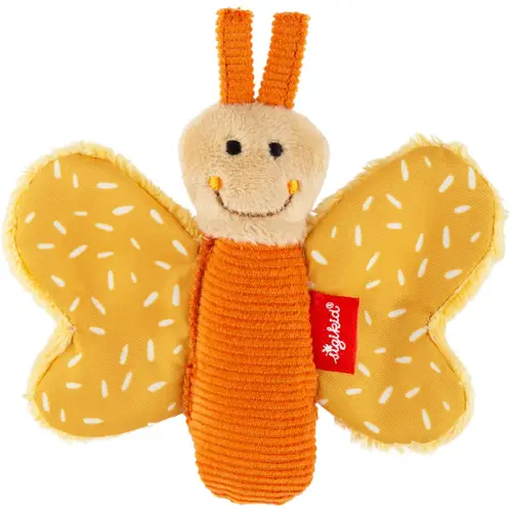
Why this product suits this profile: According to the product information, the soft butterfly shape is suitable from birth. Crinkle paper in the wings and different textiles provide a range of tactile and auditory stimuli.
Play comes from grasping and crinkling sounds rather than a multitude of electronic stimuli. The product is washable at 30 °C.
Washable polyester, a variety of material surfaces and no batteries required.
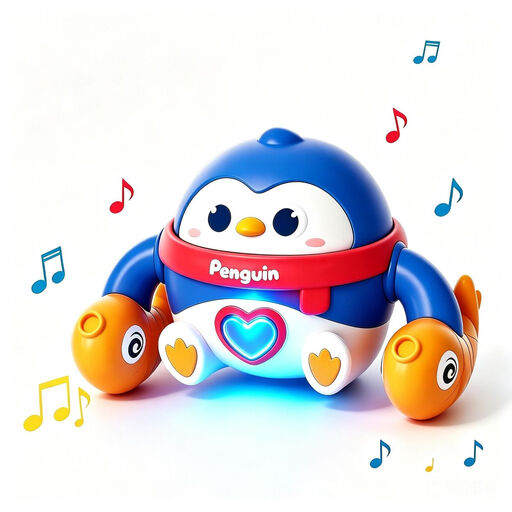
Why this product suits this profile: According to the product information, the rolling penguin is intended for children aged 6 to 36 months. Movement, lights and music can be particularly engaging during crawling and tummy time.
The movement and sensor mode can trigger a direct response to clapping or touching. Before buying, check the batteries, volume and available play space.
360-degree rolling movement, LED heart and motion sensor; according to the product information, batteries are not included.

Why this product suits this profile: The activity cube is designed for ages 1 to 3 and combines a piano, guitar, pretend phone, cogs and music on a surface measuring approximately 23 × 23 × 24 cm.
The age recommendation clearly distinguishes it from baby toys intended for younger children. Before use, check all moving elements and make sure the cube is stable.
Eight described play modes, a carry handle and several fine-motor activities in one compact cube.
We have put together a complete, regularly updated list of products that fully meet these strict selection criteria and the safety regulations applicable in the EU.
Suitable products are easy to grasp, simple to clean and designed without loose small parts. Grasping toys, crinkle toys, soft balls and simple musical toys can support hand-eye coordination and sensory awareness. Suitability depends on the child’s individual development, so always follow the manufacturer’s age recommendation.
How long a toy remains engaging depends on the child’s level of development and the type of toy. A grasping toy can serve as a tactile and entertaining toy for several months. An activity cube or sorting toy generally becomes more interesting once your child can deliberately press, turn and match things. Varied play ideas shared with an adult can extend the useful life of a toy without the need to keep buying new products.
The main ongoing cost comes from batteries. Before buying, check whether batteries are included, which size is required and whether the toy has an automatic shut-off function or volume control. With frequent use, a quiet mode can reduce battery consumption and noise levels in the home. Speaking of volume: electronic toys should not be used directly next to the ear and should only be operated at a moderate volume when needed.