
Lieferung heute & morgen

Qualitätsgarantie

Willkommens-Angebote freischalten: KOSTENLOSE Lieferung | Bis zu 80 % RABATT | Kostenlose 30-Tage-JoyPlus-Testphase
App herunterladen
Sensory toys for children can bring movement, sensory development and independent play together. The choice ranges from sensory floor tiles and balance boards to activity cubes for toddlers. At the same time, the many similar product descriptions can make it difficult to compare your options.
Three common buying mistakes are particularly likely to lead to the wrong choice:
Your child’s age is an important starting point. For learning toys for children aged 1 and over, avoid small loose parts and make sure controls are easy to reach. A Montessori activity cube can invite children to press, turn and slide, while a balance board may pose a greater risk of falls for younger children.
A balance board for children should be used on a flat, dry surface that is not slippery. Children should be supervised directly by an adult. For nurseries, pre-schools and occupational therapy practices, it is also a good idea to set a clear limit on how many children can use a product at the same time.
Look for specific material details, such as PVC, ABS or wood, as well as:
When assessing motor skills toys, it is also important to check that the product is designed for its intended purpose. An activity cube for a table is no substitute for an active play toy; sensory floor tiles are not automatically suitable as a permanent dance or sports surface.
Dimensions have a greater impact on practical use than a long list of features. Four floor tiles, each measuring around 30 × 30 cm, take up less space than a set of nine, but offer a smaller play area. That may suit a flat, while larger groups are more likely to benefit from a larger continuous surface.
With a balance board measuring 40 × 32,2 × 2,8 cm, check beforehand that there is enough room to move around. For children’s balance training, there should be no hard edges, glass panels or slippery mats near the product.
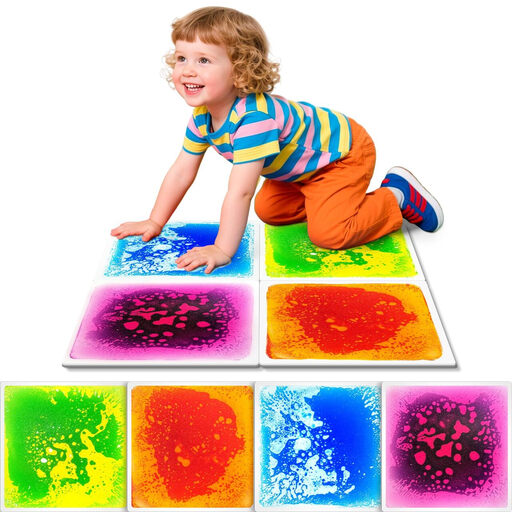
Why this product suits this profile: The set of four offers an accessible introduction to visually engaging active play. With each tile measuring 11,8 × 11,8 inches, it takes up relatively little space.
The product details specify sturdy PVC tiles and a sealed construction. Even so, check the chambers for damage before buying, and use the tiles only on a flat indoor surface.
Four tiles, PVC material and a visual liquid effect when pressure is applied.
Why this product suits this profile: Its clear dimensions, age guidance of 3 to 8 years and textured surface make it easier for families, pre-schools and supervised play areas to choose with confidence.
The product information specifically recommends a flat, dry, non-slip surface and constant supervision. This helps reduce misuse, but does not replace your own checks before each use.
40 × 32,2 × 2,8 cm, a textured surface and a recommended age range of 3 to 8 years.
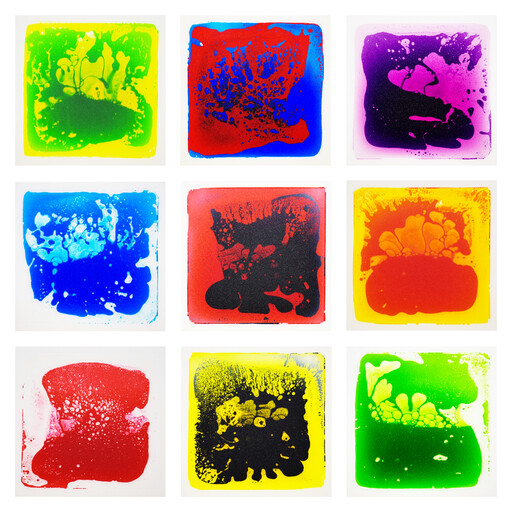
Why this product suits this profile: Nine tiles are well suited to families with a larger play area, as well as indoor spaces in nurseries, pre-schools or sensory rooms.
The product details specify a reinforced PVC underside, non-slip properties and indoor use only. Even so, check the surface regularly for signs of wear.
Nine tiles, a reinforced PVC underside and no installation required, according to the product description.

Why this product suits this profile: This compact cube brings together a range of gripping, turning and pressing activities. It’s a good fit for families looking for a space-saving sensory toy for toddlers.
The product details specify ABS, BPA-free materials, rounded edges and a recommended age range of 1 to 3 years. Parents should check the cube for loose parts or damage before use.
Eight interactive play modes, dimensions of 23 × 23 × 24 cm and an integrated carry handle, according to the product description.
We’ve put together a complete, regularly updated list of products that meet these strict selection criteria and the safety regulations in force in the EU.
Place sensory toys on a clean, dry surface. Before play, check that each floor tile lies flat and that no liquid is leaking. A balance board should only be used under supervision, with plenty of clear space around it. Check activity cubes and busy boards for babies regularly for loose buttons, damaged wires, sharp edges or parts that could come away.
Clean plastic surfaces with a slightly damp cloth and follow the manufacturer’s instructions. Direct sunlight, high temperatures and harsh cleaning products can damage materials. Do not continue using a product if it has cracks, leaking chambers or unstable components.
It depends on the product. According to the product information, the activity cube described here is intended for children aged 1 to 3 years, while the balance board is for 3 to 8 years. Always consider the specific age guidance, your child’s stage of development and the need for supervision.
There is no single answer. Their lifespan depends on how heavily they are used, how they are stored, the surface they are placed on and how well they are cared for. Regular visual checks, indoor use only and avoiding sharp objects can help extend their useful life.
They’re generally easy to look after: simply wipe the surface with a damp cloth. More importantly, check for cracks, leaks and a shifted underside before each use. If any tiles are damaged, remove them from the play area.