
Lieferung heute & morgen

Qualitätsgarantie

Willkommens-Angebote freischalten: KOSTENLOSE Lieferung | Bis zu 80 % RABATT | Kostenlose 30-Tage-JoyPlus-Testphase
App herunterladen
A serrated kitchen knife can cut through smooth-skinned and delicate foods cleanly without pressing down too hard on the surface. Tomatoes, soft fruit, bread crusts and crispy pizza bases are all typical uses. However, serrated blades vary considerably in length, tooth profile, handle material and care requirements.
If you focus only on a striking colour or the words ‘extra sharp’, you can easily overlook important details. The criteria below will help home cooks, families and quality-conscious households choose the right individual knife or kitchen knife set.
A short serrated vegetable knife is ideal for tomatoes, berries and smaller fruits. Bread loaves and cakes need a much longer blade. An 8 cm knife can handle precise tasks, but it won’t replace a bread knife with a 20 or 26 cm blade.
A dishwasher-safe kitchen knife can go in the dishwasher, but frequent washing may put more strain on the blade, handle surface and cutting performance than hand-washing. For several of the models featured here, the manufacturers therefore recommend warm water, mild washing-up liquid and drying the knife straight away.
A lightweight plastic handle is easy to clean and can feel comfortable for quick jobs. What matters is a non-slip surface, a secure grip and a shape that feels right in your hand. A handle that’s too narrow or smooth can become uncomfortable during longer tasks.
Blade length is a practical factor to consider when choosing a knife:
A fruit knife with a short serrated blade is especially handy if you often prepare soft fruit with firm skins.
Product details should state the blade material at a minimum. Rust-resistant stainless steel is widely used in everyday kitchens and is easy to clean. A serrated edge makes contact at individual points, helping it grip skins and crusts. Depending on the design, coarse teeth work well for bread, while fine serrations are useful for tomatoes, fruit or table knives.
According to the product description, ‘FRIODUR’ on the ZWILLING Now S Series Utility Knife refers to a special ice-hardening process for the blade. Brand names like this shouldn’t be judged in isolation: blade length, handle, care instructions and intended use still matter.
Polypropylene and other plastic handles are lightweight and often dishwasher-safe. Even so, hand-washing is recommended if you want to preserve the sharpness and finish for as long as possible. Don’t leave knives loose in a drawer. A knife block, drawer insert or blade guard helps reduce the risk of injury and protects the cutting edge.
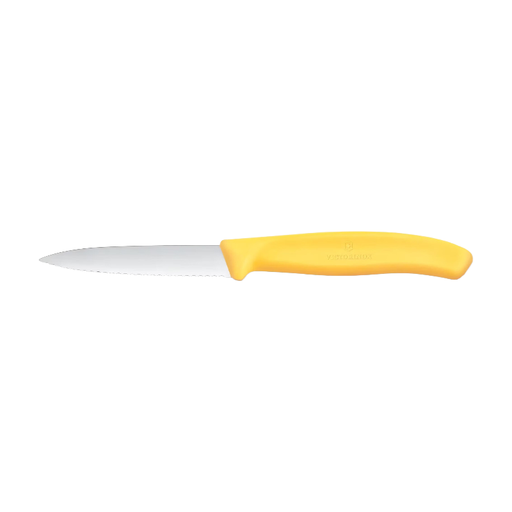
Why it suits this profile: The compact 8 cm blade is designed for tomatoes, soft fruit and smaller food-preparation tasks. The lightweight polypropylene handle makes it easy to use every day.
The blade length and serrated edge are clearly specified, so you can see that this is a vegetable knife rather than a substitute for a long bread knife.
8 cm stainless steel blade, lightweight at 20 g and dishwasher-safe according to the product details.
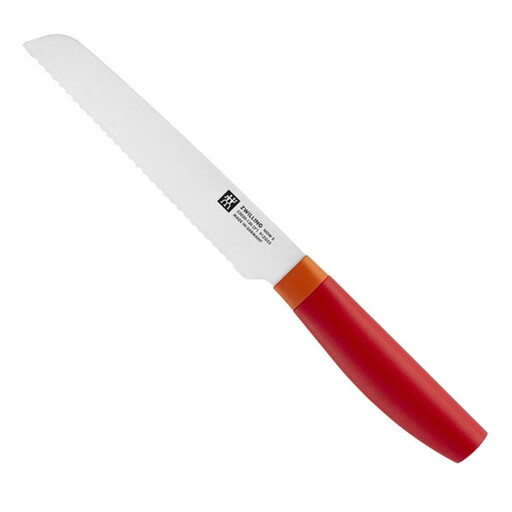
Why it suits this profile: The 13 cm blade handles a range of everyday tasks, including slicing cold meats, cheese, bread and tomatoes. The textured plastic handle is designed to provide a secure grip.
The product details specify the blade length, serrated edge, handle material and care instructions. This makes it easier to compare with a classic tomato knife or bread knife.
13 cm FRIODUR blade according to the manufacturer, ergonomic plastic handle and versatile uses.
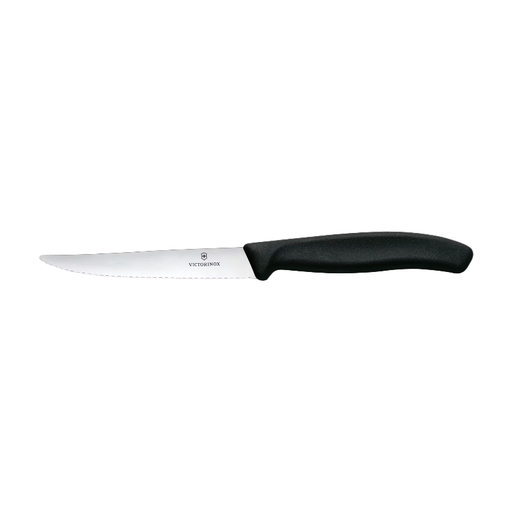
Why it suits this profile: The six-piece set is designed for families, barbecues and households with several place settings. The 11 cm serrated blades are suited to steak and pizza.
Rather than combining several individual knives, the set clearly states how many knives it contains, their blade length and what they’re designed for.
Six stainless steel knives with polypropylene handles, dishwasher-safe according to the product details.
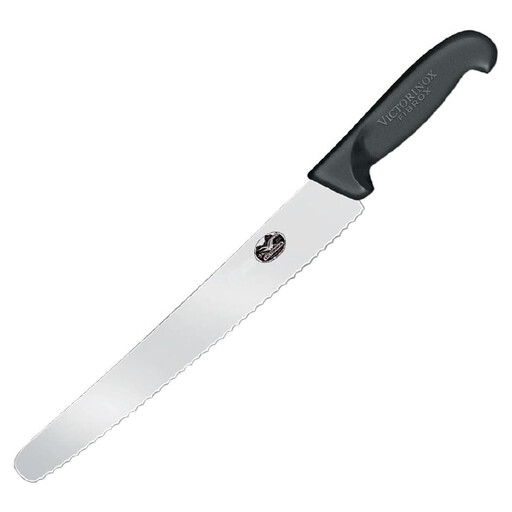
Why it suits this profile: The long blade is designed for bread, cakes and pastries. It’s a good choice for households that regularly slice large loaves or baked goods.
The 26 cm blade means you won’t have to use a short vegetable knife for large loaves. Its curved shape supports the cutting motion.
26 cm stainless steel serrated blade, plastic handle and dishwasher-safe according to the product details.
We’ve put together a complete, regularly updated list of products that meet these strict selection criteria and fully comply with the safety regulations in force in the EU.
The toothed blade grips firm skins and crusts while putting less pressure on the softer inside. This is useful for tomatoes, bread, pizza and certain types of fruit. For clean, straight cuts in meat or vegetables, a straight-edged knife may be more suitable, depending on the task.
For individual tomatoes, a serrated vegetable knife between 8 and 10 cm is often enough. An 8 cm model is particularly handy, while a 10 cm knife gives you a little more reach. The right choice depends on your hand size, chopping board and preferred way of working.
How long it lasts depends on what you cut, the chopping board you use, how you clean the knife and how you store it. Serrated blades need to be sharpened differently from straight-edged blades. Careful use, hand-washing and avoiding hard surfaces can help keep the cutting edge in good condition for longer.