
Lieferung heute & morgen

Qualitätsgarantie

Willkommens-Angebote freischalten: KOSTENLOSE Lieferung | Bis zu 80 % RABATT | Kostenlose 30-Tage-JoyPlus-Testphase
App herunterladen
A serrated kitchen knife can replace several specialist knives: it cuts through bread crusts, tomato skins, sausage, cheese and pizza without heavily squashing softer foods. However, advertised sharpness is not the only factor to consider. Blade length, handle, cleaning and the intended use all determine whether a serrated kitchen knife is genuinely practical for everyday use.
A long blade is useful for a large loaf of bread, but can be awkward for tomatoes, fruit and smaller cutting tasks. For everyday use, a serrated utility knife measuring around 10 to 13 cm is often suitable. A small serrated bread knife is easier to control and takes up less space in the kitchen drawer.
Many stainless steel knives are described as dishwasher-safe. However, the combination of heat, detergent and contact with other cutlery can affect cutting performance over time. Frequent dishwasher cycles can also put strain on the surface of knives with plastic handles. Hand washing with mild washing-up liquid, drying immediately and storing the knife safely are therefore gentler options.
The serrated edge grips hard skins and crusts effectively. For fine dicing, herbs or controlled cuts in meat, a smooth-edged vegetable knife or chef’s knife is often more suitable. Bones, frozen food, hard stones and using the knife as a lever should also be avoided, as individual teeth may be damaged.
Look for clear information about the blade length and blade material. Stainless steel is easy to care for and corrosion-resistant in everyday kitchen use, but it still needs to be cleaned and dried. For a serrated tomato or vegetable knife, 10 to 11 cm is generally sufficient for smaller foods. A 13-cm model provides a little more reach for bread rolls, sausage and cheese.
The serrations should be evenly made. Very coarse teeth can tear soft foods more easily, while finer waves may offer more controlled cutting for tomatoes and fruit. Advertised sharpness should not be the only deciding factor: handle control, blade stability and care instructions are also important.
An ergonomically shaped, non-slip plastic handle can provide secure control when cutting with little force. Check whether the handle size suits your hand and whether the transition between handle and blade has been finished cleanly. A folding model saves space when used for picnics, camping and outdoor activities. When using a knife away from your own property, you must comply with the applicable regulations governing the carrying of knives in Germany.
The dishwasher-safe label is convenient, but it should not be treated as a care recommendation for maintaining cutting performance over the long term. Do not use abrasive cleaners or stone or glass chopping boards. Softer chopping surfaces made from wood or plastic are suitable. A knife block, blade guard or suitable drawer insert prevents the teeth from coming into contact with other cutlery.
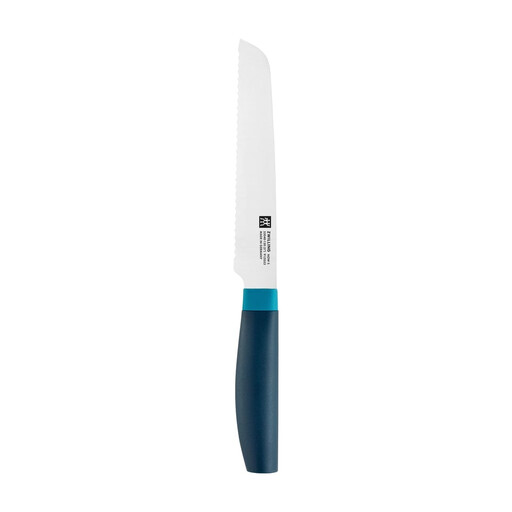
Why this product suits the profile: The 13-cm utility knife is designed for everyday tasks such as cutting bread rolls, cheese, sausage and vegetables. Its plastic handle with a non-slip surface and distinctive colour make it an appealing choice for households where it is used regularly in the kitchen.
The specified blade length and serrated edge clearly define its use as a utility knife, rather than promising unsuitable all-purpose performance.
13-cm blade, FRIODUR ice-hardened stainless steel according to the product information, and dishwasher-safe construction; hand washing is recommended to help protect the knife.
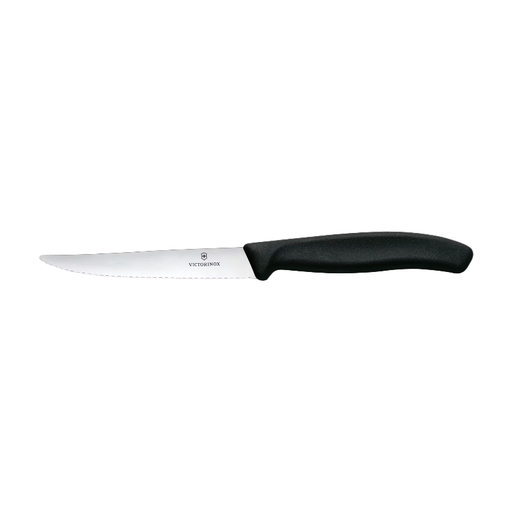
Why this product suits the profile: The six-piece set is designed for laid tables, family meals and catering use. Each knife has an 11-cm stainless steel blade and an ergonomic PP handle.
The set size and specific use for steak and pizza are clearly stated. This makes it easier to compare your requirements with the number of knives included before buying.
Six serrated stainless steel knives, 11-cm blades and dishwasher-safe handles according to the product information, providing enough knives for several table settings.
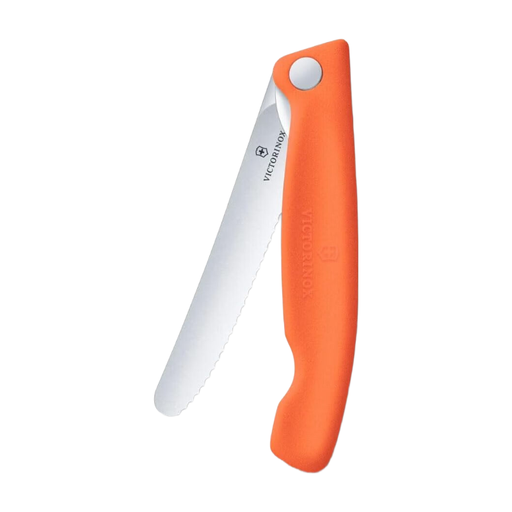
Why this product suits the profile: The folding design with an 11-cm blade is made for picnics, hiking and use on the go. When closed, it can be transported more compactly than a fixed-blade tomato knife.
The folding function addresses storage and transport. When carrying it in public, you must still comply with the statutory requirements in Germany.
Folding, 11 cm serrated blade, weighing 42 g, with dishwasher-safe materials according to the product information.
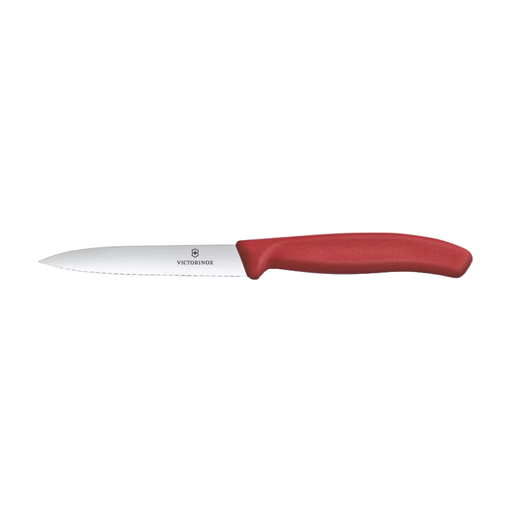
Why this product suits the profile: The compact blade is designed for tomatoes, avocados, figs and other fruit, as well as peeling tasks. This makes it a small serrated kitchen knife for controlled hand preparation.
The 10-cm blade is intended for fine cutting tasks. This prevents a small vegetable knife from being used for large loaves or extensive food preparation.
10-cm stainless steel serrated edge, ergonomic plastic handle and dishwasher-safe construction according to the product information.
We have put together a complete, regularly updated list of products that fully meet these strict selection criteria and the safety regulations applicable in the EU.
A serrated edge requires different care from a smooth sharp kitchen knife. Only use the knife on stable chopping boards and cut away from your body. Do not store it loose in a cutlery drawer. Damaged teeth, a loose handle or a bent blade should be treated as a reason to stop using the knife.
It is not possible to give a reliable fixed service life for every model. This depends, among other things, on the cutting surface, cleaning method, frequency of use and choice of food. With daily use, hand washing with mild detergent and drying immediately are sensible ways to protect the stainless steel blade and handle. A serrated edge cannot usually be sharpened with every standard honing steel; if cutting performance declines, consider professional sharpening suitable for the particular serration or replacing the knife.
For tomatoes, a compact tomato knife with a blade measuring around 10 to 11 cm is practical. The serrated edge can grip the skin without putting excessive pressure on the fruit during the first cut. For larger quantities or a wider range of foods, a 13-cm utility knife is more versatile.
This depends on the product information for the specific knife. The Victorinox and ZWILLING models mentioned are described as dishwasher-safe. For the gentlest possible care, however, hand washing, mild washing-up liquid and drying immediately are still preferable.
An 11-cm model with a serrated stainless steel blade may be designed for steak and pizza according to the product description. For several people, a set is more practical than a single knife. However, such a steak knife does not replace a large bread knife if you regularly cut large loaves.