
Lieferung heute & morgen

Qualitätsgarantie

Willkommens-Angebote freischalten: KOSTENLOSE Lieferung | Bis zu 80 % RABATT | Kostenlose 30-Tage-JoyPlus-Testphase
App herunterladen
Whether for daily use or special occasions, the right serving bowl can visually enhance a dish and make dining easier. But the selection is vast, and not every product lives up to its promise. Many bowls look great on the shelf but prove to be impractical in everyday life or break quickly. As your Joybuy Product Recommendation Officer, I'll help you navigate the typical pitfalls and make an informed decision.
Before you invest, you should be aware of the most common problems that often only become apparent after the purchase.
To avoid a bad purchase, you should check three core aspects: material, shape, and true everyday usability.
The material determines durability, potential uses, and maintenance effort.
The shape should serve function above all, not just aesthetics.
True durability is revealed in the care. A high-quality, non-porous glaze and high firing temperatures are prerequisites for genuine dishwasher and microwave suitability. Look for explicit manufacturer specifications and prefer materials like porcelain or stoneware if these properties are important to you.
Here are some recommendations tailored to different user profiles.
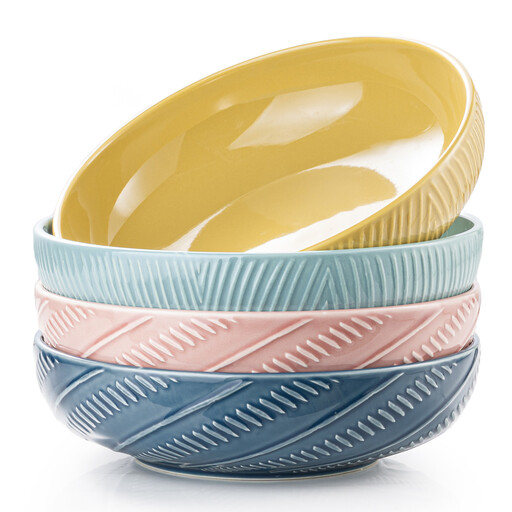
Why it's a match: This bowl set is ideal for families or daily use. The size and shape are perfect for pasta, salads, or main courses. The design is focused on functionality and space-saving storage.
The set bypasses the impractical design trap with its explicitly stackable shape and versatile size. The high-strength, lead-free ceramic construction also promises greater durability than simple earthenware.
Safe for microwave, oven, and dishwasher; the robust material is designed for intensive daily use.
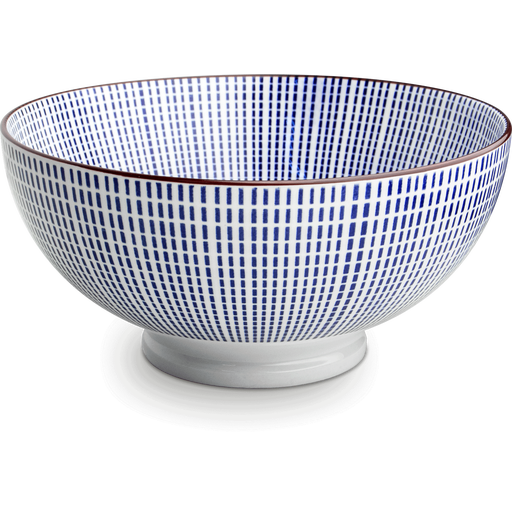
Why it's a match: For those who see dinnerware as part of their tablescape and interior design. The traditional Chinese blue motif makes this bowl a true centerpiece that impresses in both daily use and on special occasions.
This bowl avoids the trap of being a purely functional but soulless object. Its value lies in the fusion of art and utility. The description points to craftsmanship and durability for everyday use.
Unique, artistic design; the generous size of 17.5 x 9 cm makes it ideal as a soup bowl or for Asian noodle dishes.
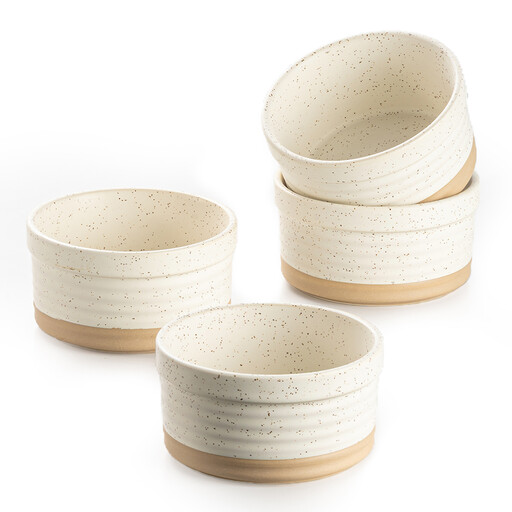
Why it's a match: Perfect for home bakers who love to prepare desserts like crème br?lée, soufflés, puddings, or small gratins. These ramekins are specifically designed for high temperatures and offer the necessary functionality.
These ramekins are oven-safe, thus avoiding the critical mistake of using an unsuitable bowl in the oven that could crack. The material is specified as high-quality, lead-free, and non-toxic ceramic, which rules out the material misconception.
Versatile for baking, serving, and storing; safe for oven, dishwasher, and freezer.
We have compiled a complete, up-to-date list of products that fully meet these strict selection criteria and rigorous safety standards.
1. What is the difference between earthenware, stoneware, and porcelain? The main difference lies in the firing temperature and porosity. Earthenware is fired at lower temperatures, is more porous, and more prone to chipping. Stoneware is fired hotter, making it denser and more robust. Porcelain has the highest firing temperature, is extremely hard, non-porous, and is considered the most durable type of ceramic.
2. How can I identify durable, dishwasher-safe ceramic bowls? Look for a smooth, even glaze without any visible flaws. Products made from porcelain or stoneware are generally a safer choice than earthenware. Reliable manufacturers often provide precise information on material composition and care. A thick, sturdy wall can also be an indicator of durability.
3. What is the ideal shape for a deep pasta plate? An ideal deep pasta plate has a wide, flat rim and a gentle well in the center. The diameter should be around 22 to 26 cm. This shape allows the pasta to be easily mixed with sauce and eaten comfortably with a fork without anything spilling over the edge.