
Lieferung heute & morgen

Qualitätsgarantie

Willkommens-Angebote freischalten: KOSTENLOSE Lieferung | Bis zu 80 % RABATT | Kostenlose 30-Tage-JoyPlus-Testphase
App herunterladen
A serving platter should present food attractively and stand up to everyday use. Yet unclear material details, unsuitable dimensions or misleading care claims often lead to disappointing purchases. This applies to homes as much as to restaurants, cafés, caterers and event organisers.
Before you buy, it’s worth checking for three common pitfalls:
A wooden serving platter or bamboo serving platter has a natural look and is particularly well suited to bread, snacks, cheese and dry starters. Bamboo models are often relatively lightweight. Follow the manufacturer’s care instructions, and don’t leave wooden platters standing in water for long periods.
A slate serving platter creates a dark, contrasting backdrop for cheese, tapas and desserts. However, the surface can be delicate depending on the model, and slate isn’t automatically dishwasher-safe. Check that details such as “dishwasher-safe”, “non-slip feet” and “fragile” are clearly stated before you buy.
A ceramic serving platter or porcelain serving platter complements classic table settings and, depending on the design, may be suitable for hot food. For ceramic and porcelain, check the guidance on microwave and dishwasher use, as well as resistance to sudden temperature changes. A decorative finish alone doesn’t tell you whether a platter has these properties.
Compact sizes such as 28 × 20 cm or 30 × 15 cm are handy for small snacks and starters. Long, narrow platters work well for baguette, antipasti or a small selection of cheeses. Square and rectangular serving platters provide more continuous space for several foods.
For larger gatherings, a platter measuring 45 × 30 cm or 30 × 40 cm may be a good choice. Remember to check the weight, too: a large slate platter is less convenient to carry than a lightweight bamboo model.
A serving tray often has a raised edge or handles. This is useful when you need to carry drinks, cups or several small bowls safely from the kitchen to the table. A flat serving platter, by contrast, is designed more for presentation.
Also consider:
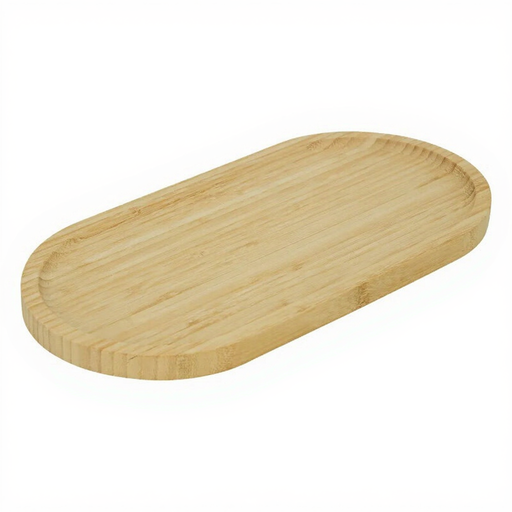
Why this product suits this customer: Measuring 30 × 15 × 1.5 cm, this compact bamboo platter is designed for small starters, snacks and desserts. At a stated weight of 0.311 kg, it’s easy to handle.
The clearly stated dimensions and material make it easier to choose a platter for smaller portions, rather than relying on a decorative product image alone.
Bamboo construction, an oval shape and a low product weight.
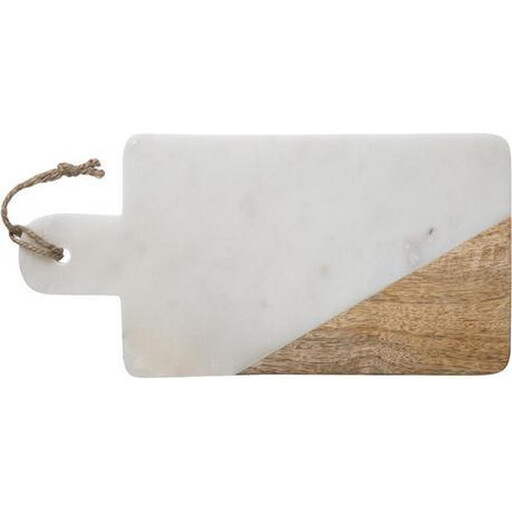
Why this product suits this customer: White marble paired with mango wood creates a clearly defined surface for presenting cheese, small desserts or starters.
The product details clearly state that the platter is fragile and isn’t dishwasher-safe. This means you can plan for the extra care it needs before buying.
A marble and mango wood combination, in a size of approximately 30 × 15 cm.
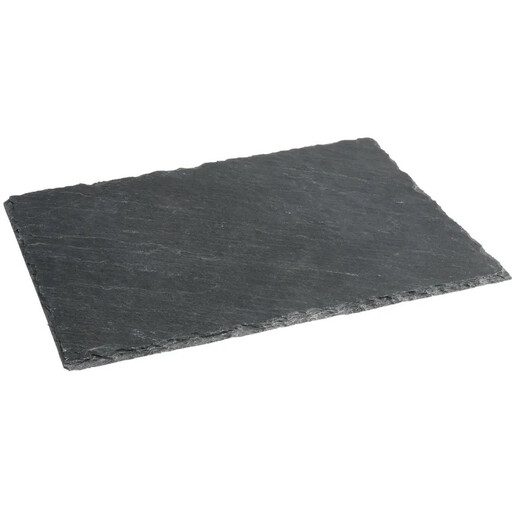
Why this product suits this customer: The rectangular slate platter has room for cheese, tapas, snacks and other small dishes. The product details state that it has non-slip feet.
The product details specify the material and dimensions, mention the non-slip feet and confirm that it’s suitable for food and snacks. The platter is also clearly marked as fragile.
An anthracite slate surface, 24 × 32 cm dimensions and non-slip feet.
We’ve put together a complete, regularly updated list of products that meet these strict selection criteria and fully comply with the safety regulations in force in the EU.
How long a platter lasts depends largely on how well it’s cared for. Wooden and bamboo platters should generally be wiped clean with a damp cloth and then dried thoroughly. Slate can usually be cleaned with a damp cloth, too; avoid soaking it for long periods. With marble, it’s particularly important to remember that it isn’t dishwasher-safe.
For restaurants and catering, sturdiness, stackability, weight and the ability to buy replacements also matter. A decorative platter may be enough for occasional use at home, while a standard size available in larger quantities is more practical for professional settings.
Slate, wood, bamboo or marble can all work well for a cheese platter. The key is to choose a flat surface that’s large enough, with care requirements suited to the material. Rectangular platters are usually easier to arrange than very small oval ones when you’re serving several cheeses with accompaniments.
It depends on the model. Wood, bamboo, marble and many slate platters aren’t automatically dishwasher-safe. For ceramic and porcelain platters, the product description should explicitly confirm that they are dishwasher-safe. If this information isn’t provided, hand-washing is the safer option.
Compact sizes between approximately 28 × 20 cm and 30 × 15 cm are often enough for two to four people. For buffets, larger gatherings or a generous serving platter for snacks and starters, sizes of around 30 × 30 cm or 45 × 30 cm are more practical. Before you buy, check that you have enough room in your cupboard and on your table.