
Lieferung heute & morgen

Qualitätsgarantie

Willkommens-Angebote freischalten: KOSTENLOSE Lieferung | Bis zu 80 % RABATT | Kostenlose 30-Tage-JoyPlus-Testphase
App herunterladen
A serving tray is far more than just a practical tool for carrying dishes. It's a central element of table culture, a stylish decorative object, and an expression of hospitality. However, the selection is vast, and not every model that looks appealing proves its worth in daily use. Many buyers soon find that their new tray is impractical, high-maintenance, or unsuitable for its intended purpose. This guide highlights the most common pitfalls and provides objective criteria for making an informed purchasing decision.
Before we dive into the key features, let's look at three common problems that can lead to disappointment and unnecessary expense.
To avoid a bad purchase, you should check three key aspects before making a decision: the material, the functional design, and the primary use case.
The material determines not only the look but also the weight, durability, and maintenance requirements.
A good serving tray is thoughtfully designed. A tray with handles is essential for safe transport, especially with larger models or when serving drinks. A slightly raised rim of at least 2 cm prevents items from sliding off or liquids from spilling onto the floor. The shape—whether a round tray, oval, or rectangular—is often a matter of personal taste but should match your existing dinnerware and available space.
Consider what you will primarily use the tray for.
Here are some product suggestions tailored to specific use profiles that avoid the pitfalls mentioned.
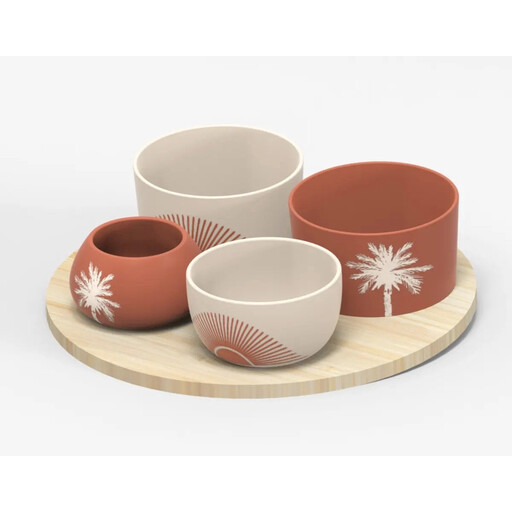
Why This Fits Their Persona: This set is ideal for hosts who enjoy serving tapas, dips, or snacks. It offers a complete and visually appealing solution without the need to search for matching bowls and a tray separately.
It solves the problem of lacking functionality (Pitfall 2) as it is designed as a well-thought-out serving set. The combination of acacia wood and stoneware is both food-safe and aesthetic (avoids Pitfall 1).
Complete set consisting of a round acacia wood tray (? 26 cm) and four stoneware bowls. According to the manufacturer, the parts are dishwasher-safe, which simplifies cleaning.
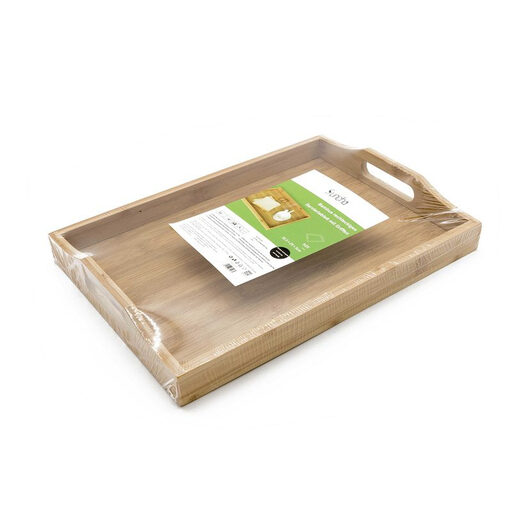
Why This Fits Their Persona: Perfect for anyone looking for a simple, lightweight, and durable tray for breakfast, coffee on the balcony, or carrying dishes. The minimalist design fits any style.
The bamboo tray is naturally resilient and low-maintenance (avoids Pitfall 1). The side cutouts act as handles, and the raised rim ensures safety, guaranteeing its functionality (avoids Pitfall 2).
Made from the lightweight and renewable resource of bamboo. The dimensions of 35.5 x 25 cm offer enough space for a plate and a drink without being cumbersome.
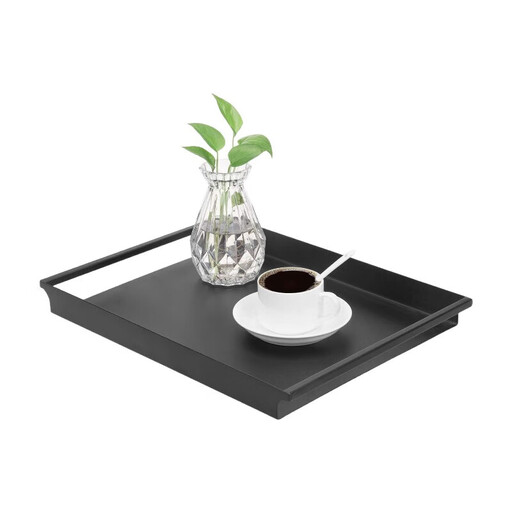
Why This Fits Their Persona: For interior design lovers looking for an object to style a coffee table, ottoman, or sideboard. The focus here is clearly on aesthetics and decorative character.
This product is clearly positioned as a decorative tray, thus avoiding false expectations about its transport function (Pitfall 3). The sturdy metal with a matte finish is durable and resistant to scratches compared to foil-wrapped materials (avoids Pitfall 1).
Durable metal in a matte black finish. The rounded, cutout handles are both a design feature and functional for occasional repositioning.
We have compiled a complete, up-to-date list of products that fully meet these strict selection criteria and all relevant safety standards.
A wooden tray should never be cleaned in the dishwasher or submerged in water. After use, wipe it with a slightly damp cloth and dry it thoroughly immediately. To protect the wood long-term and refresh its colour, it can be occasionally treated with a food-safe wood conditioning oil.
A bamboo tray is relatively heat-resistant and can usually handle a hot coffee or tea cup. However, caution is advised with very hot items like a pot straight from the stove. To reliably prevent scorch marks or warping, using a trivet is recommended.
The main difference lies in their function. A serving tray is primarily designed for transporting food and drinks, which is why it usually has a raised rim and handles. A serving platter, often also called a cheese board or presentation plate, is typically flat and is used purely for presenting food directly on the table.