
Lieferung heute & morgen

Qualitätsgarantie

Willkommens-Angebote freischalten: KOSTENLOSE Lieferung | Bis zu 80 % RABATT | Kostenlose 30-Tage-JoyPlus-Testphase
App herunterladen
Sesame crackers and crispbread are ideal for breakfast, serving with spreads or enjoying as an on-the-go snack. There’s plenty to choose from, including wholegrain crispbread, sesame pretzel sticks and sweet sesame biscuits. However, packaging design and marketing claims can obscure important differences in ingredients, salt content, portion size and allergens.
The sesame content can vary significantly from one product to another. According to the product information, Wasa Round Crispbread Sesame & Sea Salt 235 g contains 10% sesame seeds. By contrast, the stated sesame content of Garden Soda Biscuit Sesame Flavour is 2%. A flavourful taste can also come from spices or flavourings, so it doesn’t tell you how much sesame a product contains.
An organic crispbread can come from organic farming and still contain relatively high levels of salt. Likewise, a vegan sesame snack isn’t necessarily lower in sugar or energy. Check the ingredients list, nutritional information per 100 g and the specific labelling on the packaging.
Sesame biscuits such as Barazek can be much higher in energy than a simple sesame crispbread because of their sugar and fat content. According to the information available, Anabtawi Barazek Classic with Sesame 250 g contains 22 g of sugar and 40 g of fat per 100 g. Sesame pretzel sticks, on the other hand, are often savoury but can be relatively high in salt. Lorenz Saltletts Sesame Salt Sticks are listed as containing 3.0 g of salt per 100 g.
Ingredients are listed in order of quantity. If sesame appears near the top, this may indicate a higher content; however, the stated quantity is the definitive guide, when provided. If you’re looking for wholegrain crispbread, it’s also worth checking whether wholegrain flour is one of the main ingredients.
If you have an intolerance, check all highlighted allergens too. Depending on the product, it may contain sesame, wheat, rye, barley or oats. Warnings such as “May contain traces of milk” are also important.
These details are useful for a fair comparison:
Nutritional information shouldn’t be the only factor in your decision. It can, however, help you make an informed comparison between products for breakfast, a snack or serving with dips.
Packs of 210 to 250 g can be handy for regular use at home. Smaller packs or individual portions are better suited to the office, school or days out. Once opened, store crackers and crispbread in a dry, tightly sealed container to help them stay crisp for as long as possible. Always follow the best-before date and storage instructions on the packaging.
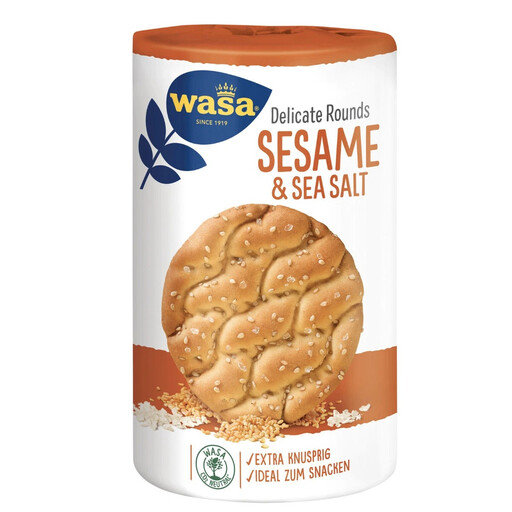
Why it suits this shopper: The 235 g pack works well as a breakfast staple, snack or accompaniment to spreads. The ingredients information lists 10% sesame seeds, with wheat flour as the main ingredient.
The stated sesame content means you don’t have to rely on the flavour description alone. Allergens such as wheat and sesame are listed.
235 g pack, 10% sesame seeds and versatile with cheese, vegetables or spreads.

Why it suits this shopper: According to the product information, this crispbread is made with 84% wholegrain rye flour, 10% sesame seeds and sea salt. It is described as vegan and made with ingredients from organic farming.
The main ingredients and stated sesame content are clearly specified. Allergen information and dry storage instructions are also provided.
Wholegrain rye as the main ingredient, 16 g of fibre per 100 g according to the product information, vegan and made without added raising agents.

Why it suits this shopper: A combination of wholegrain rye flour, oats, wheat bran and sesame makes this a good choice for a fibre-conscious breakfast or regular snack.
The product information lists the grains and a sesame content of 7.9%, so you can check the recipe before buying.
230 g pack, with 26 g of fibre and 13 g of protein per 100 g according to the nutritional information.
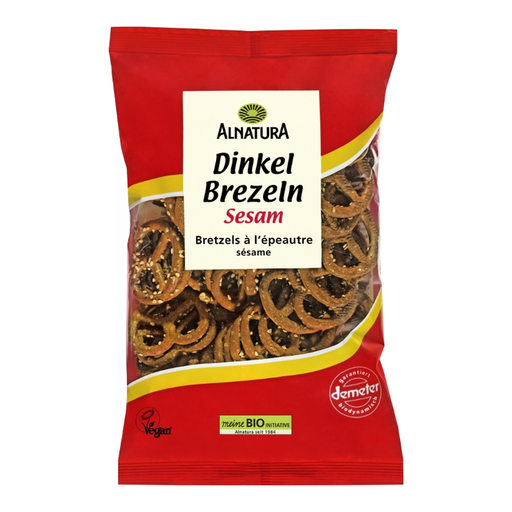
Why it suits this shopper: The 125 g pack is ideal for smaller snacks, breaks and days out. The product information lists 44% wholegrain spelt flour, 4% sesame and a vegan recipe.
The portion size means you don’t have to leave a large family pack open. Ingredients, allergens and a salt content of 2.70 g per 100 g are listed.
Vegan spelt pretzels in a 125 g pack, with 8.2 g of fibre per 100 g according to the product information.
We’ve put together a complete, regularly updated list of products that meet these strict selection criteria and fully comply with the safety regulations in force in the EU.
It depends on the recipe. Some products are clearly labelled as vegan, while others may contain milk, eggs or ingredients of animal origin. Check the ingredients list and packaging before buying. You shouldn’t assume that organic crispbread is vegan either.
Seal the pack as tightly as possible after each use and store it somewhere dry. Heat, moisture and direct sunlight can affect the texture. Individual portions or resealable packaging can help prevent the whole pack from quickly losing its crispness.
Start by comparing the pack size, then check the order of ingredients, sesame content, nutritional information per 100 g and allergen labelling. Plain crispbread often works well for breakfast and with spreads; pretzel sticks, sesame crackers or individually wrapped snacks can be more convenient on the go.