A compact desktop may be enough for mostly 2D set design, provided it supports the software you use and has the right ports. For regular CAD or 3D work, a tower with confirmed graphics and memory specifications that match your needs is the more flexible choice. For AutoCAD 2026 on Windows, Autodesk recommends 32 GB of RAM and 8 GB of graphics memory. The Blender Foundation also recommends 32 GB of RAM and 8 GB of graphics memory for Blender on Windows; these are recommendations, not universal purchase requirements. If the computer is shared, remember to plan for separate user accounts, project backups and software licences that cover the way you’ll use it.
Which desktop is right for you?
3D set design team
If you regularly model or render stage environments, the graphics and memory specifications of the configuration you actually order should match your software version. The Blender Foundation and Autodesk each publish their own requirements and recommendations for specific Windows workflows.
Team creating scale construction plans
For editable set plans, check that the configuration you order meets the requirements of your CAD software and version. Autodesk Support lists the requirements for AutoCAD 2026.
Shared design studio
If several people use the same computer, separate user accounts, reliable file storage and separate backups are important. Microsoft Support explains how separate accounts work in Windows, while Autodesk Support outlines the conditions for named users and active licences.
What matters when choosing a desktop for set design?
Compact desktop for mostly 2D work
A good fit if: You mainly work with designs and image files, and your programmes run on the operating system you’ve chosen.
Consider: Check the RAM, SSD and ports on the specific model. A compact design doesn’t guarantee 3D performance or future upgrade options.
Configurable Windows tower for CAD and 3D
A good fit if: Scale plans, larger models or regular rendering are your main tasks, and the configuration you order meets the requirements of the software you use.
Consider: A tower takes up more space, and optional graphics cards aren’t automatically included with every order. For AutoCAD 2026 on Windows, Autodesk recommends 32 GB of RAM and 8 GB of graphics memory. The Blender Foundation gives the same figures as a recommendation for Blender on Windows.
Mac mini for a confirmed macOS workflow
A good fit if: All the programmes and plug-ins you need are compatible with macOS and the chip generation you’ve chosen.
Consider: Check the memory, SSD and ports on the model you order. Graphics memory recommendations for Windows can’t be applied directly to Mac graphics.
| Priority |
What to check before you buy |
Who is it most important to? |
| 3D modelling and rendering |
Check the software version against the GPU, graphics memory and RAM actually supplied. |
If we regularly model or render stage environments, we want to choose graphics and memory that suit the specific application. Consumers who prioritise 3D performance are estimated to make up around 33%. |
| Scale CAD plans |
Decide on the programme version, operating system and project scope, then check the CPU, RAM and GPU on the specific model. |
If we work on scale set plans, the configuration we order should suit the CAD version we use. Consumers who prioritise CAD planning are estimated to make up around 25%. |
| Shared workstation and project files |
Check user accounts, file storage, separate backups and the licence terms for the programmes you use. |
If several people work on designs on the same computer, we want to organise accounts and project files sensibly and comply with the licence terms. Consumers who prioritise this shared workflow are estimated to make up around 25%. |
| 2D designs where space is limited |
Compare software requirements, RAM, SSD capacity and ports with the screens and input devices you already have. |
If we mainly create 2D designs and have limited space, we don’t want to choose specifications that don’t suit the way we work. Consumers who prioritise 2D work and a small footprint are estimated to make up around 17%. |
Which assumptions can lead you astray when choosing a desktop?
-
“Workstation” automatically means a suitable 3D graphics card
Lenovo lists the ThinkStation P3 Tower Gen 2, part number 30HTCTO1WWDE2, with integrated graphics, 32 GB of RAM and a 256 GB SSD. Options available across a product range aren’t necessarily included in the configuration you order.
Before ordering, check the full part number and confirm the GPU, graphics memory, RAM and SSD actually supplied against the requirements of your application.
-
A software recommendation applies equally to every desktop
Autodesk’s AutoCAD 2026 requirements differ between Windows and Mac. Recommendations for one platform therefore don’t automatically confirm that a different operating system or a particular configuration is suitable.
First decide on your operating system, programme version and required plug-ins. Then check the relevant manufacturer requirements.
-
A shared computer automatically takes care of accounts, licences and backups
Separate Windows accounts keep settings and documents apart, but they don’t replace backups or checks on each software licence. Autodesk requires named users and active licences for individual-user subscriptions.
Before sharing the computer, agree on user accounts, project storage, backups and licence terms.
Depending on your software agreement and backup solution, you may need additional licences or storage space for backups.
Which brands offer useful configuration examples?
Lenovo
The ThinkStation P3 Tower Gen 2 is a configurable Windows tower range to consider when assessing options for CAD and 3D work.
- Lenovo lists optional NVIDIA graphics for this range.
- The specific German configuration documented as 30HTCTO1WWDE2 lists integrated graphics, 32 GB of RAM and a 256 GB SSD. Lenovo Germany clearly distinguishes between options available across the range and the specifications of this particular model.
HP
The Z2 Tower G1i range offers configurable graphics, memory and service options.
- HP Support Germany describes the range as a configurable workstation.
- HP notes that components vary by configuration. The word “workstation” alone doesn’t confirm that a model has the right GPU for a particular 3D programme.
Dell
The Pro Max Tower T2 is a tower range with components you can choose to suit your needs.
- Dell Germany lists options for the processor, operating system and power supply.
- Check whether it’s suitable for CAD or 3D by comparing the components you choose with the software requirements.
Apple
The Mac mini is a compact desktop option for a confirmed macOS workflow.
- Apple Germany lists different chip, RAM, SSD and display options.
- These specifications alone don’t confirm that a required plug-in is compatible or that the computer can handle a specific project.
Joybuy desktops for set design, CAD and 3D
This selection includes Windows towers and compact Windows desktops for design, CAD and 3D work, as well as shared workstations. Your software requirements and the specifications of the particular model remain key.
 No image available
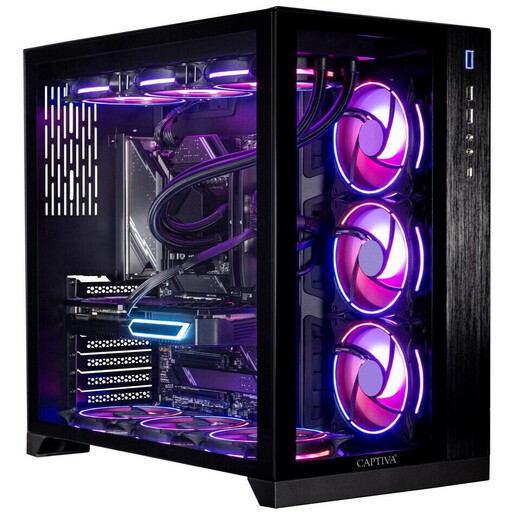
Captiva Highend Gaming R89-085 R7-9800x3D, 64 GB/2 TB, RTX 5080, Windows 11
For regular 3D work, the RTX 5080 listed in the title is worth considering. Check that the supplied specifications match your software version.
The title lists an R7-9800x3D processor, 64 GB of RAM, a 2 TB SSD and Windows 11. The description lists USB-A, USB-C, DisplayPort and HDMI ports.
View at Joybuy
 No image available
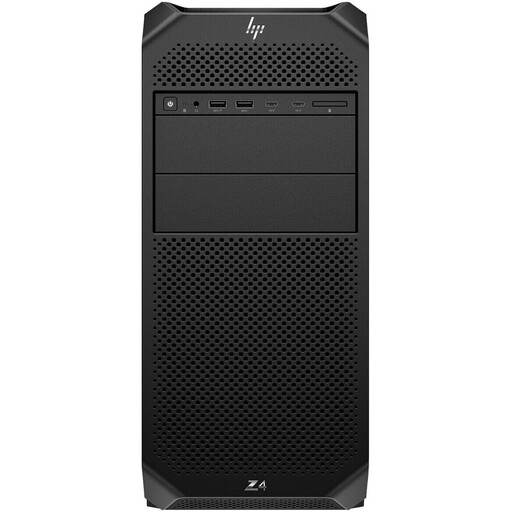
HP Workstation Z4 G5 Tower, Xeon W3-2535, 64 GB/1 TB, RTX 4000 Ada
This tower configuration could be worth considering for CAD and 3D work, provided its specifications meet the requirements of your programmes.
The product details list a Xeon W3-2535 at 3.5 GHz, 64 GB of RAM, a 1 TB SSD, an RTX 4000 Ada with 24 GB of graphics memory and Windows 11 Pro.
View at Joybuy
 No image available
HP Z2 Mini G1a Ryzen AI Max+ Pro 395, 128 GB/2 TB
Its compact design could suit a workstation with limited space. Check the integrated graphics carefully against the requirements of your specific 3D applications.
The product details list 128 GB of RAM, a 2 TB SSD and integrated Radeon graphics with Windows 11 Pro. For Blender and AutoCAD on Windows, the respective manufacturer documentation recommends 8 GB of graphics memory. This figure doesn’t automatically apply to integrated graphics.
View at Joybuy
 No image available
HP Z2 Tower G1i, Core Ultra 7 265, 32 GB RAM, Windows 11 Pro
This Windows tower could suit scale design work, provided its integrated graphics and other specifications meet the requirements of your software.
The product details list a Core Ultra 7 265, 32 GB of DDR5-5600 RAM and integrated Intel Graphics with shared memory. DisplayPort and USB ports are also listed.
View at Joybuy
 No image available
HP Z1 Tower G1i A40T1ET#ABD, Core Ultra 9 285, 64 GB/1 TB
The listed memory could make this a good option for large designs and running several applications at once. Also check that the graphics can handle your specific CAD or 3D workflow.
The product details list 64 GB of DDR5-5600 RAM, a 1 TB SSD, integrated Intel Graphics and Windows 11 Pro. DisplayPort, HDMI and USB ports are listed.
View at Joybuy
Frequently asked questions about shared set design PCs
Can several people use the same Windows computer with their own profiles?
Yes. Microsoft Support explains that Windows can have several user accounts, each with its own settings and documents. It doesn’t automatically determine who can edit shared project files.
Does one AutoCAD single-user licence cover everyone using a shared computer?
Not simply because there’s only one PC. Autodesk describes access for named or subscribed users; the number of users signed in at the same time must not exceed the number of active licences. Check the licence terms for your team.
How can you protect shared set design files against data loss?
Choose a shared project storage location and keep a separate backup. Test that you can restore files from it. Microsoft Support describes backups as copies that help protect against loss or damage; the right method depends on how you store your files.


