Sewists working with bulky seam intersections
If you’re planning lined bags, folded hems or heavier fabrics, it’s especially important to check that the thickest section fits under the presser foot and can be sewn neatly.


For multi-layer Advent bags, start by checking how the machine handles the thickest point, where the fabric, lining and hem meet. BERNINA notes that sewing through multiple layers and intersecting seams can be challenging. For occasional bag-making, the basic stitches on an easy-to-use domestic machine may be enough. If you often sew corners or find your fabric layers slipping, controlled stitching and suitable feeding aids matter more than a high stitch count.
If you’re planning lined bags, folded hems or heavier fabrics, it’s especially important to check that the thickest section fits under the presser foot and can be sewn neatly.
When the outer fabric and lining are sewn together, even feeding is important to stop the layers shifting against each other along long seams.
If you only sew bags now and then, clear settings and the essential stitches may matter more than a host of programmes you’ll rarely use.
Start with the thickest seam construction, then consider fabric feeding, ease of use and any projects you have planned for later. BERNINA describes multiple layers and intersecting seams as a particular challenge; SCHMETZ lists jeans needles for firm, thick fabrics such as canvas.
| What to look for | What to check | Who it matters most to |
|---|---|---|
| Bulky seam intersections | Place your planned combination of fabric, lining and hem under the presser foot, then sew a test seam at the thickest point. | If I’m sewing lined bags or folded hems, I want to know whether the machine will keep feeding the fabric at the thickest intersection. That’s why around 36% of consumers put bulky seam intersections first. |
| Even fabric feeding | Check whether the presser-foot pressure is adjustable and whether a feeding aid is compatible with the specific model. | When the outer fabric and lining come together along long seams, I want both layers to feed as evenly as possible. Around 29% of consumers prioritise how the fabric layers are fed. |
| Ease of use | Before buying, look at the basic stitches, stitch-length adjustment and whether the controls suit you. | If I only sew bags occasionally, I want to get to grips with the necessary settings quickly, rather than pay for programmes I rarely use. Around 21% of consumers prioritise an easy start. |
| Future projects | Make a note of any other specific sewing projects you have in mind, then check only the features and accessories you’ll need for them. | If I want to keep using the machine after making my bags, I want to choose features that suit my next projects. Around 14% of consumers put future use first. |
A model name or a long list of programmes won’t reliably tell you how the specific combination of outer fabric, lining and hem will perform at its thickest seam.
Make a test piece using exactly these fabric layers, then check the presser-foot clearance, feeding and stitch quality at the thickest intersection.
Adjustable presser-foot pressure and a walking foot are different solutions. A walking foot is model-specific and isn’t automatically included with the machine.
First work out whether you’re dealing with varying fabric thicknesses or layers that shift against each other. Then check that the specific accessory is compatible and included.
A compatible walking foot may need to be purchased separately.
An overlocker can sew, cut and neaten fabric edges in one go. However, that doesn’t tell you how well it will handle the hems and multi-layer seam sections you need to sew.
Decide on all the sewing steps before choosing a machine. Consider an overlocker as a possible addition if you already have a suitable machine for the other seams.
You may need another machine for other sewing steps.
For its mechanical 1522RD and 1522BL models, Janome lists three-step presser-foot pressure adjustment and extra-high presser-foot clearance.
For the N 3300 Pro, the manufacturer lists adjustable speed and a needle-stop function that lets you choose the needle position when you stop.
Singer positions the Heavy Duty 4423 for projects using materials such as denim and canvas, and lists adjustable presser-foot pressure.
According to the manufacturer, the Sarah is an entry-level machine with 13 stitch programmes and adjustable stitch length.
BERNINA offers the Walking Foot #50 to help feed fabric on compatible machines.
Joybuy’s selection for this topic ranges from hand-cranked models for repairs to electric machines for simple household sewing. For the Advent bags you have in mind, test the thickest seam using a suitable sample piece.
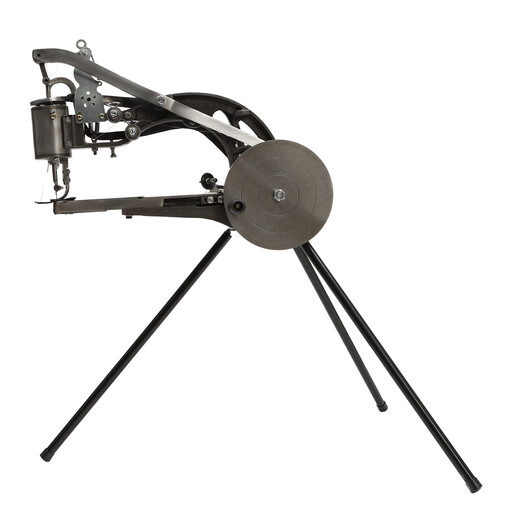 No image available
The product description mentions repairs to canvas and leather. To see whether it suits your Advent bag, test it with your planned combination of fabrics.
Hand-cranked rather than electrically powered. The product description lists a maximum stitch length of 6 mm.
 No image available
The stitch programmes and two speeds may be useful for simple sewing projects. Before you start, test your actual bag construction at its thickest point.
The product description lists forward and reverse sewing, foot pedal and hand switch operation, an LED light and a thread cutter. Check that the accessories and control options suit how you plan to use it.
 No image available
This compact model is described as suitable for simple sewing and repairs. For bulky seam intersections, check that your specific combination of fabrics fits under the presser foot and feeds evenly.
The product description lists 12 stitch patterns, dual power, an LED light and accessories.
 No image available
The product description lists this model for basic household sewing. Check whether the single straight stitch it offers is enough for all the seams in your planned bags.
Specifications include 6 V, 1 A, a straight stitch and hand or foot pedal operation. The product description also lists operation with four AA batteries.
 No image available
The product description presents this compact domestic model as suitable for beginners. Test it with your planned fabric to see whether it can sew the thickest seam evenly.
Specifications include 12 built-in stitches and reverse sewing.
SCHMETZ lists the Jeans Needle 130/705 H-J for firm, thick fabrics such as canvas. Choose a needle size and type to suit the fabric, thread and your machine’s instructions. A specialist needle doesn’t replace testing your specific fabric combination.
Start by testing the problem with a sample made from the actual layers of fabric. BERNINA describes a height compensation tool that helps keep the presser-foot sole level when the height changes suddenly. Suitable accessories and the correct technique depend on the model.
Follow the instructions for your specific model. The Janome 230DC manual says to switch off and unplug the machine before cleaning. Don’t assume that care and dismantling instructions apply to other models without checking.
Check the information for the specific appliance, including its markings, manufacturer details, product identification, instructions and warnings. The Bundesnetzagentur lists these points for the market surveillance of electrical and electronic products. The rules that apply in a particular case also depend on the appliance’s design.