Choose a sewing machine based on the most challenging seam and how easily you can handle large pieces of fabric – not the number of decorative stitches. If you regularly sew thick cross-seams, a machine designed for straight stitching could be a good fit. If layers tend to shift, a walking foot is worth considering, while versatile domestic machines offer a wider range of utility stitches. Janome states that the HD9 PROFESSIONAL has a presser foot lift of 12,7 mm; this is no guarantee that it will handle every fabric combination. Test the machine with a sample made from the actual layers you plan to use, and check the needle, presser foot and zip foot too.
Who needs what
For sewing thick seams
If you’re making choir garment bags from sturdy fabric, hems or binding can create several layers in certain places. Test the thickest section with a sample. Janome states that the HD9 PROFESSIONAL has a presser foot lift of 12,7 mm, while Schmetz lists jeans needles for sturdy fabrics such as canvas and twill. Neither is a substitute for testing your specific materials.
For sewing layers that shift
If the outer fabric, lining or a slippery layer shifts along long seams, compare a built-in dual-feed system with a walking foot that’s specifically compatible with your machine. Pfaff describes the select 4.2 as feeding fabric from both above and below. Janome recommends a walking foot for multiple layers made from different materials or with different surface finishes.
For making large garment bags
When sewing long pieces of fabric and a zip, you’ll need a suitable working area and the right zip foot. W6 states that the N 5000 Exklusive has a 200 mm throat space. Also check that the foot is compatible with the zip in your pattern and your machine.
What to look for when buying
Before comparing models, decide what matters most for your project: the thickest seam crossing, even feeding, handling large pattern pieces or keeping your sewing under control.
| What matters |
What to check before buying |
Who it matters most to |
| Thick seam crossings |
Sew test seams using exactly the fabrics and binding you plan to use; check the needle and thread recommendations for the specific model. |
When I sew several layers together at hems or binding, I first want to know whether the machine can handle that section. This is a priority for around 36 % of consumers with thick seams as their main concern. |
| Even feeding of layers |
Check whether the machine has a built-in walking foot or whether an explicitly compatible foot is available; sew a long test seam. |
When the outer fabric and lining shift against each other along long seams, I look for even feeding rather than high speed. Around 29 % of consumers put this concern first. |
| Large pieces and zips |
Compare the throat space with your pattern piece, and check what’s included or whether a suitable zip foot is compatible. |
When I’m sewing long pieces of fabric and a zip, I need room to guide the fabric and a foot suited to the step I’m working on. This is the main concern for around 21 % of consumers. |
| Controlled, repeatable sewing |
Test starting, sewing slowly and reverse stitching at a seam crossing; compare ease of use rather than looking at stitch count alone. |
When I’m making several garment bags, I want to be able to control the speed at tricky points. Around 14 % of consumers prioritise a sewing process they can repeat reliably. |
Common misconceptions when buying
-
“Heavy Duty” or lots of stitches means it can handle any thickness of fabric
Information about fabric types or stitch programmes doesn’t prove that a machine can sew every combination of outer fabric, lining, folded edges and thread.
Test the thickest section you’ll actually be sewing. Don’t assume that fabric suitability, stitch count and stitch applications are interchangeable.
-
A walking foot automatically means greater needle penetration power
Feeding fabric from above and below can help guide several layers evenly. It doesn’t tell you whether the needle can get through the thickest section.
Test how the machine feeds layers and handles thick cross-seams separately, ideally using the same fabric sample. If you’re buying a separate walking foot, check that it’s compatible with your model.
-
A straight-stitch machine will cover all your other sewing needs too
The Janome HD9 PROFESSIONAL is designed for straight stitching. If you need zigzag or other utility stitches for different projects, it won’t meet those needs on its own.
Before you buy, decide which seams and finishes you want to make yourself, then choose between a specialist straight-stitch machine and a more versatile model.
Sewing machine brands to consider
Janome
For choir garment bags, both the versatile 423S and the straight-stitch HD9 PROFESSIONAL are worth considering.
- Janome states that the HD9 PROFESSIONAL has a presser foot lift of 12,7 mm, and that the 423S can handle sturdy materials.
- The HD9 isn’t a substitute for a machine that offers other stitch types; these claims don’t prove that it can sew every specific combination of layers.
Pfaff
The select 4.2 combines utility stitches with built-in feeding from above and below, making it an interesting option if your layers tend to shift.
- Pfaff lists a zip foot and a choice of full or half speed.
- These features don’t indicate the maximum fabric thickness the machine can sew, and they don’t necessarily apply to other Pfaff models.
Singer
The mechanical Heavy Duty 4423 is an option if you want to sew sturdy materials as well as everyday projects.
- Singer lists canvas as a suitable material for this model and says its presser foot pressure is adjustable.
- These manufacturer’s claims are no substitute for testing the number of layers and seam crossings you plan to sew.
Brother
The electronic Innov-is F400 offers utility stitches and a rectangular feed system for a variety of sewing projects.
- Brother lists 40 built-in stitches and speed control.
- The claim about stitch quality on different fabric weights comes from the manufacturer; you’ll need to check separately whether a walking foot is compatible.
W6 Wertarbeit
The N 5000 Exklusive is worth considering for large pieces of fabric if the stated throat space is an important factor in your choice.
- W6 states that this model has a throat space of 200 mm.
- Its advertised suitability for thick fabrics and cross-seams is a manufacturer’s claim about this model, not independently verified performance.
Joybuy products for making choir garment bags
The options below range from a hand-operated machine for thick canvas to compact domestic sewing machines. For each model, check whether it’s suitable for the fabric layers, seam crossings and zip sewing involved in your project.
 No image available
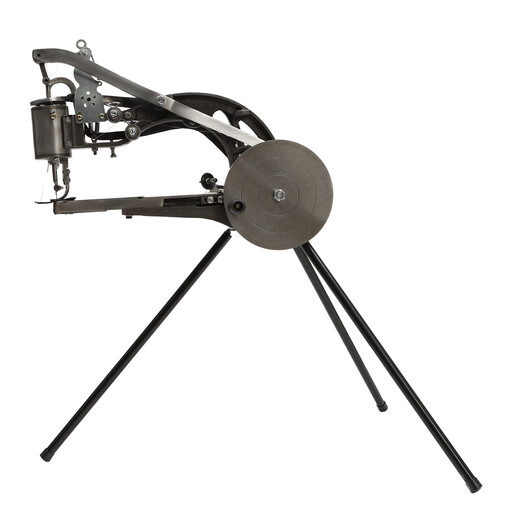
Hand-cranked heavy-duty leather sewing machine
This could be an option if a hand-cranked machine and its intended use with thick canvas suit your project. Consider how practical it will be for sewing long seams on a large garment bag.
The product listing describes materials 3–5 mm thick, and lists bags and tents as suitable uses. It’s hand-cranked rather than electrically powered.
View at Joybuy
 No image available
Electric domestic sewing machine with 12 stitch programmes
An option for a range of household sewing projects, as long as your fabric sample is within the stated material limits.
The description lists 12 stitch programmes, forward and reverse sewing, plus a foot pedal and hand control. It claims the machine can sew up to six layers of lightweight denim and materials up to 2,5 mm thick; these figures don’t guarantee it can handle thick seam crossings.
View at Joybuy
 No image available
IAGREEA YASM-505A mini sewing machine, purple
This could work for simple household sewing projects. Before using it on a garment bag, check that the specific seam and fabric layers are suitable for this compact model.
The product listing mentions 12 stitch patterns, two speed settings, an automatic thread cutter, and forward and reverse sewing.
View at Joybuy
 No image available
IAGREEA portable electric sewing machine, 6V, 1A
Its basic features could suit straightforward seams, provided you don’t need a reverse function for your project.
The product listing describes a fixed straight-stitch type with no reverse function. The product name lists a pedal, a thread hook core, an empty bobbin, a spare needle and a needle threader.
View at Joybuy
Frequently asked questions about sewing machines for choir garment bags
Which needle should I try for several layers of canvas or twill?
Schmetz lists the 130/705 H-J jeans needle for sturdy fabrics such as canvas and twill. Choose a size to suit your fabric and thread, and check that the needle system matches your machine’s manual; one size won’t automatically suit every garment bag.
Do I need an overlocker to make a garment bag?
Not just because you’re making a garment bag. TÜV SÜD describes overlockers primarily as a way to sew, cut and neaten fabric edges at the same time. A garment bag tutorial from Stoffe.de uses a sewing machine and a zip; base your choice on the type of edge finish you need.
Can you always add a walking foot?
No. Compatibility depends on the specific sewing machine model. Janome describes using a walking foot with several layers of different materials; before buying one, check that it’s specifically designed for your machine.
Who can help if a product is faulty after purchase in Germany?
For a consumer purchase in the EU, the seller’s statutory guarantee is separate from any voluntary manufacturer’s warranty. According to Your Europe, consumer goods are covered by a statutory guarantee of at least two years. If a club or association makes the purchase, check separately whether the buyer legally qualifies as a consumer.
Which safety marking matters for an electric sewing machine?
CE marking is required for products where the relevant harmonised EU rules require it. Your Europe points out that it is a declaration by the manufacturer, not individual approval by an EU authority. Check the marking on the specific machine.


