For the occasional cutlery roll, a straightforward domestic sewing machine with a straight stitch is a sensible starting point. Having enough room to guide the fabric and testing a sample seam with the actual layers matter more than a wide range of decorative stitches. If you regularly sew sturdy fabrics, also look for good feed, adjustable presser-foot pressure and controllable speed.
Who this guide is for
Sewing on a narrow table
If you sew on a shallow work surface, you’ll need to allow room not just for the machine but also to guide the fabric and, if necessary, fit an extension table. An extension table can provide more support for your fabric, as BERNINA explains.
Sewing with bulky layers
Where pockets, interfacing or binding meet, the thickest part of the seam is what matters. SCHMETZ recommends jeans needles for sturdy fabrics such as canvas; the needle still needs to be suitable for both the material and the machine.
Occasional cutlery roll projects
If you mainly need straight seams to divide the pockets, you don’t necessarily need lots of programmes. TÜV SÜD lists mechanical sewing machines as suitable for simple and occasional sewing tasks, among other uses; settings such as stitch length are adjusted manually.
What to look for when buying
First check whether you have room to set up the machine and guide the fabric, then compare seam control and features with what your project actually requires.
| Consideration |
What to check before buying |
Who this matters to |
| Space and fabric handling |
Allow for the complete setup, including the foot control and any extension table, as well as room to guide the fabric. |
If I sew at a narrow table, I need enough room beside the machine to guide the roll. Around 31% of consumers say the space available for setting up the machine is their most important consideration. |
| Multiple fabric layers |
Test a sample seam using the materials you plan to sew, at the thickest point; choose a needle to suit both the fabric and the machine. |
Where pockets, interfacing and binding meet, I want to test that exact combination of layers. Around 31% of consumers put handling multiple fabric layers first. |
| Keeping straight seams under control |
Straight stitch, adjustable stitch length and a sewing speed you can control. |
For straight pocket seams, I want to keep a close eye on the needle and speed. Around 25% of consumers say seam control is their most important consideration. |
| A straightforward set of features |
The basic stitches you need, plus the presser feet and needles included in the box. |
If I only sew cutlery rolls occasionally, I want the essential functions rather than unnecessary extra programmes. Around 13% of consumers prioritise a straightforward set of features. |
Avoiding common mistakes
-
“Compact” doesn’t automatically mean the machine will fit on your sewing table
You’ll also need room to lay out and guide the fabric. An extension table can provide more support, but it takes up extra worktop space.
Measure the complete setup and the space needed to guide the fabric, not just the machine itself.
-
A machine suitable for thick fabrics isn’t guaranteed to sew through every combination of layers
At pockets and binding, the seam can be much thicker than a single layer of fabric.
Before you start, test the thickest section you plan to sew using the same materials and a needle suited to both the fabric and the machine.
You may need extra needles or several attempts to get the settings right for your test seams.
-
An overlocker isn’t necessarily the only machine you need for the whole roll
Overlockers trim and neaten fabric edges at the same time. The pockets of a cutlery roll, by contrast, are divided with straight seams.
First work out which seams you need. If necessary, choose an overlocker to complement a machine for straight stitching.
Brands and models to consider
W6 Wertarbeit
The N 1235/61 and N 1235 Pro are different models with different features.
- W6 lists a straight stitch and adjustable stitch length for the N 1235/61.
- For the N 1235 Pro, W6 lists adjustable presser-foot pressure. A high stitch count or the model name alone doesn’t tell you how the machine will handle your particular layers.
Janome
According to JANOME Deutschland GmbH, the 230DC Limited Edition includes features for speed control and adapting to different fabrics.
- The manufacturer lists a speed control, adjustable presser-foot pressure and a large extension table included with the machine.
- The extension table gives your fabric more support, but it takes up room. Measure the complete setup on your table.
Singer
The Heavy Duty 4423 is a mechanical model that Singer also describes as suitable for sturdy fabrics.
- Singer lists denim and canvas as suitable fabrics and specifies adjustable presser-foot pressure.
- These are the manufacturer’s claims for this model, not a guarantee that it will sew every bulky seam or combination of materials.
Veritas
The Sarah is a mechanical option to consider for basic sewing tasks.
- Veritas lists 13 stitch programmes, adjustable stitch length and a removable accessory compartment.
- The brand’s claims about thicker fabrics are no substitute for testing a sample seam with your own combination of layers.
Bernina
The B 335 (Gen. 2) is a more feature-rich option, provided you have enough room for the complete setup in your sewing area.
- Bernina lists an extension table included with the machine, providing a larger fabric support area.
- Extra stitches aren’t necessarily needed for straight cutlery pockets, and an extension table must fit the depth of your existing table.
Joybuy products
The products below are hand-operated leather or shoe sewing machines whose titles mention canvas; they are not presented as domestic sewing machines for cutlery rolls. Before buying, check that the design, sewing method and setup will work for straight pocket seams on your table.
 No image available
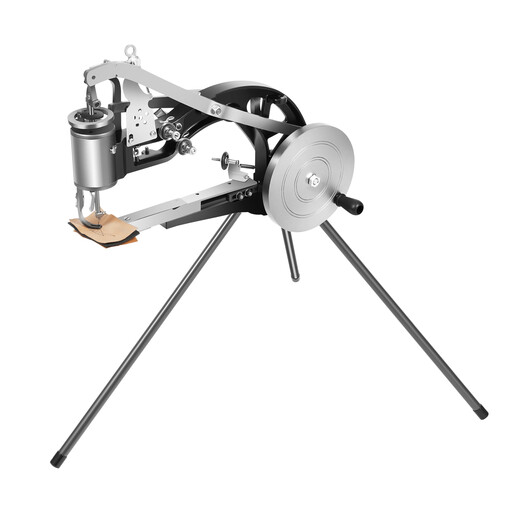
Hand-cranked sewing machine for leather and canvas, 6 mm stitch length
Described as a hand-cranked machine for repairing shoes, tents and canvas; check that its design will suit straight pocket seams and your table.
Stitch length up to 6 mm; material thickness 3–5 mm; 360° adjustment.
View at Joybuy
 No image available
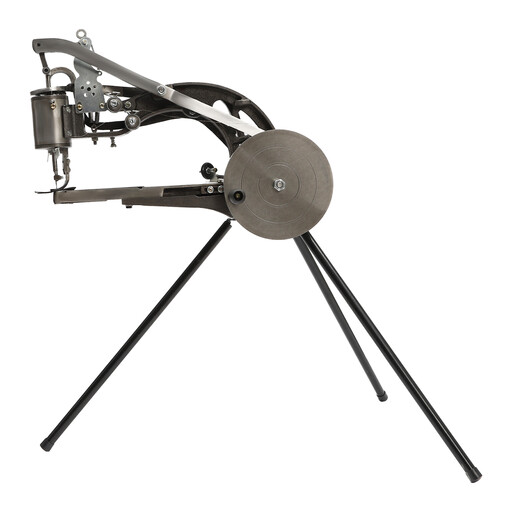
Hand-cranked leather sewing machine, 6 mm stitch length, 360° head
Described as a hand-cranked machine for repairing canvas, tents and bags; check that its operation and fabric handling will suit your straight pocket seams.
Stitch length up to 6 mm; material thickness 3–5 mm; 360° rotating head.
View at Joybuy
 No image available
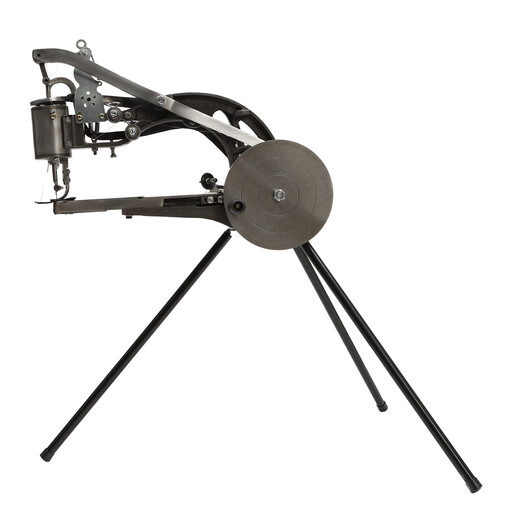
Hand-cranked machine for leather and heavy canvas, black
Described as a hand-operated leather sewing machine for heavy canvas and rubber repairs; check beforehand that it is suitable for straight pocket seams and your table.
Hand-cranked; black finish.
View at Joybuy
Frequently asked questions
Is a straight stitch enough for the pockets of a cutlery roll?
To divide the pockets of the roll bag described, you sew through the layers of fabric with a straight stitch. Any other stitches you need will depend on the rest of your project.
How should I handle a bulky section with binding or interfacing?
First sew a sample using the actual layers, and choose a needle suited to both the fabric and the machine. SCHMETZ recommends jeans needles for sturdy fabrics such as canvas; this doesn’t guarantee that every machine can handle every combination of layers.
Do I need an extension table for a narrow sewing table?
An extension table provides more support for your fabric and can make it easier to guide, but it takes up extra room. Compare the complete setup with the depth of your available table; you don’t necessarily need one for this project.
What are my rights in Germany if a product is faulty or I want to cancel an online purchase?
If a product is faulty, your statutory consumer rights generally apply against the seller. A manufacturer’s guarantee is voluntary and subject to its own terms, as explained by the Verbraucherzentrale (as at September 2026). For online purchases by consumers, you generally have 14 days from receiving the goods to cancel; exceptions apply, as the Verbraucherzentrale explains (as at August 2026).


