For simple drawstring bags made from woven cotton, a domestic sewing machine with straight and zigzag stitches is a good place to start. You don’t necessarily need a separate overlocker to finish the edges, as the BERNINA Blog tutorial shows. If several people will be sewing, or you’ll be working with thicker folds, clear settings, controllable speed and a test piece made from the actual fabric layers matter more than having a large number of stitch programmes.
Who will be sewing in the workshop?
A workshop for sewing beginners
When several people are sewing simple drawstring bags, a clear choice of stitches and a brief group introduction make it easier to find the right settings again. The BERNINA Blog tutorial shows how to finish the edges of drawstring bags with a zigzag stitch or an overlock stitch on a domestic sewing machine.
A group working with different fabrics
Whether you’re using simple woven fabric or folded edges, the group should test the actual fabric layers. Janome lists an extra-high presser foot lift for the 1522 LIMITED EDITION; bernette lists adjustable presser foot pressure among the features of the b05 ACADEMY. These model specifications don’t replace testing your own materials.
A workshop with frequent changes of user
When people with different levels of sewing experience take turns, clear instructions and easy-to-follow settings can make the machine easier to use. Brother lists a speed control for the Innov-is A16; bernette lists a speed limiter for the b05 ACADEMY.
What should you look for when buying?
Mechanical domestic sewing machine
A good fit if: you’ll mostly be sewing simple drawstring bags from woven fabric and the group can keep a shared record of the settings.
Trade-off: stitch length and width are adjusted by hand on the mechanical models described here.
Electronic domestic sewing machine
A good fit if: users taking turns particularly value adjustable sewing speed and controls that are easy to find again.
Trade-off: extra features are no substitute for an introduction to the machine or testing thick seam intersections.
Machine for working with different fabric layers
A good fit if: folded hems or different woven fabrics are part of your planned bag design.
Trade-off: assess the presser foot lift and, where applicable, adjustable presser foot pressure on the specific model, using a test piece.
Overlocker as an additional machine
A good fit if: you often want to trim and finish edges in one step, and you have a suitable machine for sewing seams.
Trade-off: for finishing the woven fabric used in the drawstring bags described here, the BERNINA Blog tutorial also recommends a zigzag stitch or an overlock stitch on a domestic sewing machine.
When choosing a sewing machine for drawstring bags in a shared workshop, start with the need that matters most to you when making your decision.
| What you need |
What to check when buying |
Who will value this most? |
| Basic seams and controls |
Check the specific model for straight and zigzag stitches, reverse sewing and easy-to-read controls. |
If I want to sew seams and finish edges without unnecessary programmes, basic features come first for me. Consumers with this priority are likely to make up roughly 33 %. |
| Folded edges and fabric layers |
Test-sew using the intended fabric layers, the right needle and the thread you plan to use; check the presser foot lift and, where applicable, presser foot pressure. |
If I also want to sew folded hems, I want to see how the machine feeds the specific stack of fabric. Consumers who put different or thicker fabric layers first are likely to make up roughly 25 %. |
| Controllable sewing speed |
Check whether the model has a speed control or limiter, and whether all users understand how to use it. |
If different people will be sewing short seams and corners, I want to be able to adjust the speed to suit. Consumers who prioritise speed control are likely to make up roughly 25 %. |
| Work area and accessories |
Check the space available for the machine and for guiding fabric; set aside a dedicated place to store accessories. |
If I’m sharing the machine, fabric and accessories with others, a well-organised work area is essential. Consumers who put space and organisation first are likely to make up roughly 17 %. |
Common buying mistakes
-
Choosing an overlocker as the only machine for the whole bag project
An overlocker is designed to trim and finish edges. The BERNINA Blog tutorial also recommends a zigzag stitch or an overlock stitch on a domestic sewing machine for finishing the edges of drawstring bags.
Choose your machine based on the sewing steps you have planned, and only factor in an overlocker if you’ll need this additional step regularly.
You may also need a suitable sewing machine for seams and topstitching.
-
Assuming lots of stitch programmes mean the machine can handle thick seam intersections
The number of programmes doesn’t tell you how a particular model will feed your fabric layers. Manufacturer specifications for presser foot pressure or lift don’t guarantee that the machine will handle every seam intersection either.
Test your thickest planned fold on the fabric layers you intend to use, with the right accessories.
-
Forgetting about the space around the machine
The DGUV considers table space, material feeding and lighting to be part of a sewing workstation. In a shared space, accessories also need a dedicated place.
Plan the machine, fabric support and storage around the workshop table you already have.
Brands and models to consider for your workshop
W6 Wertarbeit
The mechanical N 1235/61 could suit groups looking for a straightforward set of basic features.
- W6 lists 23 programmes, straight and utility stitches, adjustable stitch length and width, and three rotary dials for the N 1235/61.
- The number of stitches doesn’t show how the model will sew your particular folded bag fabric.
VERITAS
The mechanical Sarah is an option if a smaller selection of utility stitches is all you need.
- VERITAS lists 13 programmes, adjustable stitch length and a reverse sewing button for the Sarah.
- Its advertised suitability for thicker fabrics doesn’t replace testing your planned seam intersections.
Janome
The 1522 LIMITED EDITION is a model to compare if your group will be working with different woven fabrics and needs accessories.
- Janome lists three-step presser foot pressure, an extra-high presser foot lift and an accessory compartment for this model.
- Only a test with your intended fabric will show whether these features help with your bag design.
Brother
The Innov-is A16 is a model to compare if electronic speed control is important for users taking turns.
- Brother lists a speed slider, a needle up/down button and 16 stitches for the A16.
- Its advertised performance on multiple layers doesn’t replace testing your own stack of fabric.
bernette
The mechanical b05 ACADEMY is a model to compare if you’re looking for speed limitation and workshop accessories.
- bernette lists a speed limiter, adjustable presser foot pressure, a finger guard and an extension table included with this model.
- Its features may go beyond what you need for simple drawstring bags.
Joybuy product selection
This Joybuy product selection focuses on sewing machines for making drawstring bags and sharing in a workshop. Before choosing, check the stitch type you need and test the fabric layers using a sample piece.
 No image available
Mini domestic sewing machine, 12 stitch types
Could be worth considering for compact sewing projects with users taking turns, provided the available stitch types suit your bag design.
The product title lists 12 stitch types, single and twin needles, two speed settings and a sewing kit.
View at Joybuy
 No image available
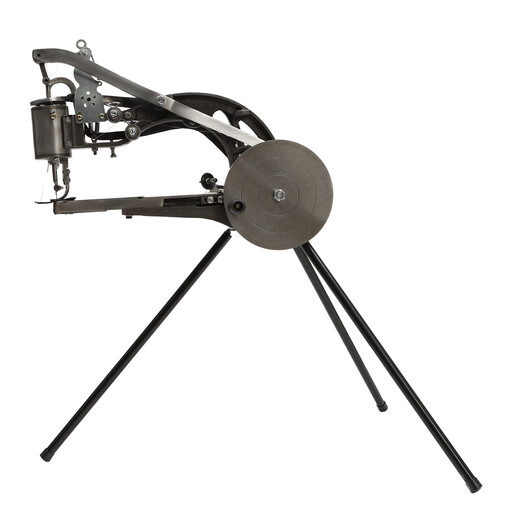
Hand-cranked sewing machine for leather and thick canvas
Described as a hand-operated machine for leatherwork and repairs to thick canvas. Before buying, check that the stitch type and seam guidance suit your planned drawstring bag.
The product title lists a hand crank and a black finish.
View at Joybuy
 No image available
Portable sewing machine, 12 stitches
Could be considered for a compact sewing project with users taking turns, provided the included stitch types and controls suit your needs.
The product title lists 12 stitches, dual power, an LED light, a pink finish and accessories.
View at Joybuy
 No image available
IAGREEA electric domestic sewing machine
Only worth considering if a fixed straight stitch is all you need for the planned sewing step. To finish the edges of woven fabric, the BERNINA Blog tutorial recommends a zigzag stitch or an overlock stitch.
The product details list a fixed stitch with no reverse sewing, 6 V and 1 A, and foot-pedal operation. They also list battery operation with 4 AA batteries, bobbin parts, a spare needle and a needle threader.
View at Joybuy
Frequently asked questions
Do we need an overlocker for drawstring bags?
Not necessarily for drawstring bags made from the woven cotton fabric described here: the BERNINA Blog tutorial recommends a zigzag stitch or an overlock stitch on a domestic sewing machine as an alternative to finishing the edges with an overlocker.
How should we set up the machine for users taking turns?
A brief introduction to threading the machine and choosing a stitch helps everyone understand and follow the settings. If the sewing workstation is being used for work, the applicable health and safety obligations should be assessed separately. The DGUV covers ergonomic design, but this doesn’t replace an assessment of how your particular workshop is organised.
What should we do if stitches are skipped at a folded edge?
First, check that the machine is threaded correctly and that you’re using a bobbin suitable for the model. Then sew a test piece using the actual fabric layers. SINGER notes that bobbins which look similar but are the wrong type can cause damage; always follow the instruction manual for your chosen model.
What statutory rights do we have if the product is faulty?
§ 438 BGB generally sets a two-year limitation period from delivery for standard claims relating to defects under the law of sale; the requirements for each claim depend on the circumstances of the purchase. A voluntary manufacturer’s guarantee is separate from these rights.
What should we know about product safety in Germany?
Your Europe explains that goods offered for sale in the EU must comply with the relevant product safety rules. A CE mark is only required for product categories where it is mandatory, and on its own it doesn’t show that a sewing machine is suitable for the fabric layers you plan to use.


